
One-to-one home physiotherapy vs group sessions: what is the difference?
In short
One-to-one physiotherapy allows individual assessment and closer personal supervision. Group rehabilitation can offer structured activity and peer support for suitable participants. Neither format is automatically better for every condition or patient.
In this guide (6 sections)
As modern physiotherapy services expand across India, patients encountering rehabilitation options frequently weigh one-to-one home visits against group physiotherapy sessions conducted in community centres, residential welfare associations (RWAs), or hospital outpatient gyms. Both models possess distinct clinical methodologies, cost structures, and social dynamics. However, conflating group exercise classes with individualized clinical physiotherapy can compromise recovery speed or even provoke secondary injuries if clinical indications are misunderstood.
While group sessions offer social camaraderie, mutual motivation, and lower per-person costs for chronic maintenance, individualized domiciliary physiotherapy provides dedicated, unhurried, one-to-one clinical attention essential for acute medical conditions, complex post-surgical tissue healing, and high-fall-risk neurological rehabilitation.
Biomechanical and Physiological Differences in Supervision Models
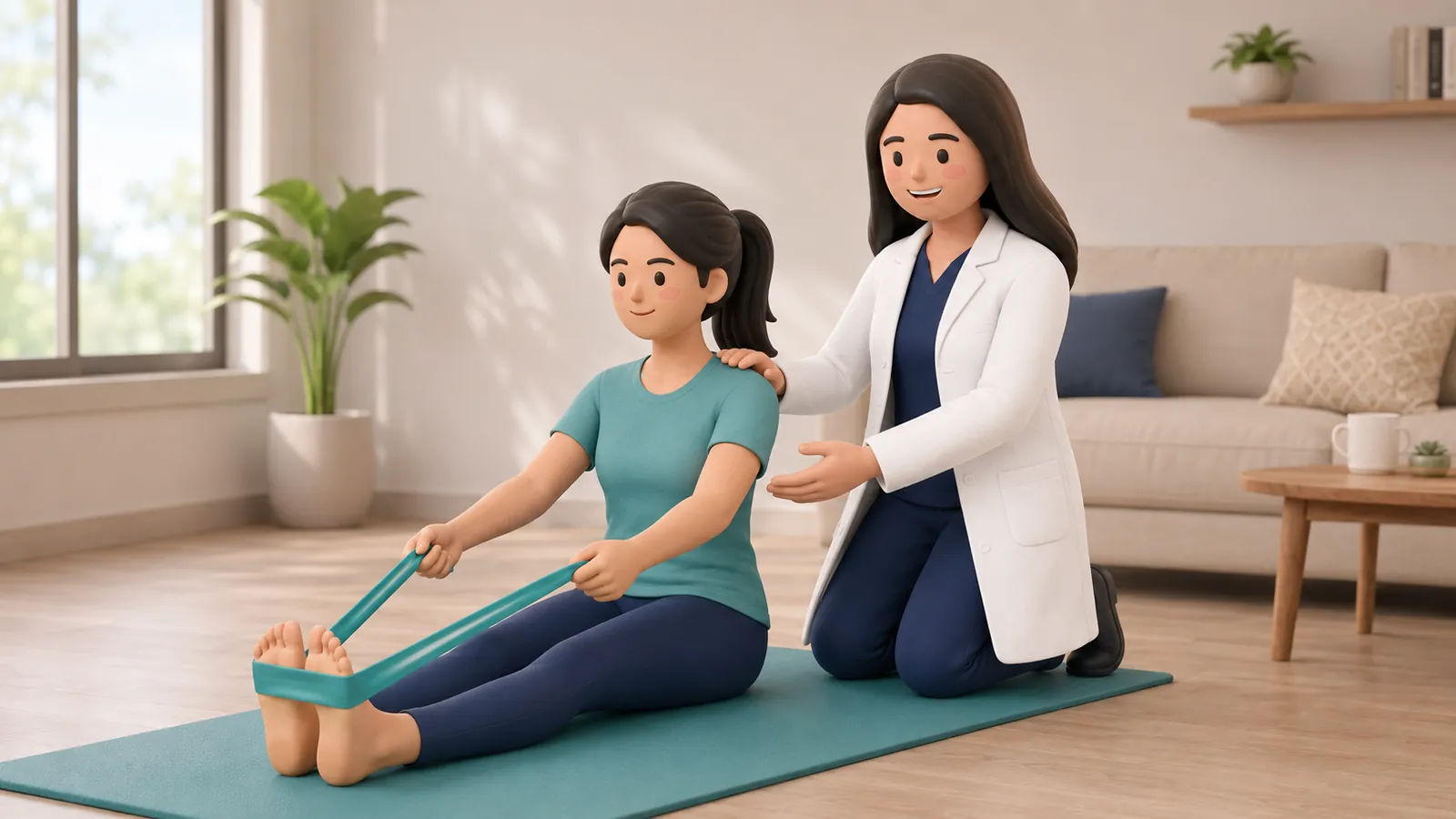
The fundamental difference between one-to-one care and group exercise lies in the precision of motor control feedback. In a dedicated one-to-one home session, the physiotherapist maintains continuous tactile, visual, and verbal contact. They can detect subtle compensatory movement patterns: such as pelvis elevation during hip abduction, trunk sway during unilateral standing, or forward head thrust during scapular retraction: and correct them immediately before faulty motor patterns become ingrained.
In contrast, even in well-managed group rehabilitation classes of 6 to 10 participants, clinician attention is divided. While the therapist demonstrates exercises from the front of the room, participants frequently perform repetitions with compromised alignment, risking joint overload or muscle strain if they possess underlying structural degeneration.
| Operational Parameter | Individual One-to-One Home Visit | Group Physiotherapy / Community Rehab Class |
|---|---|---|
| Primary Clinical Indication | Acute post-operative recovery, acute stroke, severe radiculopathy, spinal fractures, high fall risk | Stable chronic osteoarthritis, mild osteopenia, general geriatric wellness, cardiac maintenance, prenatal fitness |
| Clinician Attention and Supervision | 100 percent continuous, dedicated attention for 45 to 60 minutes with hands-on manual corrections | Divided attention across 6 to 15 participants; clinician demonstrates from front and scans the room |
| Exercise Prescription Customization | Strictly individualized load, repetition, and range based on real-time pain and surgical precautions | Generalized protocol adapted to the average participant fitness level; less individualized nuance |
| Session Fee Range in India | ₹600 to ₹2,000 per session direct payment; covers clinician dedicated travel and exclusive clinical focus | ₹150 to ₹500 per person per class; shared communal cost, often billed monthly across RWA or clinic batches |
| Infection Control and Privacy | Zero exposure to hospital pathogens or sick community members; complete personal domestic privacy | Shared indoor air, equipment handled by multiple participants, and lack of personal privacy for clinical examination |
| Caregiver Education & Handling | Direct, personalized instruction for family members and home attendants in transfers and bed mobility | Caregivers typically do not participate directly; focus remains entirely on group class execution |
When Individual One-to-One Care is Non-Negotiable
During the acute and subacute phases of recovery from major orthopaedic or neurological trauma, individualized one-to-one care is an absolute clinical necessity. In conditions like acute total hip replacement, deviation of 5 degrees beyond the permitted flexion limit can lead to prosthetic joint dislocation. In acute stroke rehabilitation, neuroplastic re-education requires precise manual facilitation of paretic muscle groups, sensory stimulation, and immediate postural correction that cannot be delivered in a group setting.
Furthermore, patients with significant cognitive impairment, early Alzheimer disease, or severe post-ICU anxiety become easily overwhelmed and distracted in group environments. The quiet, familiar domestic setting allows the clinician to break complex motor tasks into manageable steps without peer pressure.
The Clinical Value of Group Sessions in Long-Term Maintenance
Group physiotherapy excels in secondary prevention and chronic lifestyle management. For elderly individuals with mild chronic knee osteoarthritis, stable Parkinson disease, or osteoporosis, group classes organized in apartment clubhouses or local clinics provide social accountability and fight social isolation, which is a major contributor to cognitive decline in Indian elders.
Seeing fellow seniors perform balance drills on foam pads or complete gentle resistance circuit training encourages perseverance and reduces fear of movement (kinesiophobia). For community members on fixed retirement pensions, group classes offer an affordable long-term fitness solution once one-to-one clinical therapy has concluded.
Building a Stepped Rehabilitation Pathway
The optimal approach combines both formats in a phased sequence. A patient begins with intensive, individual home visits to regain basic motor control and ensure domestic safety. As strength and confidence improve, the physiotherapist transitions them to independent home exercises, followed by graduation into a structured community group maintenance class. This pathway ensures clinical safety while controlling lifetime healthcare costs.
Neuroplasticity and Attentional Demands in Early Motor Re-Education
Motor re-learning following neurological insults like stroke or traumatic brain injury depends heavily on principles of neuroplasticity: specificity, high repetition, and salient feedback. In an individualized home session, the physiotherapist provides real-time sensory cues, tapping paretic muscle bellies and guiding limb trajectories through external proprioceptive feedback. In a group class, patients with cognitive deficits or hemispatial neglect cannot process generic auditory group instructions, frequently leading to frustration or faulty learned non-use.
The economic sustainability of long-term care also benefits from this sequential model. While private home visits provide necessary intensive early input, transitioning stable chronic patients to weekly or bi-weekly community group classes reduces recurring monthly therapy expenses by 60 to 75 percent. This structured step-down approach prevents premature therapy abandonment while ensuring long-term physical conditioning, functional endurance, and community peer support across retirement years.
The Psychological Gradient: Overcoming Kinesiophobia and Isolation
While one-to-one therapy is clinically superior during acute recovery, group environments play a crucial psychological role once basic mobility is restored. Many chronic musculoskeletal sufferers develop kinesiophobia, or the pathological fear that movement causes damage. Witnessing peers with similar spinal or joint degenerations perform squats, balance drills, and step-ups in a structured group class builds profound self-efficacy, reassuring patients that physical activity is safe and therapeutic.
Can someone with a fresh knee replacement join a group physiotherapy class?
No. A fresh total knee replacement (under 4 to 6 weeks post-surgery) requires strict one-to-one clinical monitoring of wound healing, extensor lag, swelling, and joint range of motion. Joining a group class prematurely risks joint effusion, stiffness, or falls.
Are group exercise classes conducted in gyms the same as group physiotherapy?
No. Fitness gym group classes (like Zumba or aerobic bootcamps) are led by fitness instructors focused on calorie burning. Group physiotherapy is prescribed and led by licensed physiotherapists targeting specific pathological deficits, joint alignment, and fall risk mitigation.
How many participants should ideally be in a clinical group physiotherapy session?
For high-quality clinical oversight, group physiotherapy sessions should strictly cap attendance at 6 to 8 participants per physiotherapist. Exceeding 10 participants compromises individual movement correction and patient safety.
Can a family member join the patient during an individual home visit?
Yes, and it is strongly encouraged. Having a dedicated family caregiver observe one-to-one sessions ensures they learn correct handling techniques, fall prevention cues, and home exercise assistance.
How do I choose between the two models on BookPhysio.in?
BookPhysio.in specializes in verified, one-to-one clinical consultations (both clinic and home visits). You can discuss transitioning to community group maintenance with your verified clinician once your one-to-one goals are achieved.
- Chartered Society of Physiotherapy (CSP): Individual versus group exercise rehabilitation outcomes: https://www.csp.org.uk
- Cochrane Systematic Review: Group-based versus individual physiotherapy for chronic knee osteoarthritis: https://www.cochranelibrary.com
- Indian Association of Physiotherapists (IAP): Standards for group and domiciliary clinical practice: https://physiotherapyindia.org
- Archives of Physical Medicine and Rehabilitation: Cost-effectiveness of tiered physiotherapy delivery models: https://www.archives-pmr.org
BookPhysio.in Editorial Team
The BookPhysio.in editorial team writes and maintains this content, checking it against reliable clinical sources. Content follows our medical review policy: general information only, and no page claims a clinical review until a named registered physiotherapist has signed it off.
Read our medical review policy