
Recurring Lower Back Pain: Evidence-Based Assessment, Spine Mechanics, and Long-Term Rehabilitation in India
In short
Recurring lower back pain is one of the leading causes of disability among Indian working adults. Learn why passive rest fails, how mechanical spine loading works, and evidence-based active rehabilitation protocols.
In this guide (5 sections)
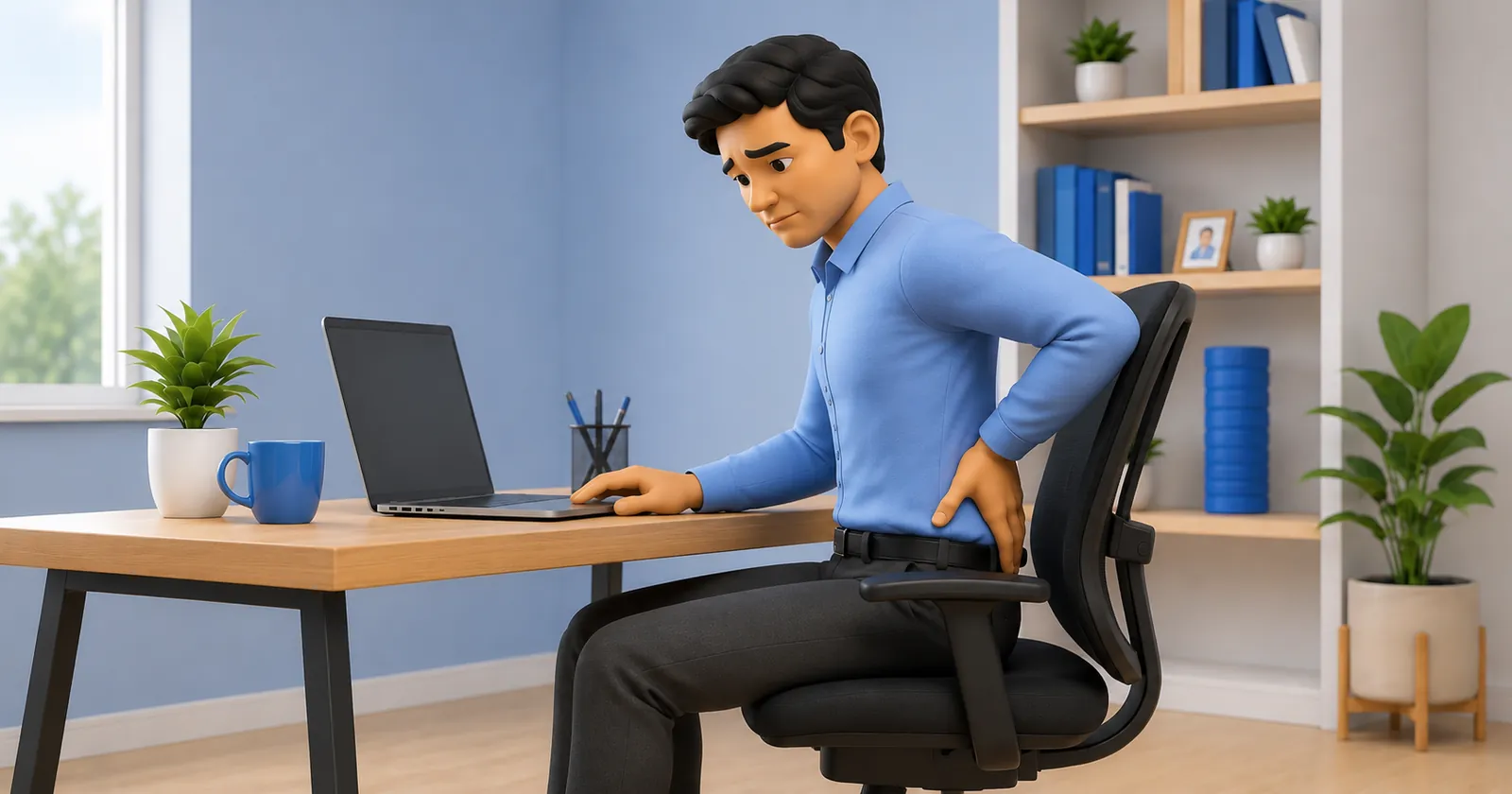
Lower back pain (LBP) is the single leading contributor to musculoskeletal disability across urban and suburban India. Epidemiological surveys indicate that over 60 percent of Indian adults will experience a debilitating episode of lumbar pain at some point in their adult lives, with more than 40 percent suffering recurrent flare-ups within twelve months of initial onset. Despite its widespread prevalence, conventional management in Indian communities frequently relies on bed rest, non-steroidal anti-inflammatory drugs (NSAIDs), and passive modalities like hot water bags or short-wave diathermy. While these provide temporary symptomatic soothing, they fail to address the underlying neuromuscular deficits, altered spinal kinematics, and deconditioning that drive chronic recurrence.
Modern musculoskeletal physiotherapy approaches low back pain through a functional biomechanical lens. The lumbar spine relies on an integrated tripartite stability system described by Panjabi: the passive spinal column (vertebral bodies, intervertebral discs, facet joints, and spinal ligaments), the active muscular subsystem (deep transversus abdominis, lumbar multifidus, quadratus lumborum, and pelvic floor), and the neural control subsystem. When pain induces reflex inhibition of the deep stabilisers, superficial global movers like the erector spinae overcompensate with compressive spasm, locking the lumbar spine in a continuous cycle of fatigue and microtrauma.
1. Biomechanical Subtypes: Differentiating Discogenic, Facet, and Muscular Pain
Effective physical rehabilitation requires accurate mechanical classification rather than relying purely on radiological MRI findings, which often reveal asymptomatic degenerative changes such as disc desiccation or mild bulges in completely pain-free individuals. Clinical assessment groups mechanical lower back pain into directional preferences and structural drivers.
| Clinical Feature | Discogenic Lumbar Strain | Facet Joint Arthropathy | Myofascial Ligamentous Strain |
|---|---|---|---|
| Aggravating Movements | Prolonged sitting, lumbar flexion, coughing, sneezing, driving | Prolonged standing, lumbar extension, sustained backward bending, walking | Sudden awkward twisting, sustained static awkward posture, heavy lifting |
| Relieving Postures | Standing, gentle walking, prone lying with lumbar lordosis supported | Sitting, leaning forward over a counter, flexion-biased rest positions | Gentle active movement, heat application, position changes |
| Pain Characteristics | Deep, central dull ache; possible somatic referral to buttock or posterior thigh | Localized unilateral or bilateral lumbar ache; sharp catching on extension | Diffuse muscular tightness, palpable tender trigger points, muscular guarding |
| Physical Exam Signs | Loss of lumbar extension; positive centralization during repeated extension | Positive Kemps quadrant test; localized facet joint tenderness on palpation | Negative neurological tests; muscular stiffness without segmental deficit |
2. The Indian Domestic and Commute Ergonomic Context
Unique cultural and infrastructural factors profoundly shape lumbar loading patterns in Indian society. Two-wheeler commuting across potholed arterial roads in Bengaluru, Pune, and Chennai subjects the lumbar spine to severe, repetitive axial shock loading while the rider is seated in slight kyphotic flexion. Similarly, long daily commutes in crowded suburban trains or static bumper-to-bumper car traffic cause sustained disc creep: a phenomenon where intervertebral disc fluid is squeezed outward, leaving the posterior annulus fibrosus vulnerable to tearing upon sudden movement.
Domestically, traditional routines such as washing utensils near ground level, cleaning floors with short brooms, and sleeping on either sagging soft cotton mattresses (gaddas) or excessively rigid wooden boards create extreme postural extremes. Physiotherapy guides patients to transition toward medium-firm orthopaedic supportive surfaces, maintain neutral lumbar lordosis with lumbar rolls during vehicular commutes, and modify domestic chores to eliminate high-risk repetitive flexion-rotation loads.
3. Three-Phase Active Lumbar Rehabilitation Protocol
A progressive, evidence-informed exercise prescription restores segmental stability, desensitises the nervous system, and builds load capacity.
Phase 1: McKenzie Prone Extension and Directional Preference
Objective: Centralise discogenic symptoms, reduce posterior annular strain, and restore physiological lumbar lordosis.
- 1Lie face down on a firm treatment mat or bed with arms relaxed by your sides for 2 minutes to allow spinal muscles to release tension.
- 2Place your palms flat on the surface directly beneath your shoulders, identical to a press-up setup.
- 3Gently press through your hands to lift your chest and upper torso upward while keeping your pelvis, buttocks, and lower legs completely relaxed and anchored to the mat.
- 4Exhale smoothly at the top of the range, hold the gentle extension for 2 to 3 seconds without holding your breath, and slowly lower back down.
- 5If pain centralises toward the midline of your lower back, the exercise is therapeutic. Discontinue immediately if peripheral pain shoots further down your leg.
Phase 2: Deep Core Muscle Activation (Transversus Abdominis and Multifidus)
Objective: Re-educate the deep muscular cylinder to stabilise lumbar motion segments during dynamic movement.
- 1Lie on your back in crook lying position with your knees bent at 90 degrees and feet flat on the floor, hips width apart.
- 2Place your index and middle fingertips 2 centimetres inward and downward from your anterior superior iliac spine (the prominent hip bones).
- 3Take a relaxed breath in; as you exhale gently through your mouth, draw your lower abdominal wall inward toward your spine as if pulling away from a tight waistband, without flattening your lower back against the floor.
- 4Maintain a steady normal breathing pattern while sustaining the deep contraction for 10 seconds. You should feel a gentle firming under your fingers without bulging of the superficial rectus abdominis muscle.
- 5Progress to bird-dog quadruped reaches once stable isometric control is demonstrated.
Phase 3: Gluteal Bridging with Pelvic Neutral Control
Objective: Build posterior chain strength and gluteus maximus drive to offload compensatory lumbar erector overactivity.
- 1Remain in crook lying with feet flat, heels positioned approximately 15 centimetres from your sit bones.
- 2Engage your deep lower abdominal cylinder and gently squeeze your gluteal muscles.
- 3Drive through your heels to elevate your hips toward the ceiling until your thighs, pelvis, and torso form a straight diagonal line.
- 4Ensure your lumbar spine does not hyperextend at the peak; all lifting power must originate from your hips rather than your lower back.
- 5Hold the top contraction for 3 seconds while breathing comfortably, then lower your hips under controlled eccentric braking over 3 seconds.
While over 90 percent of lower back pain is mechanical and non-specific, certain symptoms warrant immediate neurosurgical or emergency consultation: progressive foot drop or motor weakness, numbness or sensory loss in the saddle region (inner thighs, perineum, or buttocks), sudden loss of bowel or bladder control, unexplained fever accompanying spine pain, history of cancer, or unremitting severe night pain that is unaffected by lying down or changing positions.
4. Clinic Consultation vs Home-Visit Care and Transparent Fee Benchmarks
Patients suffering from acute, severe back pain often find vehicular travel to a physiotherapy clinic excruciating. In such cases, initial domiciliary physiotherapy (home visits) provides safe, immediate relief through bedside clinical assessment, gentle manual mobilisation, and ergonomic modification of the home sleeping and seating environment. Once acute symptoms stabilise, transitioning to an outpatient clinic allows access to specialised resistance apparatus, functional cable trainers, and clinical Pilates equipment.
Across Indian urban centres, private clinic physiotherapy sessions typically range from ₹400 to ₹1,500 per visit depending on practitioner qualifications (BPT vs post-graduate MPT in Orthopaedics or Musculoskeletal Rehabilitation) and city tier. Home-visit physiotherapy sessions generally range from ₹600 to ₹2,000 per consultation to account for transit time and personalised one-on-one bedside care. Under fair platform standards, patients pay their physiotherapist directly at each session with zero hidden commissions or mandatory prepaid packages.
5. Frequently Asked Questions Regarding Lower Back Pain Physiotherapy
Should I get an MRI before consulting a physiotherapist for lower back pain?
In the vast majority of cases, an MRI is unnecessary before beginning clinical physiotherapy. Clinical guidelines recommend imaging only in the presence of red flags such as progressive neurological deficits, trauma, suspected malignancy, or when conservative care fails after 6 to 8 weeks. Most MRI scans reveal incidental findings like mild disc bulges or degenerative disc disease that are common in pain-free adults. A qualified physiotherapist performs a comprehensive physical assessment to determine mechanical directional preference without needing an expensive scan.
Is complete bed rest recommended when my back pain flares up?
No. Strict bed rest beyond 24 to 48 hours is actively detrimental to spinal recovery. Prolonged immobilisation leads to rapid deconditioning of stabilising muscles, increases disc stiffness, reduces local blood circulation, and heightens central pain sensitivity. Modern clinical evidence strongly advises maintaining tolerable light daily activity, short gentle walks on flat ground, and frequent position changes. Relative rest with directional movement is far superior to lying flat in bed.
How many physiotherapy sessions are typically required for recurrent back pain?
Most patients with mechanical lower back pain experience noticeable symptomatic relief within 3 to 6 sessions over the first two to three weeks. However, completing a full active rehabilitation programme to restore deep core endurance, correct movement dysfunctions, and prevent future recurrences generally requires 8 to 12 weeks of structured progression, transitioning from supervised clinical sessions to an independent home maintenance exercise routine.
Can wearing a lumbar support belt help my back pain?
A lumbar corset or support belt can provide temporary reassurance and mechanical offloading during acute severe spasms or when performing unavoidable heavy lifting. However, prolonged continuous use of a belt should be avoided because it fosters psychological dependency and can lead to reflex disuse atrophy of your natural internal muscular core. Belts should be used as a short-term adjunct while actively training your own abdominal and lumbar muscles.
What kind of mattress is best for chronic back pain in India?
Scientific studies demonstrate that a medium-firm mattress provides the optimal balance of spinal alignment and pressure distribution for lower back pain sufferers. Extremely hard surfaces (such as sleeping directly on a wooden plank or floor) place excessive pressure on bony prominences like the sacrum and shoulder blades, preventing the lumbar spine from relaxing. Conversely, overly soft, sagging mattresses allow the pelvis to sink, forcing the lumbar spine into sustained kyphosis throughout the night.
Related condition guides

BookPhysio.in Editorial Team
The BookPhysio.in editorial team writes and maintains this content, checking it against reliable clinical sources. Content follows our medical review policy: general information only, and no page claims a clinical review until a named registered physiotherapist has signed it off.
Read our medical review policy