
Physiotherapy for Pelvic Organ Prolapse

Quick answer
Physiotherapy for pelvic organ prolapse strengthens the pelvic floor to ease symptoms and support the pelvic organs, and is a recommended first-line treatment for mild to moderate prolapse.
- First-line treatment for mild to moderate prolapse
- Private, one-to-one care
- Book directly, we do not ask for a referral. Red-flag symptoms need medical care first
- We check every physiotherapist’s registration details before their profile goes live
What is pelvic organ prolapse?
Pelvic organ prolapse is when the bladder, uterus, or bowel descends because the pelvic floor support has weakened, often after childbirth or with age. For mild to moderate prolapse, pelvic floor physiotherapy is a recommended first-line treatment that eases symptoms and improves support. More severe prolapse may also need a medical or surgical opinion. Any intimate or internal assessment happens only with your informed consent and privacy, and you can stop at any time. Internal assessment is not mandatory to book or begin care, and your physiotherapist should explain all options and only proceed with your consent.
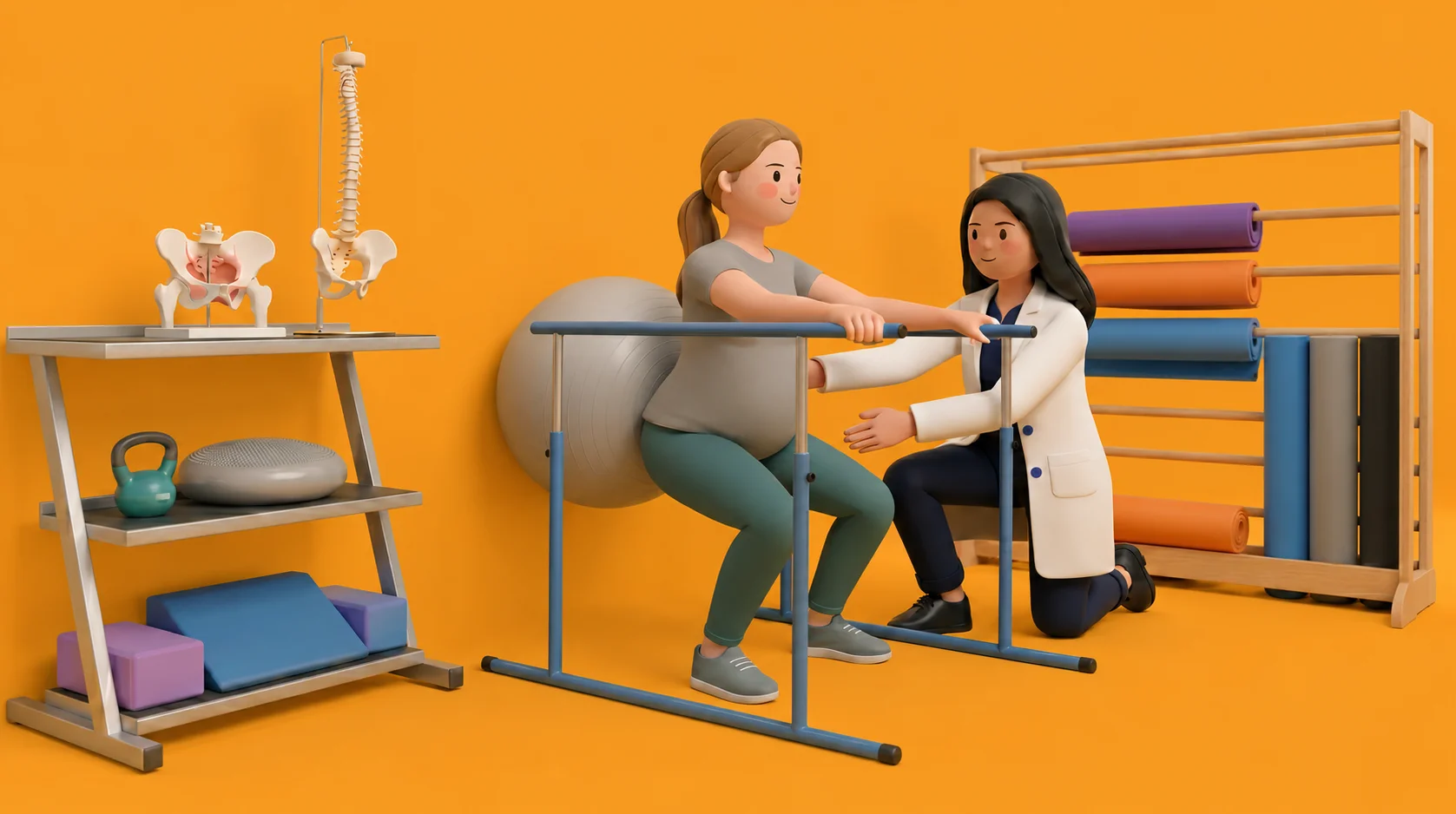
Women's Health Physiotherapy
Pelvic Organ Prolapse is assessed and treated under Women's Health physiotherapy (pregnancy & pelvic health). Prenatal, postnatal, and pelvic floor physiotherapy for every stage of a woman's life. Requires relevant specialty training and works alongside your medical team where needed. Any intimate or internal assessment is consent-based, private, and optional, and you can stop at any time. Internal assessment is not mandatory to book or begin care.
How physiotherapy helps
- Pelvic floor assessment and strengthening
- Symptom-management strategies
- Advice on lifting and avoiding strain
- Support alongside a pessary if your doctor recommends one
- Guidance on activity and exercise
Common signs
- A feeling of heaviness or dragging in the vagina
- A bulge you can feel or see
- Discomfort that worsens by the end of the day
- Bladder or bowel changes
- Discomfort with intercourse
In-clinic vs home visit physiotherapy
| What to compare | In-clinic | Home visit |
|---|---|---|
| Typical fee | ₹300 to ₹1,500 a session. It depends on your city. | ₹400 to ₹2,000 a session. It depends on your city. |
| Exact fee | Set by each physiotherapist and shown on their profile | Set separately for home visits and shown on their profile |
| Best for | Equipment-based rehab and first assessments | Limited mobility, post-surgery, and elderly care |
| Equipment | Full clinic setup | Portable equipment the physiotherapist brings |
| Travel | You travel to the clinic | The physiotherapist comes to you |
| Booking | Pick a clinic slot on search | Filter by home visit on search |
Clinical rehabilitation framework
Evidence-informed clinical progression and starter exercise targets for pelvic organ prolapse.
Clinical progression criteria & key observations
- Symptom severity does not always match anatomical grade: manage the symptoms and function in front of you, refer for formal staging when in doubt
- Chronic cough and constipation are modifiable prolapse drivers: address them alongside the pelvic floor programme, not as an afterthought
Starter exercise targets & evidence-based dosage
When to seek urgent care
Physiotherapy is safe for most people. See a doctor urgently if you have any of these.
- A sudden inability to pass urine, which needs urgent care
- Any vaginal bleeding after menopause, or bleeding from the bulge, which needs a doctor
- A bulge that becomes painful, raw, or cannot be pushed back in
- Severe or rapidly worsening symptoms, which need a doctor
Seek urgent medical care first. Physiotherapy comes after, when it is safe.
Frequently asked questions
Can physiotherapy help prolapse without surgery?
Can I get physiotherapy for pelvic organ prolapse at home?
How much does physiotherapy for pelvic organ prolapse cost in India?
Related conditions & care


Clinical guides & articles for pelvic organ prolapse
Evidence-informed articles, recovery timelines, and home care advice from our clinical library.
Pelvic Floor Rehabilitation After Hysterectomy: Preventing Vault Prolapse and Incontinence in India
Removing the uterus compromises pelvic suspension ligaments, leaving the vaginal vault vulnerable to prolapse. Discover clinical pelvic floor rehabilitation protocols.
Urinary Incontinence in Women: Stopping Bladder Leaks During Coughing, Sneezing, and Running
Involuntary bladder leaks while laughing, sneezing, or exercising are common but never normal. Discover how structured pelvic floor physiotherapy restores continence.
Pelvic Organ Prolapse: How Pelvic Floor Physiotherapy Helps Without Surgery
Pelvic organ prolapse is common, manageable, and often significantly improved without surgery. Learn how pelvic floor physiotherapy, structured PFMT, and lifestyle adaptations restore pelvic support.
Find physiotherapists for pelvic organ prolapse by city
Verified physiotherapists treat pelvic organ prolapse in these cities. Home visit and in-clinic options vary by physiotherapist.
Find a physiotherapist for pelvic organ prolapse
Compare physiotherapists by fee, experience, and availability. Clinic visits and home visits across India.
This page is for general education and booking guidance. It does not diagnose your condition or replace medical care.
If your symptoms are severe, sudden, or getting worse, seek urgent medical care first. The same applies with fever, chest pain, breathlessness, fainting, new weakness, loss of bladder or bowel control, or unexplained bleeding.
Always consult a qualified physiotherapist or doctor about your condition.