
Physiotherapy for Urinary Incontinence

Quick answer
Physiotherapy for urinary incontinence treats leaking with pelvic floor rehabilitation and bladder retraining, and is recommended first-line for stress, urge, and mixed incontinence. Sessions are private, and it helps many people avoid medication or surgery.
- Recommended first-line treatment for stress, urge, and mixed incontinence
- Private, one-to-one care
- Book directly, we do not ask for a referral. Red-flag symptoms need medical care first
- We check every physiotherapist’s registration details before their profile goes live
What is urinary incontinence?
Urinary incontinence is leaking urine, whether with effort like coughing or exercise (stress incontinence) or with a sudden strong urge (urge incontinence). Pelvic floor rehabilitation and bladder retraining are the recommended first-line treatment and help many people, in private, respectful sessions. Pelvic health physiotherapy should be done by a trained pelvic health physiotherapist. Any intimate or internal assessment happens only with your informed consent and privacy, and you can stop at any time. Internal assessment is not mandatory to book or begin care, and your physiotherapist should explain all options and only proceed with your consent.
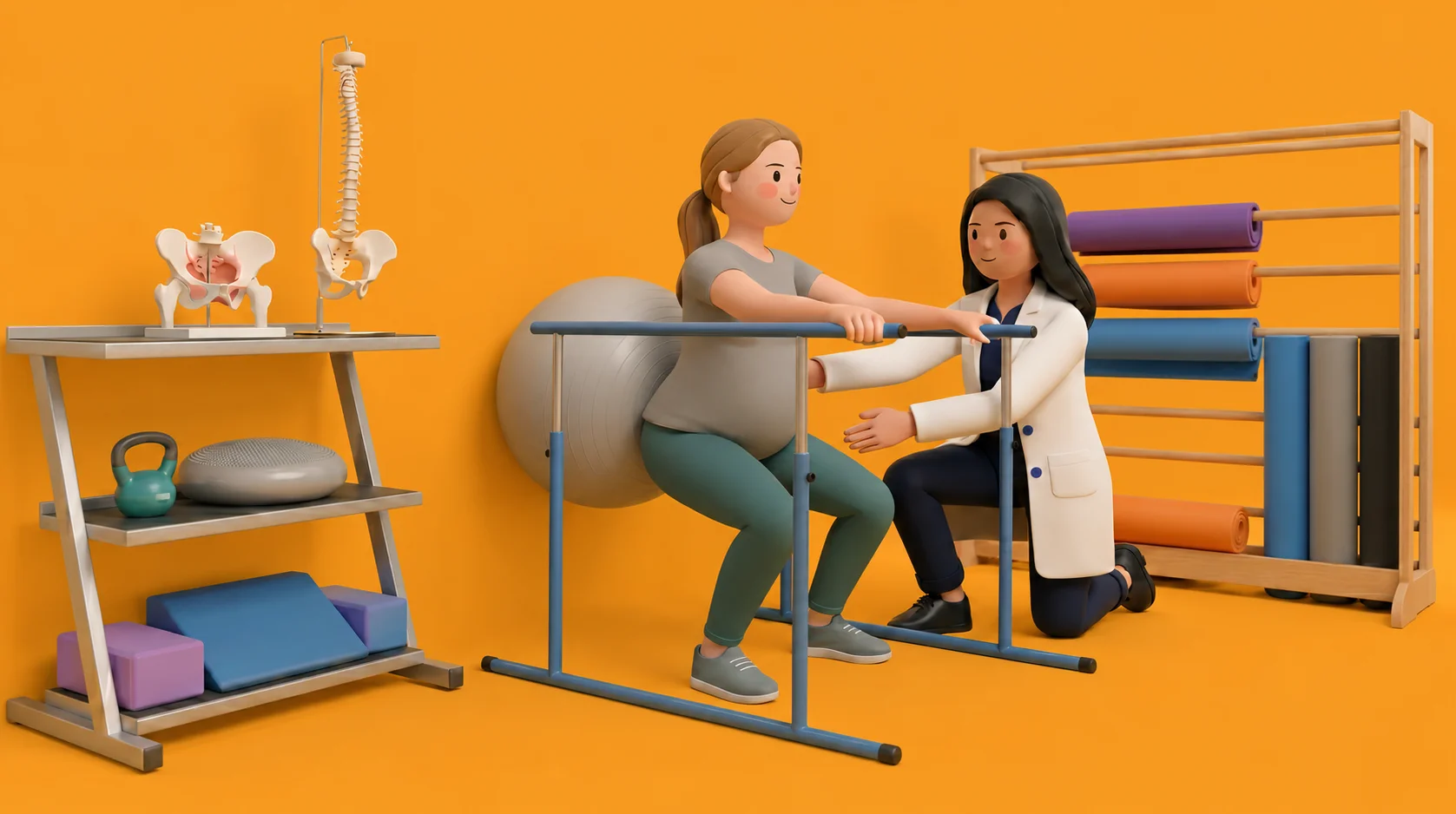
Women's Health Physiotherapy
Urinary Incontinence is assessed and treated under Women's Health physiotherapy (pregnancy & pelvic health). Prenatal, postnatal, and pelvic floor physiotherapy for every stage of a woman's life. Requires relevant specialty training and works alongside your medical team where needed. Any intimate or internal assessment is consent-based, private, and optional, and you can stop at any time. Internal assessment is not mandatory to book or begin care.
How physiotherapy helps
- Pelvic floor assessment and strengthening
- A bladder retraining programme
- Biofeedback where it helps
- Fluid and lifestyle advice
- Guidance on returning to exercise without leaking
Common signs
- Leaking with coughing, sneezing, or exercise
- Sudden strong urges to pass urine
- Passing urine very often
- Leaking on the way to the toilet
- Waking at night to pass urine
In-clinic vs home visit physiotherapy
| What to compare | In-clinic | Home visit |
|---|---|---|
| Typical fee | ₹300 to ₹1,500 a session. It depends on your city. | ₹400 to ₹2,000 a session. It depends on your city. |
| Exact fee | Set by each physiotherapist and shown on their profile | Set separately for home visits and shown on their profile |
| Best for | Equipment-based rehab and first assessments | Limited mobility, post-surgery, and elderly care |
| Equipment | Full clinic setup | Portable equipment the physiotherapist brings |
| Travel | You travel to the clinic | The physiotherapist comes to you |
| Booking | Pick a clinic slot on search | Filter by home visit on search |
Clinical rehabilitation framework
Evidence-informed clinical progression and starter exercise targets for urinary incontinence.
Clinical progression criteria & key observations
- Confirm the woman can correctly CONTRACT (not bear down/strain) the pelvic floor before prescribing a home programme: a significant proportion of women do it backwards on verbal instruction alone
- Stress and urge incontinence respond to different strategies (strength/timing vs bladder training): treating both the same way under-serves mixed presentations
Starter exercise targets & evidence-based dosage
When to seek urgent care
Physiotherapy is safe for most people. See a doctor urgently if you have any of these.
- Blood in the urine, or pain or burning with fever, needs medical review
- Being unable to pass urine needs urgent care
- New loss of bladder control with back pain or saddle numbness needs urgent medical review
- Any vaginal bleeding after menopause, which always needs a doctor
- New numbness around the groin or inner thighs, or new leg weakness, which needs urgent medical review
Seek urgent medical care first. Physiotherapy comes after, when it is safe.
Frequently asked questions
Can physiotherapy really stop urine leaking?
Can I get physiotherapy for urinary incontinence at home?
How much does physiotherapy for urinary incontinence cost in India?
Related conditions & care


Clinical guides & articles for urinary incontinence
Evidence-informed articles, recovery timelines, and home care advice from our clinical library.
How to find and book a verified female physiotherapist for home visits in India
Cultural privacy, personal dignity, and specialized women's health needs make booking a female physiotherapist the preferred choice for many Indian families. Learn how to verify credentials and arrange home care.
Pelvic Floor Rehabilitation After Hysterectomy: Preventing Vault Prolapse and Incontinence in India
Removing the uterus compromises pelvic suspension ligaments, leaving the vaginal vault vulnerable to prolapse. Discover clinical pelvic floor rehabilitation protocols.
Urinary Incontinence in Women: Stopping Bladder Leaks During Coughing, Sneezing, and Running
Involuntary bladder leaks while laughing, sneezing, or exercising are common but never normal. Discover how structured pelvic floor physiotherapy restores continence.
Bowel Incontinence and Rectal Support: Retraining Anal Sphincters and Defecation Mechanics
Accidental bowel leakage or gas incontinence after childbirth or surgery is treatable. Learn how specialized pelvic health physiotherapy restores sphincter control.
Find physiotherapists for urinary incontinence by city
Verified physiotherapists treat urinary incontinence in these cities. Home visit and in-clinic options vary by physiotherapist.
Find a physiotherapist for urinary incontinence
Compare physiotherapists by fee, experience, and availability. Clinic visits and home visits across India.
This page is for general education and booking guidance. It does not diagnose your condition or replace medical care.
If your symptoms are severe, sudden, or getting worse, seek urgent medical care first. The same applies with fever, chest pain, breathlessness, fainting, new weakness, loss of bladder or bowel control, or unexplained bleeding.
Always consult a qualified physiotherapist or doctor about your condition.