
Physiotherapy for Lymphoedema

Quick answer
Physiotherapy for lymphoedema reduces and manages the swelling caused by lymph fluid build-up after cancer treatment, mainly through compression, graded exercise, and skin care, with manual lymphatic drainage as an adjunct where helpful.
- Specialist care can help reduce and control swelling
- Works alongside your oncology team
- Home visits suit ongoing management
- We check every physiotherapist’s registration details before their profile goes live
What is lymphoedema?
Lymphoedema is swelling caused by a build-up of lymph fluid, often after lymph nodes are removed or treated during cancer care. Specialist physiotherapy manages it with compression, graded exercise, and skin care, with manual lymphatic drainage as an adjunct where helpful, and teaches you to keep it under control day to day. Physiotherapy is adjusted around your oncology team's advice, blood counts, infection risk, and wounds.
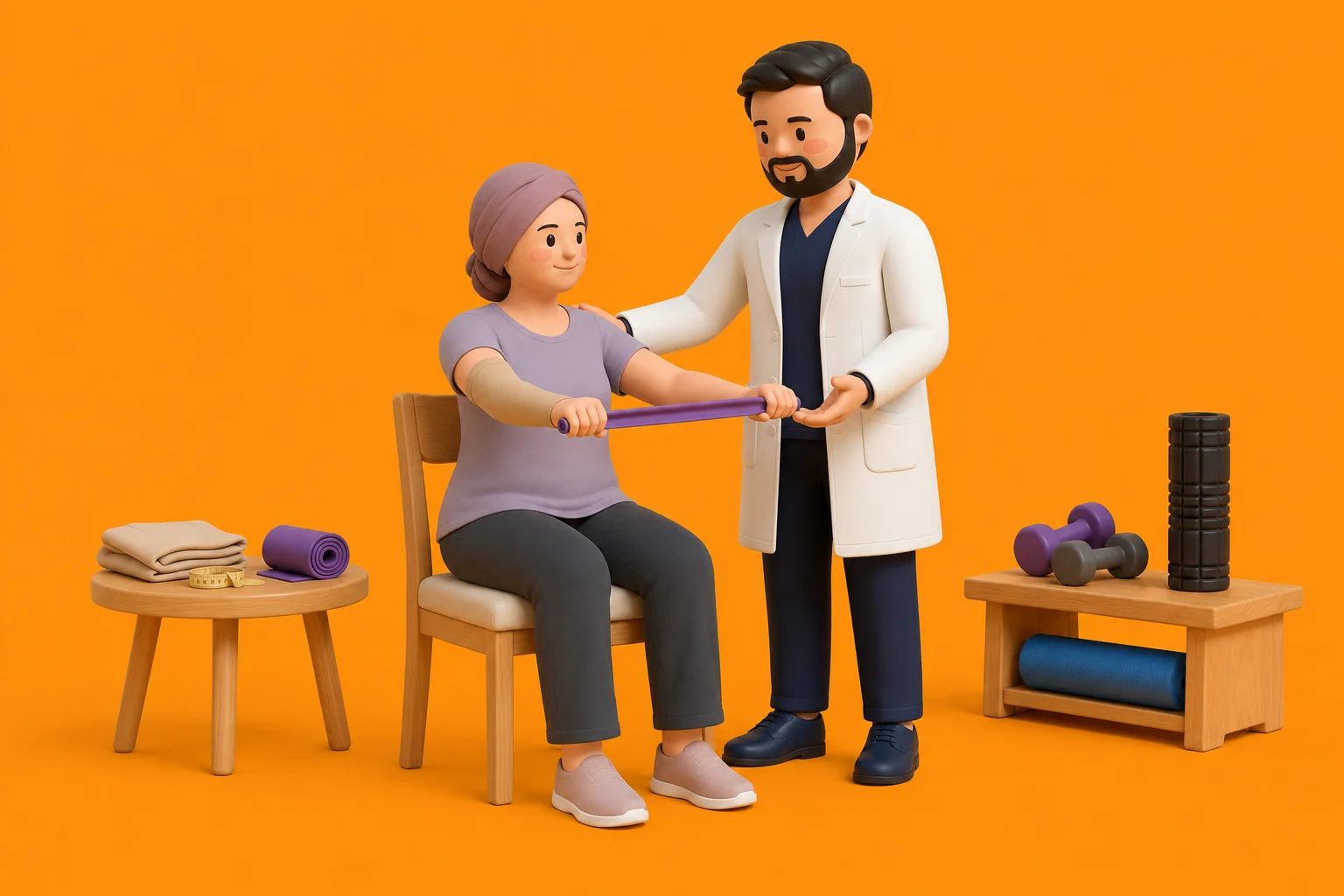
Oncology Rehab Physiotherapy
Lymphoedema is assessed and treated under Oncology Rehab physiotherapy (cancer recovery). Lymphoedema, fatigue, and rehabilitation during and after cancer treatment. Requires relevant specialty training and works alongside your medical team where needed.
How physiotherapy helps

- Compression bandaging and garment fitting
- Graded exercise to support lymph flow and muscle activity
- Skin care to reduce the risk of cracks, wounds, and infections such as cellulitis
- Manual lymphatic drainage (MLD), a gentle technique used as an adjunct to compression and exercise
- A self-management plan
Common signs
- Swelling in an arm, leg, or other area
- A feeling of heaviness or tightness
- Clothing or jewellery feeling tight
- Reduced movement in the area
- Aching in the swollen part
In-clinic vs home visit physiotherapy
| What to compare | In-clinic | Home visit |
|---|---|---|
| Typical fee | ₹300 to ₹1,500 a session. It depends on your city. | ₹400 to ₹2,000 a session. It depends on your city. |
| Exact fee | Set by each physiotherapist and shown on their profile | Set separately for home visits and shown on their profile |
| Best for | Equipment-based rehab and first assessments | Limited mobility, post-surgery, and elderly care |
| Equipment | Full clinic setup | Portable equipment the physiotherapist brings |
| Travel | You travel to the clinic | The physiotherapist comes to you |
| Booking | Pick a clinic slot on search | Filter by home visit on search |
Clinical rehabilitation framework
Evidence-informed clinical progression and starter exercise targets for lymphoedema.
Clinical progression criteria & key observations
- Progressive resistance training was historically restricted out of fear of triggering/worsening lymphoedema; current evidence (e.g. the PAL trial) supports GRADED resistance training as safe and beneficial; update older assumptions
- Any sign of cellulitis in a lymphoedema limb is time-critical: it can progress to sepsis faster than in a normal limb, so escalate rather than "watch and wait"
Starter exercise targets & evidence-based dosage
When to seek urgent care
Physiotherapy is safe for most people. See a doctor urgently if you have any of these.
- Sudden new swelling, redness, heat, fever, severe pain, or shortness of breath needs urgent medical review before any massage, compression, or exercise progression
- A sudden increase in swelling with redness, heat, or fever can signal an infection (cellulitis) and needs prompt medical care
- Any rapidly spreading redness needs urgent care
- Sudden new swelling in one limb, especially with calf pain, which needs review to rule out a blood clot (DVT)
Seek urgent medical care first. Physiotherapy comes after, when it is safe.
Frequently asked questions
Can lymphoedema be cured?
Can I get physiotherapy for lymphoedema at home?
How much does physiotherapy for lymphoedema cost in India?
Related conditions & care


Clinical guides & articles for lymphoedema
Evidence-informed articles, recovery timelines, and home care advice from our clinical library.
Find physiotherapists for lymphoedema by city
Verified physiotherapists treat lymphoedema in these cities. Home visit and in-clinic options vary by physiotherapist.
Find a physiotherapist for lymphoedema
Compare physiotherapists by fee, experience, and availability. Clinic visits and home visits across India.
This page is for general education and booking guidance. It does not diagnose your condition or replace medical care.
If your symptoms are severe, sudden, or getting worse, seek urgent medical care first. The same applies with fever, chest pain, breathlessness, fainting, new weakness, loss of bladder or bowel control, or unexplained bleeding.
Always consult a qualified physiotherapist or doctor about your condition.