
Physiotherapy for Vestibular Neuritis

Quick answer
Physiotherapy for vestibular neuritis speeds recovery from the dizziness and imbalance left after the inner-ear balance nerve is inflamed, using vestibular rehabilitation exercises that retrain your balance system.
- Vestibular rehabilitation helps the balance system recover
- Book directly, we do not ask for a referral. Red-flag symptoms need medical care first
- Clinic and home visits available across India
- We check every physiotherapist’s registration details before their profile goes live
What is vestibular neuritis?
Vestibular neuritis is inflammation of the balance nerve in the inner ear. It usually starts with sudden, severe vertigo, which settles over days, but can leave lingering unsteadiness and dizziness with movement. A first episode needs medical or ENT review to confirm the diagnosis. Physiotherapy then uses vestibular rehabilitation to help the brain adapt and recover balance.
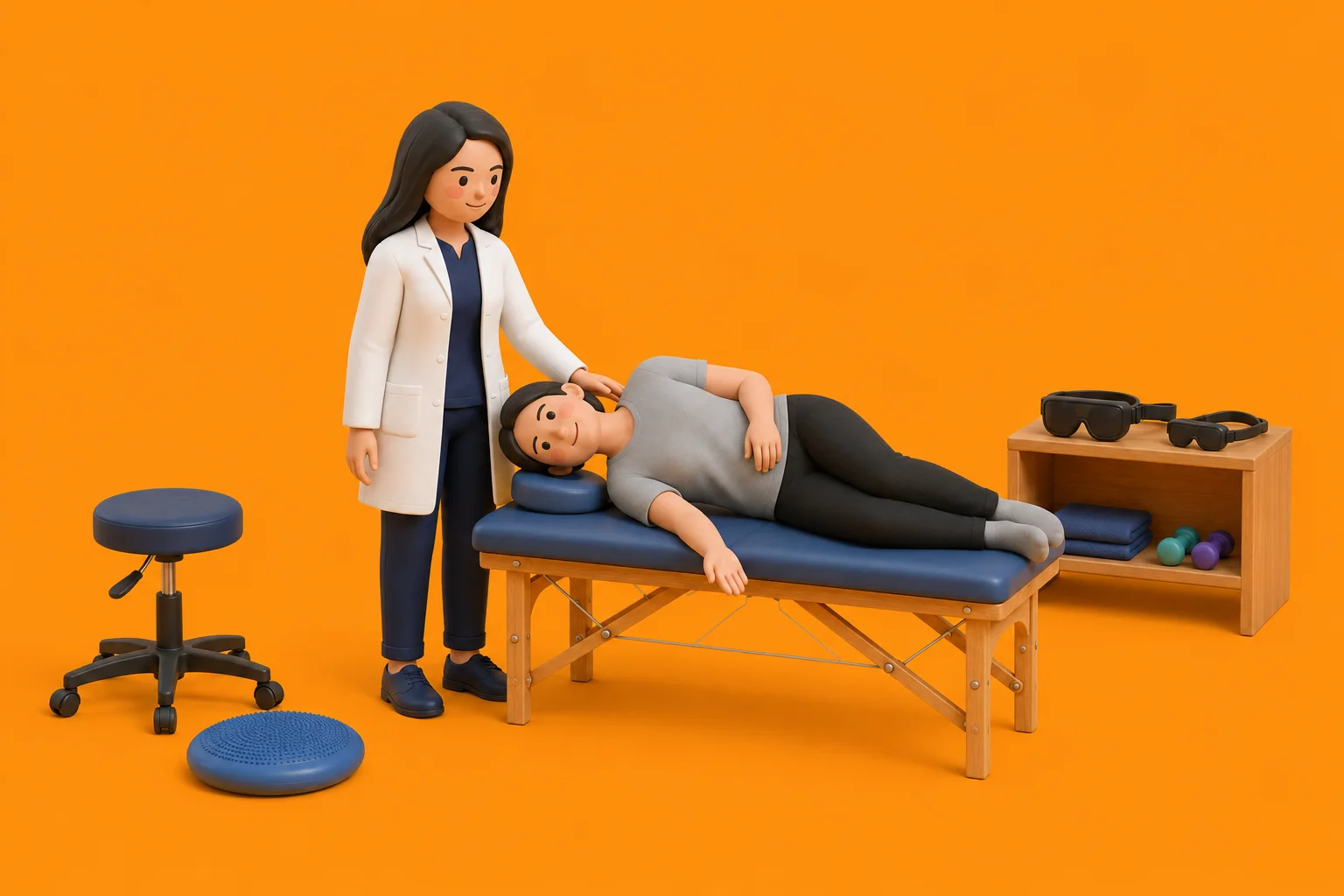
Vestibular Physiotherapy
Vestibular Neuritis is assessed and treated under Vestibular physiotherapy (dizziness & balance). BPPV, vertigo, and balance problems from inner ear conditions. Requires relevant specialty training and works alongside your medical team where needed.
How physiotherapy helps
- A vestibular and balance assessment
- Vestibular rehabilitation exercises (VRT)
- Gaze stabilisation training
- Balance retraining
- A graded return to normal activity
Common signs
- Severe spinning vertigo at the start
- Ongoing unsteadiness
- Dizziness with head movement
- Nausea
- Difficulty focusing while moving
In-clinic vs home visit physiotherapy
| What to compare | In-clinic | Home visit |
|---|---|---|
| Indicative fee band | BookPhysio guide: ₹300 to ₹1,500 a session. This is not a measured average; check the physiotherapist's current profile for the exact fee. | BookPhysio guide: ₹400 to ₹2,000 a session. This is not a measured average; check the physiotherapist's current profile for the exact home-visit fee. |
| Exact fee | Set by each physiotherapist and shown on their profile when an in-clinic fee is listed | Set separately for home visits and shown on their profile when a home-visit fee is listed |
| Decision factors | A clinic setting may offer equipment or facilities that are useful for some sessions. Ask the physiotherapist what is available and appropriate for your appointment. | A home visit can reduce travel when mobility, transport, or convenience matters. Confirm the service area and whether a home visit is appropriate with the physiotherapist. |
| Equipment availability | Varies by clinic and physiotherapist. Ask what equipment or facilities are available. | Varies by physiotherapist and appointment. Ask what they bring for a home visit. |
| Travel | You travel to the clinic | The physiotherapist comes to you |
| Finding an option | Choose an in-clinic option only when the physiotherapist lists it on their profile | Use the home-visit filter and confirm the physiotherapist covers your area |
Clinical rehabilitation framework
Evidence-informed clinical progression and starter exercise targets for vestibular neuritis.
Clinical progression criteria & key observations
- Episode length points to the cause: seconds and positional suggests BPPV; hours suggests Meniere disease; days of constant vertigo suggests neuritis
- Duration of nystagmus on Dix-Hallpike separates canalithiasis (transient) from cupulolithiasis (persistent)
- A normal head-impulse test with acute continuous vertigo raises concern for a central cause
Starter exercise targets & evidence-based dosage
When to seek urgent care
Physiotherapy is safe for most people. See a doctor urgently if you have any of these.
- A first episode of severe vertigo, new hearing loss, double vision, weakness, slurred speech, fainting, or severe headache needs medical or ENT review
- Vertigo with severe headache, weakness, slurred speech, or double vision needs urgent care
- New hearing loss needs medical assessment
Seek urgent medical care first. Physiotherapy comes after, when it is safe.
Frequently asked questions
How long does vestibular neuritis take to settle?
Can I get physiotherapy for vestibular neuritis at home?
How much does physiotherapy for vestibular neuritis cost in India?
Related conditions & care


Clinical guides & articles for vestibular neuritis
Evidence-informed articles, recovery timelines, and home care advice from our clinical library.
Vestibular Neuritis and Labyrinthitis: Gaze Stabilization, Balance Retraining, and Dizziness Relief
Acute vestibular neuritis causes terrifying room-spinning vertigo that leaves lingering unsteadiness. Learn why prolonged vertigo medications delay recovery and how Vestibular Rehabilitation Therapy (VRT) restores gaze stability.
BPPV and Vertigo: How the Epley Manoeuvre and Physiotherapy Resolve Dizziness
Benign Paroxysmal Positional Vertigo (BPPV) causes sudden room-spinning dizziness. Learn how a trained physiotherapist uses the Epley manoeuvre to reposition loose canalith crystals in 1 to 3 sessions.
Vestibular Rehabilitation: Gaze Stability, VOR Adaptation x1/x2 and Habituation Drills
Chronic dizziness and oscillopsia result from impaired vestibulo-ocular reflexes. Learn VOR x1 and x2 gaze stability exercises, retinal slip adaptation, and habituation protocols.
BPPV Posterior Canal: Dix-Hallpike Test, Geotropic Nystagmus & Canalith Repositioning (Epley) Maneuver
Sudden violent spinning when rolling over in bed is most frequently posterior canal BPPV. Discover how vestibular physiotherapists diagnose and cure vertigo with the Epley maneuver.
Search for a physiotherapist
Keep vestibular neuritis as your search context, then review each current profile for specialties, listed conditions, visit types, fee and availability before you request an appointment.
This page is for general education and booking guidance. It does not diagnose your condition or replace medical care.
If your symptoms are severe, sudden, or getting worse, seek urgent medical care first. The same applies with fever, chest pain, breathlessness, fainting, new weakness, loss of bladder or bowel control, or unexplained bleeding.
Always consult a qualified physiotherapist or doctor about your condition.