
Physiotherapy for Balance Disorders

Quick answer
Physiotherapy for balance problems improves stability and confidence with targeted balance, strength, and walking exercises, lowering the risk of falls.
- Balance and strength training lowers fall risk
- Book directly, we do not ask for a referral. Red-flag symptoms need medical care first
- Clinic and home visits available across India
- We check every physiotherapist’s registration details before their profile goes live
What is balance disorders?
Balance can decline with age or because of inner-ear, neurological, or muscle problems, making everyday movement feel unsteady. Physiotherapy assesses the cause and trains your balance, strength, and walking to make you steadier and more confident, which lowers the risk of falls.
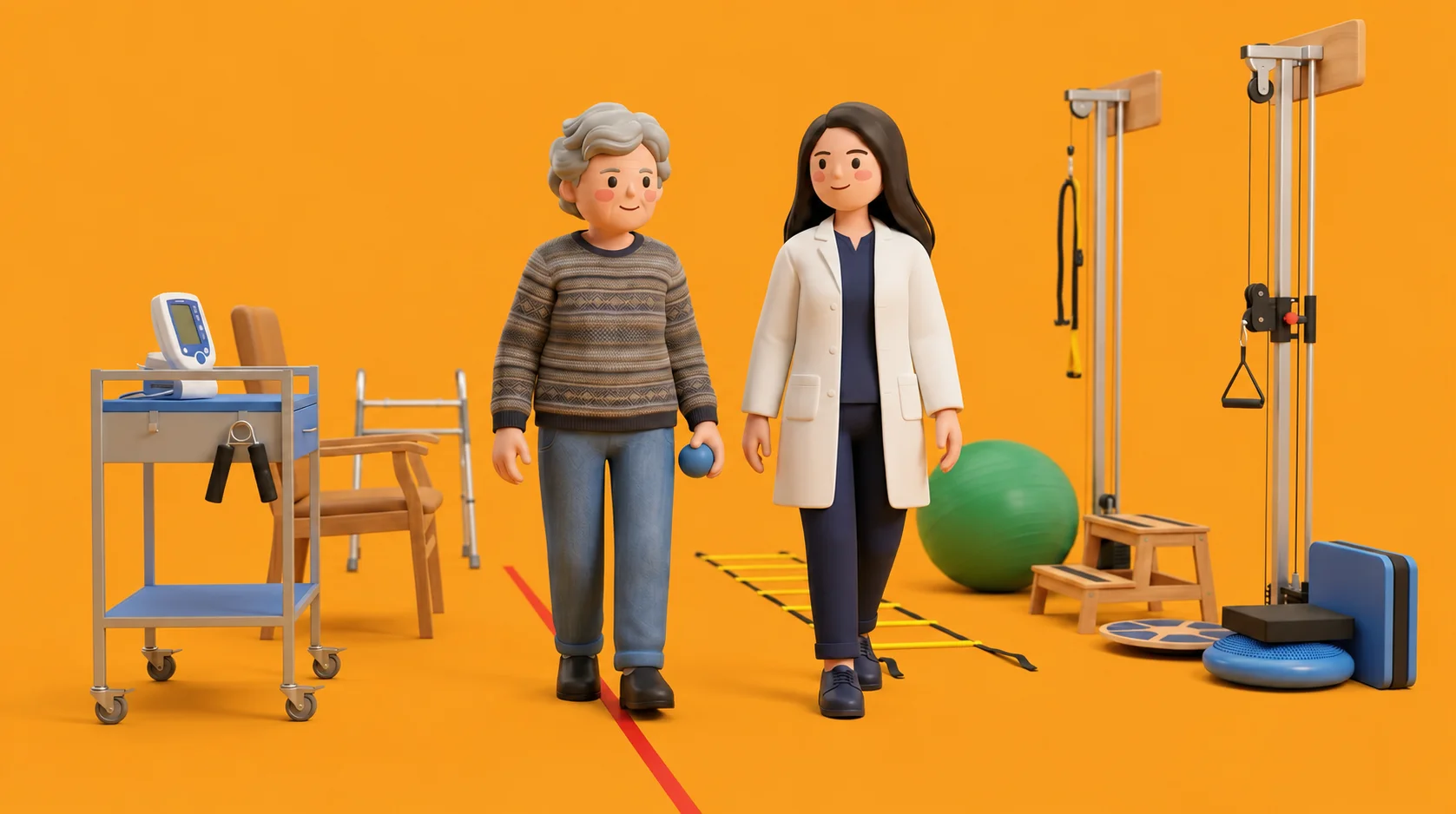
Geriatric Physiotherapy
Balance Disorders is assessed and treated under Geriatric physiotherapy (elderly care). Fall prevention, mobility preservation, and independence for older adults.
How physiotherapy helps

- A balance assessment to identify contributing factors and decide whether medical referral is needed
- Balance and strength training
- Walking and gait practice
- Vestibular exercises if the inner ear is involved
- Home safety and confidence advice
Common signs
- Feeling unsteady on your feet
- Near-falls or falls
- Dizziness
- Holding on to furniture to move around
- Fear of falling
In-clinic vs home visit physiotherapy
| What to compare | In-clinic | Home visit |
|---|---|---|
| Typical fee | ₹300 to ₹1,500 a session. It depends on your city. | ₹400 to ₹2,000 a session. It depends on your city. |
| Exact fee | Set by each physiotherapist and shown on their profile | Set separately for home visits and shown on their profile |
| Best for | Equipment-based rehab and first assessments | Limited mobility, post-surgery, and elderly care |
| Equipment | Full clinic setup | Portable equipment the physiotherapist brings |
| Travel | You travel to the clinic | The physiotherapist comes to you |
| Booking | Pick a clinic slot on search | Filter by home visit on search |
Clinical rehabilitation framework
Evidence-informed clinical progression and starter exercise targets for balance disorders.
Clinical progression criteria & key observations
- A Timed Up and Go longer than about 13.5 seconds is a commonly cited community falls-risk marker; use it to track change
- Exercise programmes need enough dose (around 3 hours weekly, balance-focused) to reduce falls; token frequencies underperform
- Always ask "can you get up from the floor?": teaching floor recovery reduces long-lie harm
Starter exercise targets & evidence-based dosage
When to seek urgent care
Physiotherapy is safe for most people. See a doctor urgently if you have any of these.
- A fall causing injury or a knock to the head, especially if you take blood-thinning medicine
- Sudden severe dizziness with weakness, slurred speech, or vision loss
- For these, seek urgent care
Seek urgent medical care first. Physiotherapy comes after, when it is safe.
Frequently asked questions
Can physiotherapy improve my balance?
Can I get physiotherapy for balance problems at home?
How much does physiotherapy for balance problems cost in India?
Related conditions & care


Clinical guides & articles for balance disorders
Evidence-informed articles, recovery timelines, and home care advice from our clinical library.
Fall prevention for older adults: what families can check at home
Fall prevention works best by looking for several modifiable risk factors rather than assuming one exercise or home change will solve the problem. Balance and strength, medicines, vision, blood pressure, footwear, foot problems, home hazards, and medical conditions can all be relevant.
Bell's palsy physiotherapy: recovery timeline, facial exercises, and treatment stages
Bell's palsy causes sudden weakness or paralysis on one side of the face. Learn the clinical recovery timeline, gentle facial retraining exercises using mirror feedback, and why aggressive electrical stimulation should be avoided.
Plantar fasciitis relief: physiotherapy exercises, morning heel pain, and footwear in India
Stabbing heel pain with your first morning steps is the classic sign of plantar fasciitis. Learn targeted tissue-loading exercises, calf stretches, and why walking barefoot on Indian marble and tile floors delays healing.
Vertigo and BPPV relief: how vestibular physiotherapy and the Epley manoeuvre work
Brief episodes of intense room-spinning dizziness triggered by turning in bed or looking upward are often caused by loose inner-ear crystals (BPPV). Learn how qualified physiotherapists diagnose and treat vertigo with repositioning manoeuvres.
Find physiotherapists for balance disorders by city
Verified physiotherapists treat balance disorders in these cities. Home visit and in-clinic options vary by physiotherapist.
Find a physiotherapist for balance disorders
Compare physiotherapists by fee, experience, and availability. Clinic visits and home visits across India.
This page is for general education and booking guidance. It does not diagnose your condition or replace medical care.
If your symptoms are severe, sudden, or getting worse, seek urgent medical care first. The same applies with fever, chest pain, breathlessness, fainting, new weakness, loss of bladder or bowel control, or unexplained bleeding.
Always consult a qualified physiotherapist or doctor about your condition.