
Physiotherapy at Home for Frailty and Fall Risk

Quick answer
Physiotherapy at home for frailty and fall risk builds strength, balance, and confidence in older adults, lowering the chance of falls right where they happen, at home.
- Strength and balance training is one of the well-supported ways to reduce fall risk
- Home visits assess your real environment
- Book directly, we do not ask for a referral. Red-flag symptoms need medical care first
- We check every physiotherapist’s registration details before their profile goes live
What is frailty and fall risk?
Frailty in older adults brings weakness, unsteadiness, and a higher risk of falls, and most falls happen at home. Community physiotherapy is ideal here: it builds strength and balance, assesses and reduces hazards in your actual home, and rebuilds the confidence to move safely. Home physiotherapy is not emergency care: seek medical help for a fall with injury, sudden weakness, chest pain, breathlessness, or confusion.
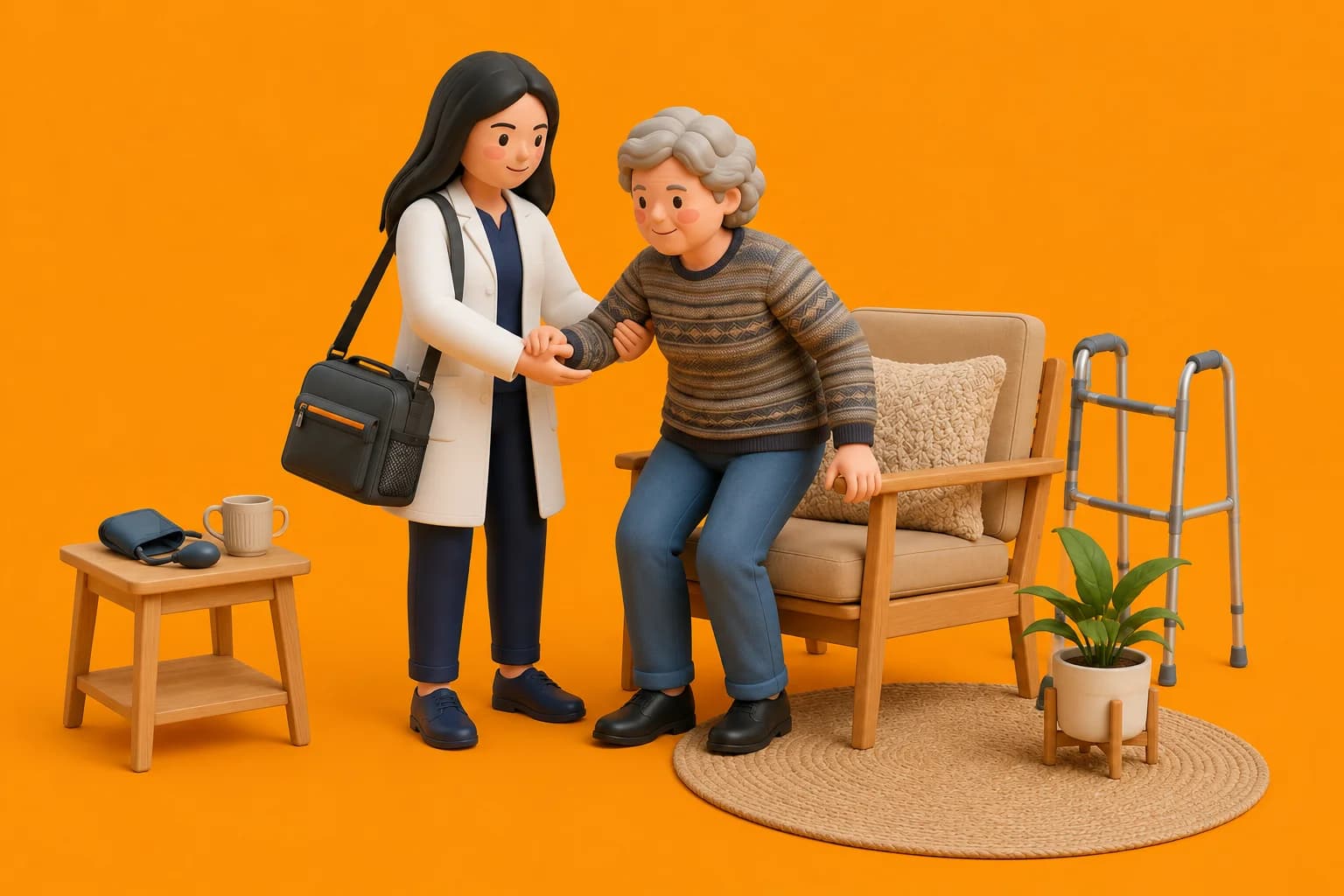
Community Physiotherapy
Frailty and Fall Risk (At Home) is assessed and treated under Community physiotherapy (home & outreach). At-home physiotherapy for people who cannot easily reach a clinic.
How physiotherapy helps

- Strength and balance training
- A home hazard assessment
- Walking-aid and gait advice
- Confidence building to move safely
- A tailored home programme and carer guidance
Common signs
- Unsteadiness
- Previous falls or near-falls
- Difficulty rising from a chair
- Weakness
- Fear of falling
In-clinic vs home visit physiotherapy
| What to compare | In-clinic | Home visit |
|---|---|---|
| Indicative fee band | BookPhysio guide: ₹300 to ₹1,500 a session. This is not a measured average; check the physiotherapist's current profile for the exact fee. | BookPhysio guide: ₹400 to ₹2,000 a session. This is not a measured average; check the physiotherapist's current profile for the exact home-visit fee. |
| Exact fee | Set by each physiotherapist and shown on their profile when an in-clinic fee is listed | Set separately for home visits and shown on their profile when a home-visit fee is listed |
| Decision factors | A clinic setting may offer equipment or facilities that are useful for some sessions. Ask the physiotherapist what is available and appropriate for your appointment. | A home visit can reduce travel when mobility, transport, or convenience matters. Confirm the service area and whether a home visit is appropriate with the physiotherapist. |
| Equipment availability | Varies by clinic and physiotherapist. Ask what equipment or facilities are available. | Varies by physiotherapist and appointment. Ask what they bring for a home visit. |
| Travel | You travel to the clinic | The physiotherapist comes to you |
| Finding an option | Choose an in-clinic option only when the physiotherapist lists it on their profile | Use the home-visit filter and confirm the physiotherapist covers your area |
Clinical rehabilitation framework
Evidence-informed clinical progression and starter exercise targets for frailty and fall risk.
Clinical progression criteria & key observations
- A Timed Up and Go longer than about 13.5 seconds is a commonly cited community falls-risk marker; use it to track change
- Exercise programmes need enough dose (around 3 hours weekly, balance-focused) to reduce falls; token frequencies underperform
- Always ask "can you get up from the floor?": teaching floor recovery reduces long-lie harm
Starter exercise targets & evidence-based dosage
When to seek urgent care
Physiotherapy is safe for most people. See a doctor urgently if you have any of these.
- A fall with injury, loss of consciousness, or a head knock, especially if you take blood-thinning medicine
- Sudden new weakness, dizziness, or confusion
- For these, seek medical care
Seek urgent medical care first. Physiotherapy comes after, when it is safe.
Frequently asked questions
Why is home physiotherapy good for fall prevention?
Can I get physiotherapy for frailty and fall risk at home?
How much does physiotherapy for frailty and fall risk cost in India?
Related conditions & care


Clinical guides & articles for frailty and fall risk
Evidence-informed articles, recovery timelines, and home care advice from our clinical library.
Bedbound Elderly Care in Indian Joint Families: Log Rolling, Bedsore Prevention, and Chest Physio
Prolonged bed rest leads to catastrophic bedsores and hypostatic pneumonia. Discover clinical log-rolling protocols, skin care, and chest physiotherapy.
Dementia and Alzheimer's Walking Routines: Mobility, Safety, and Agitation Relief in Indian Homes
Pacing and agitation in Alzheimer's elders can be channeled into therapeutic walking. Discover evidence-based sensory pacing routines and mobility physiotherapy.
Preventing Falls in Elderly Parents: Balance Drills, Bathroom Safety, and Walking Aids
Falls among elderly parents lead to devastating fractures and loss of independence. Discover proven balance exercises and practical Indian home safety modifications.
Sarcopenia and Age-Related Muscle Wasting in Indian Vegetarians: The Leucine Trigger and Resistance Physio
Indian vegetarian diets frequently lack essential amino acids, driving rapid sarcopenic muscle loss in seniors. Discover progressive resistance training protocols.
Search for a physiotherapist
Keep frailty and fall risk as your search context, then review each current profile for specialties, listed conditions, visit types, fee and availability before you request an appointment.
This page is for general education and booking guidance. It does not diagnose your condition or replace medical care.
If your symptoms are severe, sudden, or getting worse, seek urgent medical care first. The same applies with fever, chest pain, breathlessness, fainting, new weakness, loss of bladder or bowel control, or unexplained bleeding.
Always consult a qualified physiotherapist or doctor about your condition.