
Physiotherapy for Ménière's Disease

Quick answer
Physiotherapy supports people with Ménière's disease by improving balance and lowering fall risk between attacks, alongside the medical care that manages the condition itself.
- Supports balance between attacks, alongside medical care
- Book directly, we do not ask for a referral. Red-flag symptoms need medical care first
- Clinic and home visits available across India
- We check every physiotherapist’s registration details before their profile goes live
What is Ménière's disease?
Ménière's disease causes episodes of spinning vertigo along with hearing loss, ringing in the ear, and a feeling of fullness. The attacks and the condition itself are managed medically by an ENT specialist. Physiotherapy works alongside your ENT team to help with the unsteadiness and confidence between attacks, using balance and vestibular work to lower fall risk and keep you active.
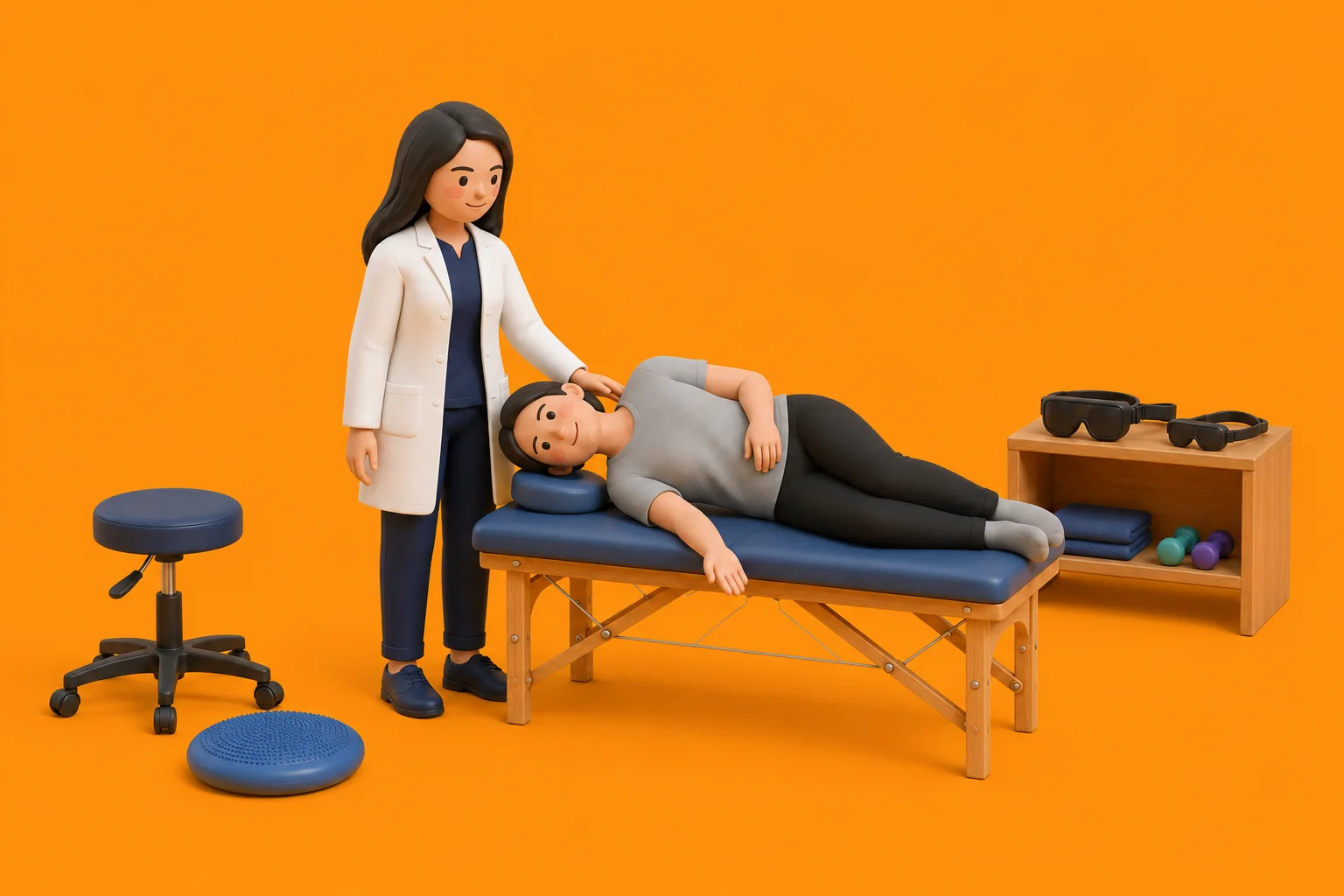
Vestibular Physiotherapy
Ménière's Disease is assessed and treated under Vestibular physiotherapy (dizziness & balance). BPPV, vertigo, and balance problems from inner ear conditions. Requires relevant specialty training and works alongside your medical team where needed.
How physiotherapy helps
- A balance assessment
- Vestibular rehabilitation between attacks
- Balance and fall-prevention training
- Confidence building for daily movement
- Advice on managing dizziness day to day
Common signs
- Episodes of spinning vertigo
- Hearing loss, often fluctuating
- Ringing in the ear (tinnitus)
- A feeling of fullness in the ear
- Unsteadiness between episodes
In-clinic vs home visit physiotherapy
| What to compare | In-clinic | Home visit |
|---|---|---|
| Typical fee | ₹300 to ₹1,500 a session. It depends on your city. | ₹400 to ₹2,000 a session. It depends on your city. |
| Exact fee | Set by each physiotherapist and shown on their profile | Set separately for home visits and shown on their profile |
| Best for | Equipment-based rehab and first assessments | Limited mobility, post-surgery, and elderly care |
| Equipment | Full clinic setup | Portable equipment the physiotherapist brings |
| Travel | You travel to the clinic | The physiotherapist comes to you |
| Booking | Pick a clinic slot on search | Filter by home visit on search |
Clinical rehabilitation framework
Evidence-informed clinical progression and starter exercise targets for Ménière's disease.
Clinical progression criteria & key observations
- Episode length points to the cause: seconds and positional suggests BPPV; hours suggests Meniere disease; days of constant vertigo suggests neuritis
- Duration of nystagmus on Dix-Hallpike separates canalithiasis (transient) from cupulolithiasis (persistent)
- A normal head-impulse test with acute continuous vertigo raises concern for a central cause
Starter exercise targets & evidence-based dosage
When to seek urgent care
Physiotherapy is safe for most people. See a doctor urgently if you have any of these.
- Sudden hearing loss, or new one-sided deafness, which needs same-day medical assessment
- A first-ever severe vertigo attack, or new neurological symptoms
- For these, seek medical review
Seek urgent medical care first. Physiotherapy comes after, when it is safe.
Frequently asked questions
Can physiotherapy stop Ménière's attacks?
Can I get physiotherapy for ménière's disease at home?
How much does physiotherapy for ménière's disease cost in India?
Related conditions & care


Clinical guides & articles for Ménière's disease
Evidence-informed articles, recovery timelines, and home care advice from our clinical library.
Find physiotherapists for Ménière's disease by city
Verified physiotherapists treat Ménière's disease in these cities. Home visit and in-clinic options vary by physiotherapist.
Find a physiotherapist for Ménière's disease
Compare physiotherapists by fee, experience, and availability. Clinic visits and home visits across India.
This page is for general education and booking guidance. It does not diagnose your condition or replace medical care.
If your symptoms are severe, sudden, or getting worse, seek urgent medical care first. The same applies with fever, chest pain, breathlessness, fainting, new weakness, loss of bladder or bowel control, or unexplained bleeding.
Always consult a qualified physiotherapist or doctor about your condition.