
Physiotherapy for Deconditioning After Cancer Treatment

Quick answer
Physiotherapy for deconditioning after cancer treatment rebuilds the strength, stamina, and confidence lost during treatment, with a safe, graded exercise plan that helps you return to daily life. It works alongside your oncology team.
- Graded exercise rebuilds strength and stamina
- Works alongside your oncology team
- Home visits suit early recovery
- We check every physiotherapist’s registration details before their profile goes live
What is deconditioning after cancer treatment?
Cancer treatment and the reduced activity that comes with it often leave people weak and lacking stamina. Physiotherapy rebuilds strength, fitness, and confidence with a safe, graded plan, paced within your treatment tolerance, so you can return to daily life, alongside your oncology team.
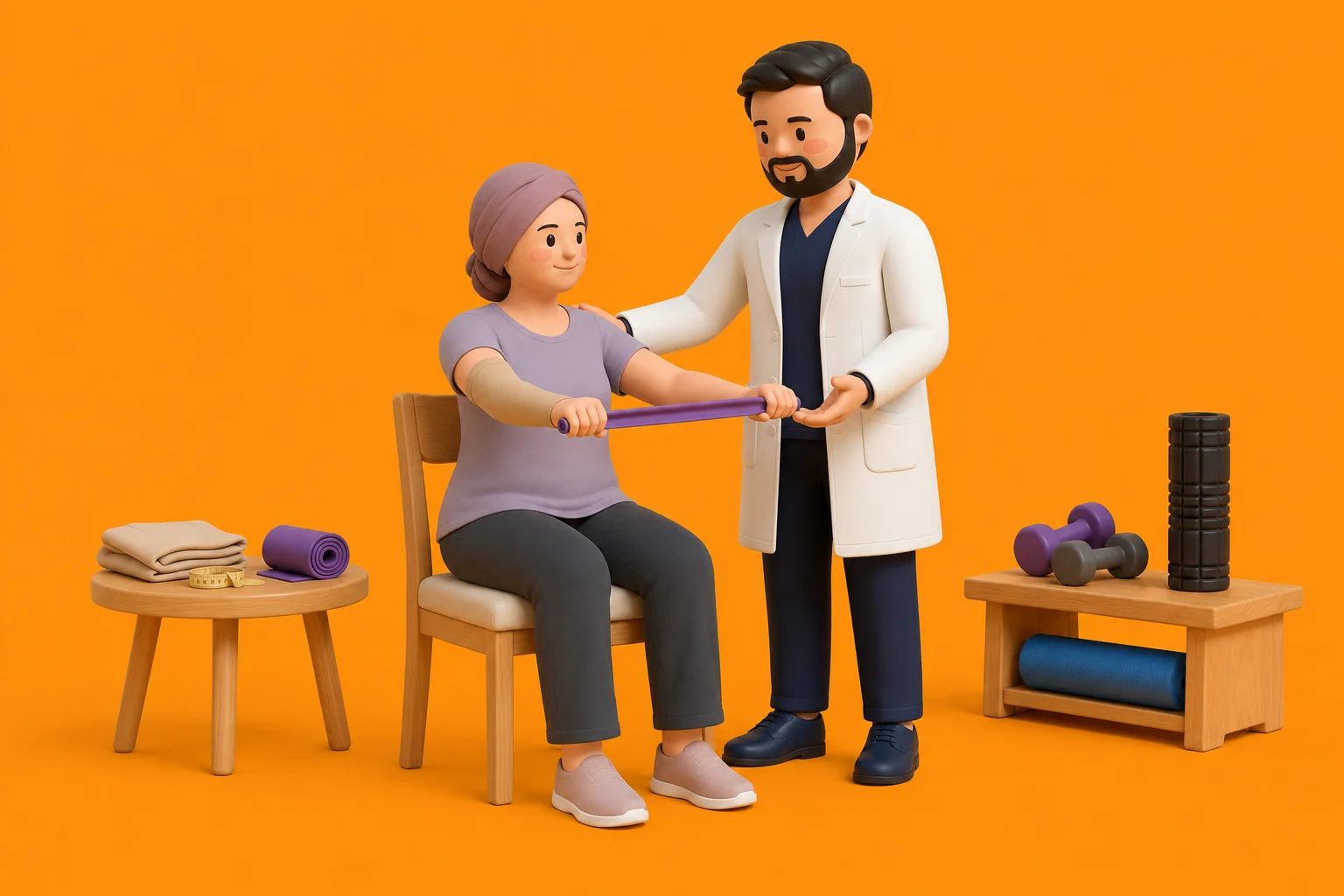
Oncology Rehab Physiotherapy
Deconditioning After Cancer Treatment is assessed and treated under Oncology Rehab physiotherapy (cancer recovery). Lymphoedema, fatigue, and rehabilitation during and after cancer treatment. Requires relevant specialty training and works alongside your medical team where needed.
How physiotherapy helps
- Graded strengthening
- Stamina and walking work
- Balance and fall prevention
- Pacing within treatment tolerance
- A safe return-to-activity plan
Common signs
- General weakness
- Tiring easily
- Reduced stamina
- Difficulty with stairs or daily tasks
- Loss of fitness
In-clinic vs home visit physiotherapy
| What to compare | In-clinic | Home visit |
|---|---|---|
| Typical fee | ₹300 to ₹1,500 a session. It depends on your city. | ₹400 to ₹2,000 a session. It depends on your city. |
| Exact fee | Set by each physiotherapist and shown on their profile | Set separately for home visits and shown on their profile |
| Best for | Equipment-based rehab and first assessments | Limited mobility, post-surgery, and elderly care |
| Equipment | Full clinic setup | Portable equipment the physiotherapist brings |
| Travel | You travel to the clinic | The physiotherapist comes to you |
| Booking | Pick a clinic slot on search | Filter by home visit on search |
Clinical rehabilitation framework
Evidence-informed clinical progression and starter exercise targets for deconditioning after cancer treatment.
Clinical progression criteria & key observations
- Cancer-related fatigue exercise guidance is now standard across major oncology bodies: "exercise is medicine" applies directly here, working WITH the oncology team's blood-count and treatment-day guidance
- Always check for bone metastases before prescribing loaded or impact exercise to a specific region: this single check changes the entire plan
Starter exercise targets & evidence-based dosage
When to seek urgent care
Physiotherapy is safe for most people. See a doctor urgently if you have any of these.
- Chest pain, severe breathlessness, or fainting
- Fever or new bone pain
- A new severe symptom, which needs your oncology team
Seek urgent medical care first. Physiotherapy comes after, when it is safe.
Frequently asked questions
How do I rebuild strength after cancer treatment?
Can I get physiotherapy for deconditioning after cancer treatment at home?
How much does physiotherapy for deconditioning after cancer treatment cost in India?
Related conditions & care


Find physiotherapists for deconditioning after cancer treatment by city
Verified physiotherapists treat deconditioning after cancer treatment in these cities. Home visit and in-clinic options vary by physiotherapist.
Find a physiotherapist for deconditioning after cancer treatment
Compare physiotherapists by fee, experience, and availability. Clinic visits and home visits across India.
This page is for general education and booking guidance. It does not diagnose your condition or replace medical care.
If your symptoms are severe, sudden, or getting worse, seek urgent medical care first. The same applies with fever, chest pain, breathlessness, fainting, new weakness, loss of bladder or bowel control, or unexplained bleeding.
Always consult a qualified physiotherapist or doctor about your condition.