
Home visit physiotherapy checklist: how to prepare your space and information
In short
For a home physiotherapy visit, make access easy, clear a practical area for assessment, wear comfortable clothing, keep relevant health records and medicines information ready, and tell the physiotherapist about mobility or access issues. A family member can be present if the patient wants or needs support.
In this guide (6 sections)
Receiving physiotherapy at home offers tremendous comfort, dignity, and convenience, particularly for individuals recovering from major surgery, managing severe acute pain, or navigating frailty. However, because a home is not inherently built as a clinical rehabilitation studio, preparation on the part of the patient and family dramatically influences session efficiency, safety, and therapeutic outcomes. A chaotic environment with barking pets, ringing doorbells, and cramped furniture impedes gait re-education and active exercise.
By following a systematic preparation checklist covering physical space, patient clothing, clinical paperwork, and caregiver involvement, you enable your visiting physiotherapist to devote 100 percent of their session time to manual treatment and therapeutic exercise rather than clearing clutter or searching for discharge papers.
Why Environmental Preparation Transforms Clinical Outcomes
When a visiting physiotherapist enters your home, their time is strictly clinical: they are there to evaluate joint kinematics, facilitate neuromuscular activation, mobilize stiff scar tissue, and progress gait stability. If the first 20 minutes of an appointment are consumed by hunting for lost prescription papers, finding a safe chair, moving heavy tea tables, or dealing with curious pets, the actual therapeutic time is severely curtailed.
Furthermore, inadequate physical preparation introduces safety hazards. Stepping onto loose throw rugs or exercising on a soft, sagging spring mattress can compromise postural stability and increase joint shearing forces during early post-operative loading.
| Preparation Domain | Key Actions to Complete Before Clinician Arrival | Common Indian Household Oversights to Avoid |
|---|---|---|
| Physical Exercise Space | Clear a 6x6 foot open area; remove loose floor mats, footstools, and low cables; ensure firm, supportive bed or diwan | Leaving slippery bathroom doormats near bed; running loud ceiling fans that blow away paperwork |
| Patient Clothing and Hygiene | Wear loose cotton track pants, t-shirt, or shorts allowing full knee/shoulder exposure; keep supportive indoor walking shoes ready | Wearing tight jeans, stiff churidars, or heavy sarees that restrict joint mobility and prevent palpatory examination |
| Clinical Documentation Readiness | Gather latest hospital discharge summary, surgeon precautions, medication chart, X-ray films, and recent lab reports | Searching through buried almirahs or multiple smartphone photo albums while clinician wait time elapses |
| Household Distraction Control | Confine domestic pets to another room; silence personal phones; schedule domestic staff sweeping outside visit hours | Allowing relatives to conduct social conversations in the exercise space during active neuro-balance training |
| Hydration and Nutrition Timing | Complete heavy meals 60 to 90 minutes before; have a small water bottle and light diabetic snack readily available | Starting exercises immediately after a heavy thali lunch, causing gastrointestinal reflux and lethargy |
Preparing the Physical Environment: Beds, Seating, and Flooring
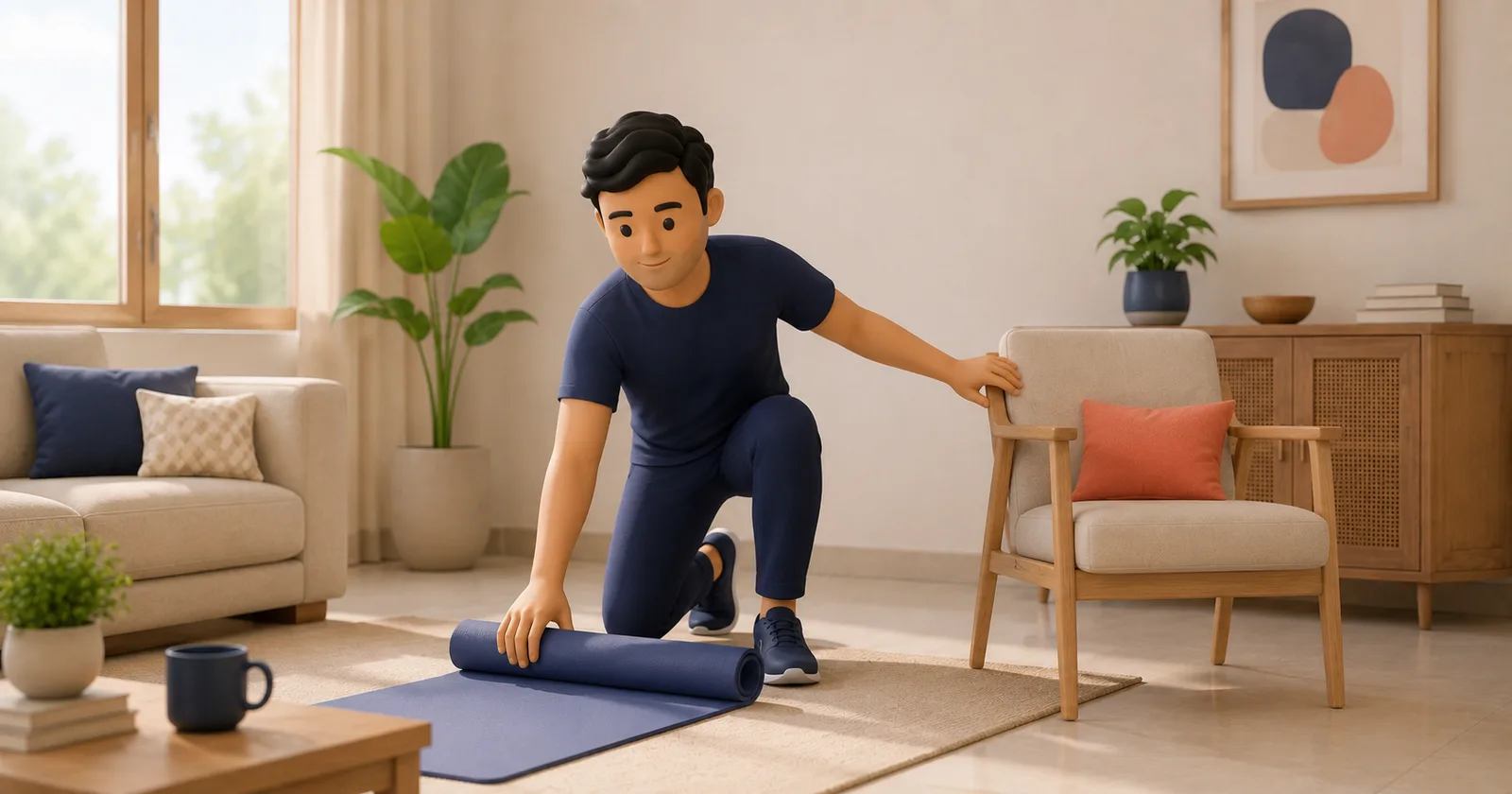
The bed or treatment surface is central to home rehabilitation. While hospital examination plinths are firm and height-adjustable, domestic beds often feature soft foam or spring mattresses that sag under body weight. For bedbound or post-arthroplasty patients, a firm mattress or wooden diwan provides essential pelvic stability for bridging and straight-leg raises. If the patient must exercise on the floor, keep a sanitized, thick yoga mat ready rather than thin cotton bedsheets that bunch up during bridging.
Ensure room lighting is bright and glare-free. Indian apartment corridors and bedrooms frequently feature dim ambient bulbs that obscure subtle gait deviations and increase fall risk during dynamic balance exercises. Turn on all ceiling lights before the clinician arrives.
Timing Meals, Hydration, and Medication Around the Session
Proper physiological timing prevents exercise intolerance. Heavy meals (such as full thali lunches or oily parathas) should be consumed at least 60 to 90 minutes before the scheduled visit to avoid gastrointestinal reflux and postprandial lethargy. A light snack (a banana or toast) 30 minutes prior is ideal for patients with diabetes to prevent exercise-induced hypoglycemia.
Similarly, if prescribed analgesic medication for post-operative pain or acute radiculopathy, time oral doses roughly 30 to 45 minutes before therapy begins. This creates an optimal pain-relief therapeutic window, allowing the patient to tolerate passive joint mobilisation without guarding.
The Vital Role of the Primary Family Caregiver During Visits
In Indian joint families, multiple relatives frequently wish to participate in care. However, having too many voices in the room creates confusion for the patient. Designate one primary caregiver (spouse, adult child, or trained attendant) to accompany the physiotherapist throughout the appointment. This designated individual learns the exact hands-on placement for assisting bed transfers, understands home exercise dosage, and takes notes on fall precautions to enforce between professional visits.
Ensure appropriate room ventilation and footwear accessibility. If gait re-training is scheduled, locate the patient supportive walking shoes (with velcro or laced closure and rubber non-slip soles) before the clinician arrives. Exercising in loose domestic slippers (chappals) or floppy sandals impairs ankle stability and dramatically elevates tripping risk on indoor surfaces.
Multi-Generational Dynamics: Managing Household Distractions and Children
Indian homes are vibrant, lively hubs often housing multiple generations under one roof. While family warmth is comforting, active children running through the room, loud television serials, or pressure cookers whistling in nearby kitchens disrupt the intense cognitive focus required for neurological gait retraining and motor learning. Designate a quiet bedroom or partitioned space during the 45-minute appointment, ensuring background noise is minimized and the patient can hear all proprioceptive cues from the clinician.
Post-Session Rest, Hydration, and Recovery Setup
Proper preparation extends to post-treatment recovery. Mobilizing stiff joints and activating dormant stabilizing muscles consumes considerable physiological energy. Keep a clean water glass ready beside the bed for post-session rehydration. If the physiotherapist recommends localized cryotherapy (ice pack application) or moist heat after manual mobilization, prepare a wrapped gel pack in the freezer or warm water bag beforehand so it can be applied immediately following the appointment.
What kind of chair is best for home physiotherapy exercises?
A sturdy, armless wooden or metal dining chair with a firm, flat seat (approximately 17 to 19 inches high) is ideal. Avoid low, soft couches, revolving office chairs on wheels, or plastic chairs that flex under weight during sit-to-stand training.
Should the patient exercise barefoot or wear shoes at home?
This depends on clinical indications. Foot and ankle strengthening or balance drills on textured mats may be performed barefoot. However, for post-TKR, stroke, or elderly gait training on slick tiled or marble floors, closed-toe supportive sports shoes with non-skid rubber soles are strongly recommended.
Can the physiotherapist use our ceiling fan or air conditioner during the session?
Maintain a comfortable room temperature (around 24 to 26 degrees Celsius). Avoid intense ceiling fans blowing directly onto sweaty muscles during deep tissue manual release, as this can trigger muscle shivering and reflex guarding.
What should we do if our building does not have an elevator and the patient lives on the third floor?
Inform your physiotherapist in advance. While the clinician will climb stairs to reach your flat, knowing the floor level is critical for planning the patient rehabilitation timeline for stair climbing and eventual outdoor community mobility.
How should session fees be settled at home?
On BookPhysio.in, fees are paid directly to the practitioner at the end of each session without platform cuts. Have UPI payment apps ready or keep exact cash available to avoid post-session delays.
- Chartered Society of Physiotherapy (CSP): Practical guide to preparing for a home visit: https://www.csp.org.uk
- National Institute on Aging (NIA): Exercise and physical activity safety checklist for older adults: https://www.nia.nih.gov
- Indian Association of Physiotherapists (IAP): Patient guidelines for domiciliary therapy sessions: https://physiotherapyindia.org
- Journal of Geriatric Physiotherapy: Environmental safety optimization in home-based rehabilitation: https://journals.lww.com/jgpt
BookPhysio.in Editorial Team
The BookPhysio.in editorial team writes and maintains this content, checking it against reliable clinical sources. Content follows our medical review policy: general information only, and no page claims a clinical review until a named registered physiotherapist has signed it off.
Read our medical review policy