
Achondroplasia: Cervicomedullary Decompression Precautions and Musculoskeletal Milestones
In short
Physiotherapy for infants with achondroplasia requires strict handling precautions to protect the narrow foramen magnum and prevent persistent thoracolumbar kyphosis.
In this guide (4 sections)
FGFR3 Gene Mutations and Endochondral Ossification Pathology
Achondroplasia is the most common skeletal dysplasia leading to disproportionate short stature, caused by gain-of-function mutations in the FGFR3 gene (fibroblast growth factor receptor 3). This mutation constitutively hyperactivates intracellular signaling, prematurely arresting the proliferation and column formation of chondrocytes in the growth plates of long bones and skull base synchondroses (endochondral ossification). In contrast, periosteal membranous ossification remains intact, resulting in characteristic rhizomelic shortening of long bones with preserved trunk length.
Infants present with marked generalized hypotonia, macrocephaly with frontal bossing, midface hypoplasia, and joint hypermobility with the exception of the elbows. Most critically, hypoplasia of the skull base synchondroses leads to critical stenosis of the foramen magnum. This stenosis poses high risks of cervicomedullary compression, sleep apnea, central hypoventilation, hyperreflexia, and sudden infant death, demanding rigorous positioning and handling precautions from birth.
Standardized Clinical Safety and Neurological Screening Markers
| Clinical Sign / Symptom | Pathophysiological Mechanism | Diagnostic Evaluation Required | Physiotherapy Action & Referral Threshold | |
|---|---|---|---|---|
| Upper Limb Hyperreflexia / Clonus | Cervicomedullary junction compression at small foramen magnum | Urgent high-resolution CT / MRI of skull base and brainstem | Immediate neurosurgical referral; halt all neck movements and unsupported seating | |
| Central Sleep Apnea / Snoring | Brainstem respiratory center ischemia or midface airway collapse | Polysomnography (overnight sleep study) and skull base MRI | Urgent ENT and neurosurgical evaluation; position in semi-elevated supported lateral recumbency | |
| Gibbus / Fixed Lumbar Kyphosis | Truncal hypotonia coupled with unsupported early vertical sitting | Standing / supported lateral thoracolumbar plain X-rays | Strict ban on umbrella strollers; enforce rigid firm-back seating and prone play | |
| Lower Extremity Genu Varum | Fibula overgrowth relative to tibia combined with ligamentous laxity | Full-length standing alignment radiographs (teleoroentgenogram) | Monitor intercondylar distance; refer for eight-plate guided growth if varus > 5 cm | |
| Neurologic Claudication in Child | Short pedicles and spinal canal stenosis during upright walking | Lumbar spine MRI / CT myelography | Prescribe frequent flexion rest breaks; avoid forced lumbar hyperextension |
Standardized Handling Precautions and Milestone Adaptation
- The Strict Ban on Conventional Umbrella Strollers and Soft Slings: Strictly prohibit soft canvas umbrella strollers, unsupported fabric baby carriers, and bouncy seats; infant macrocephaly combined with ligamentous laxity causes gravity to collapse the spine into acute thoracolumbar kyphosis (fixed gibbus); utilize rigid, flat-backed strollers with firm cervical and trunk bolsters.
- The Absolute Prohibition of Infant Jumpers and Mechanical Walkers: Never permit mechanical doorway jumpers or circular walker devices; vertical impact jarring transmits dangerous axial compression forces across the narrowed foramen magnum and destabilizes hypermobile hip joints.
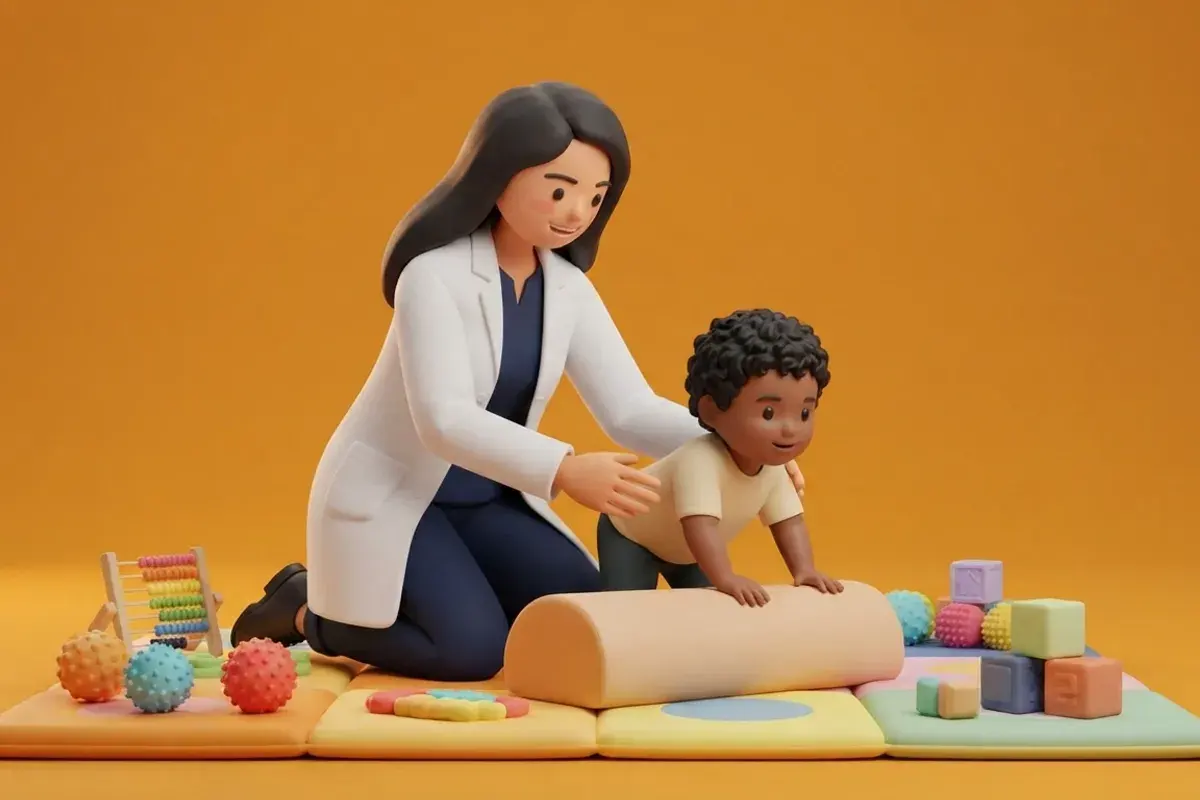
- Encourage Prone Tummy-Time on Firm Surfaces: Position infants prone on firm foam playmats with a small horizontal chest roll; prone weight-bearing gently recruits back extensors, strengthens scapular retractors, and naturally reduces gravity-induced lumbar kyphosis without loading the cervical spine.
Frequently Asked Questions
Why do babies with achondroplasia take longer to sit and walk?
Babies with achondroplasia have larger heads, shorter limbs, and naturally relaxed muscle tone. Balancing a larger head with shorter arms takes extra time and muscular development, so they typically learn to sit at 9 to 12 months and walk at 18 to 24 months, which is completely expected and normal for them.
Why are soft baby carriers and bouncy seats dangerous for an achondroplasia infant?
Soft carriers let the baby slump forward like a letter C. Because their neck muscles are still developing and their head is heavy, slumping squeezes the spinal cord at the base of the skull and can bend their lower spine into a permanent hunchback (gibbus deformity).
Can children with achondroplasia participate in trampolines or contact sports?
No. High-impact jumping on trampolines, gymnastics flips, and contact sports (like rugby or football) generate severe jarring forces that can pinch the narrowed spinal cord at the neck. Swimming, cycling, and gentle dance are much safer sports.
Related condition guides


Related recovery guides & articles
BookPhysio.in Editorial Team
The BookPhysio.in editorial team writes and maintains this content, checking it against reliable clinical sources. Content follows our medical review policy: general information only, and no page claims a clinical review until a named registered physiotherapist has signed it off.
Read our medical review policy