
Down Syndrome: Hypotonia, Atlantoaxial Instability and Motor Milestones
In short
Down syndrome features joint hypermobility and low muscle tone. Learn atlantoaxial instability safety precautions, milestone facilitation and postural corrections.
In this guide (4 sections)
Motor Development Profile in Down Syndrome
Down syndrome (Trisomy 21) is the most common chromosomal condition associated with developmental delay. Children with Down syndrome present with generalized muscular hypotonia, ligamentous laxity, and decreased postural muscle strength.
While typically developing infants walk at an average of 12 to 14 months, children with Down syndrome typically achieve independent walking between 20 and 36 months. Early physiotherapy accelerates milestone attainment and prevents compensatory skeletal deformities.
Atlantoaxial Instability (AAI) Screening and Red Flags
Approximately 10 to 15 percent of individuals with Down syndrome have increased ligamentous laxity between the atlas (C1) and axis (C2) cervical vertebrae. If untreated, excessive movement can cause spinal cord compression.
| Clinical Domain | Critical Signs and Symptoms | Safety Precaution / Mandated Action | |
|---|---|---|---|
| Myelopathic Red Flags | Progressive gait deterioration, new urinary incontinence, hyperreflexia, torticollis, neck pain. | Immediate emergency cervical immobilization and spine imaging. | |
| High-Risk Gymnastics | Somersaults, forward rolls, trampoline jumping with inverted landings. | Strictly contraindicated in all children with Down syndrome. | |
| Contact Sports | Rugby, wrestling, football headers, high-impact martial arts. | Restricted; avoid sudden cervical axial loading. | |
| Pre-Operative Neck Safety | General anaesthesia requiring endotracheal intubation. | Notify anaesthesia team to avoid hyperextension during intubation. |
Therapeutic Motor Milestone Facilitation
Because of ligamentous hypermobility, children with Down syndrome often adopt compensatory wide-base postures (such as extreme W-sitting and hyperextending knees during standing) to achieve passive joint locking.
- Discouraging W-Sitting: Actively redirect children from W-sitting into tailor sitting (cross-legged), ring sitting, or long sitting to protect hip joint architecture and facilitate active trunk muscle recruitment.
- Early Treadmill Training Protocol: Ulrich et al. demonstrated that implementing supported treadmill training (8 minutes daily) starting when the infant can sit unsupported helps children with Down syndrome walk up to 4 months earlier than standard physiotherapy alone.
- Supramalleolar Orthoses (SMOs): Fitted once standing emerges to stabilize severe pronation and calcaneal valgus while permitting active ankle plantarflexion and dorsiflexion.
Frequently Asked Questions
How do you differentiate hypotonia from muscle weakness?
Hypotonia is decreased resistance to passive joint movement (a resting physiological tone deficit), whereas muscle weakness is decreased ability to generate active muscular force. Both co-exist in Down syndrome.
Should all children with Down syndrome have routine cervical X-rays?
Current AAP guidelines recommend screening for clinical signs and symptoms of spinal cord compression rather than routine asymptomatic radiographs, due to high false-positive rates on flexion-extension films.
Why do children with Down syndrome struggle with balance?
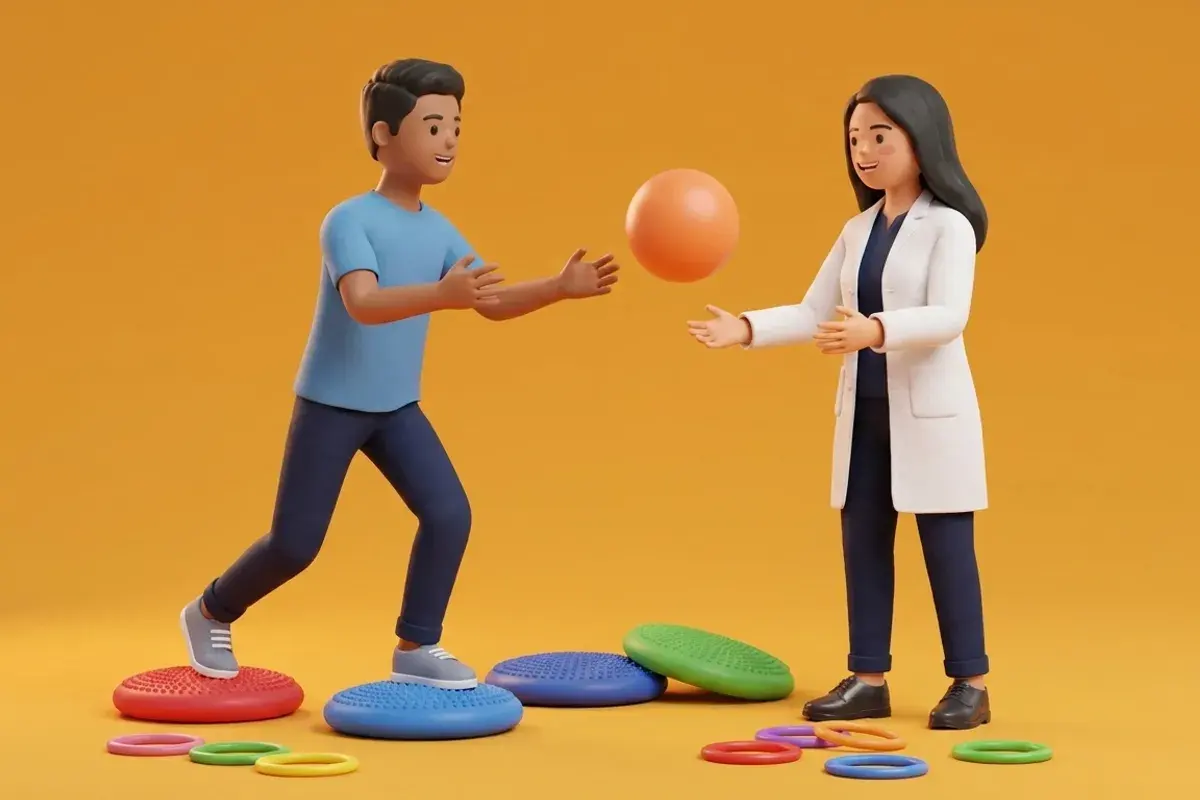
Hypotonia, hypermobility, smaller cerebellum volume, and slower vestibular integration combine to delay postural righting reactions.
Related condition guides


Related recovery guides & articles
BookPhysio.in Editorial Team
The BookPhysio.in editorial team writes and maintains this content, checking it against reliable clinical sources. Content follows our medical review policy: general information only, and no page claims a clinical review until a named registered physiotherapist has signed it off.
Read our medical review policy