
Ergonomics for TMD: Telephone Headsets and Preventing Chin-Tuck Strain
In short
Cradling a phone between your shoulder and ear destroys jaw mechanics. Discover practical office ergonomic modifications to protect your neck and TMJ.
In this guide (4 sections)
Occupational ergonomic factors exert a profound, continuous mechanical influence on craniomandibular health and postural pain syndromes. In modern digital and corporate workspaces, millions of professionals maintain static, compromised sitting postures for 8 to 12 hours daily. Among the most destructive habitual ergonomic faults is telephone neck-cradling: clamping a mobile phone or telephone handset between the ear and raised shoulder while simultaneously typing or taking notes. This asymmetrical posture forces the cervical spine into extreme lateral flexion and rotation while elevating the scapula, generating intense, sustained co-contraction across the upper trapezius, levator scapulae, sternocleidomastoid, and ipsilateral masticatory muscles.
Domestic Realities and Daily Functional Loading in India
In India major business process outsourcing (BPO), customer support, IT, and financial hubs across Noida, Gurugram, Bengaluru, Hyderabad, and Pune, thousands of desk professionals spend their working shifts communicating with clients. Many employees in informal or home-based workspaces do not use proper hands-free headsets, habitually cradling handsets between shoulder and cheek while navigating multiple software windows. At home, family members frequently multi-task by pinning mobile phones against their shoulders while cooking in the kitchen or attending to household chores. Over weeks and months, this sustained asymmetrical compression produces excruciating unilateral temple headaches, sharp ear aches, and acute jaw clicking. Physiotherapists provide practical workplace ergonomic interventions, mandating hands-free telephone headsets and screen height adjustments.
Asymmetrical Lateral Shear, Styloid Compression, and SCM Spasm
The destructive biomechanics of telephone cradling involve violent asymmetrical torque across the craniocervical and temporomandibular junctions. Clamping the phone between the ear and shoulder forces the ipsilateral mandibular condyle into deep, superior-posterior compression within the glenoid fossa, squeezing the retrodiscal pad against the tympanic plate. Concurrently, the contralateral condyle is pulled into forced translation and distraction. The sternocleidomastoid and digastric muscles on the flexed side undergo acute ischemic shortening, compressing the greater auricular nerve and the styloid process. This asymmetrical clamping pattern directly destabilizes the articular disc and triggers severe myofascial trigger points in the masseter, producing pain that radiates into the ear, jaw angle, and upper molar teeth.
Workstation Ergonomics, Hands-Free Adaptation, and Neck Neutralization
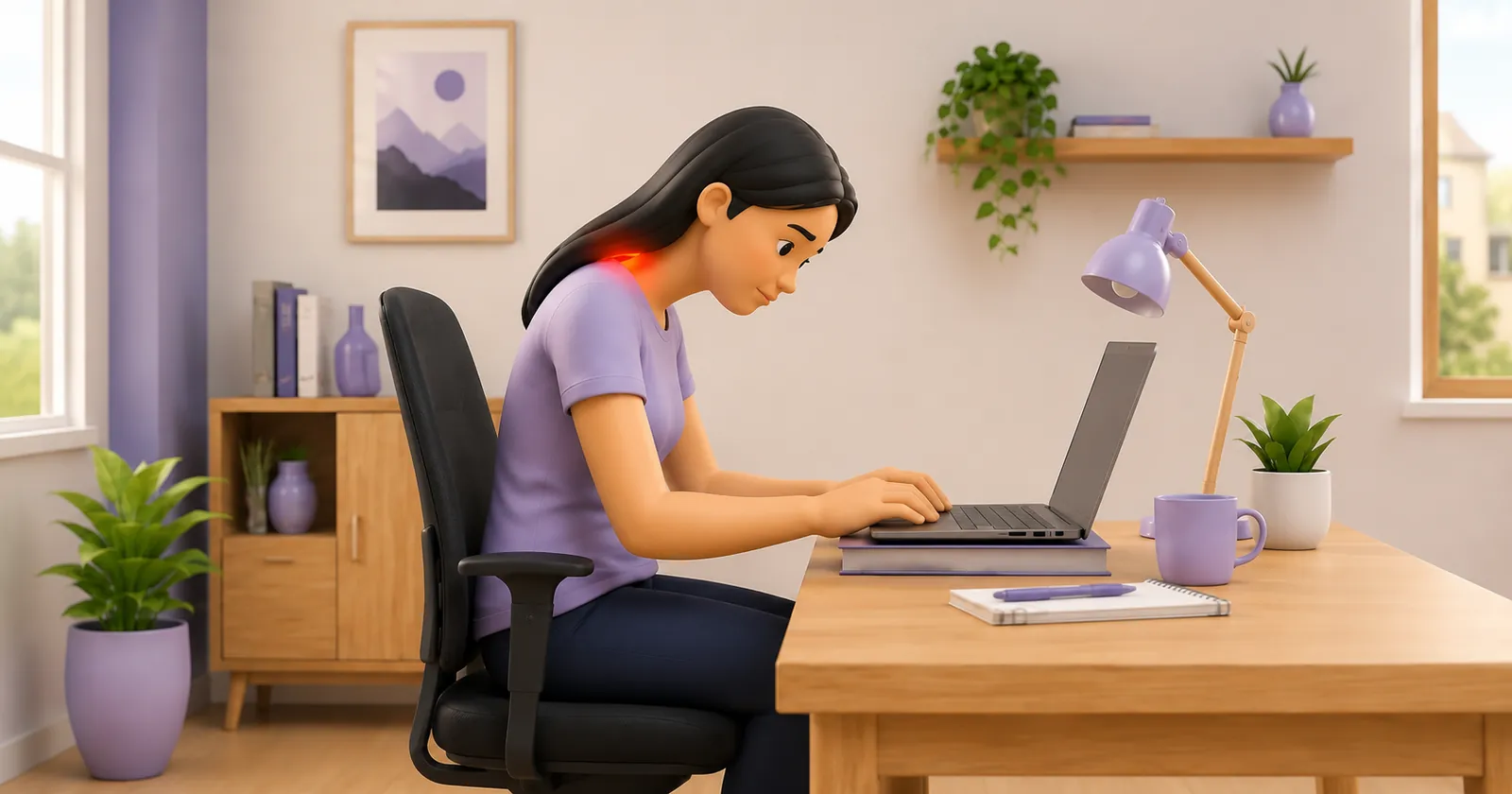
Workplace ergonomic intervention begins with a non-negotiable directive: zero telephone cradling. Employers and individuals must transition immediately to lightweight, binaural hands-free telephone headsets or wireless earbuds. Workstation setup requires precise calibration: computer monitors must be positioned directly in front of the user with the top third of the screen aligned at horizontal eye level, eliminating downward neck flexion. Forearms must be supported by adjustable chair armrests at 90 degrees to offload the weight of the arms from the shoulder girdle. Physiotherapists prescribe regular micro-breaks (the 20-20-20 rule) paired with bilateral neck neutralization stretches.
Bilateral SCM and Lateral Neck Neutralization Stretch
Objective: Release acute muscular spasm in the sternocleidomastoid and restore symmetrical cervical alignment
- 1Sit upright tall in your office chair with your feet flat on the floor and arms resting comfortably on your lap.
- 2Place your right hand gently behind your back to anchor your right shoulder downward.
- 3Gently tilt your left ear toward your left shoulder, keeping your face looking straight forward without turning.
- 4Slowly rotate your chin slightly upward toward the ceiling until you feel a gentle, pleasant stretch along the front-side of your neck.
- 5Hold this comfortable position for 15 seconds while breathing smoothly, then gently return to center and repeat on the opposite side.
| Ergonomic Risk Factor | Biomechanical Dysfunction Induced | Corrective Ergonomic Solution | Craniomandibular Benefit |
|---|---|---|---|
| Telephone Neck Cradling | Extreme lateral cervical flexion; unilateral TMJ compression | Wireless binaural hands-free headset or speakerphone | Eliminates 100% of asymmetrical neck and jaw clamping forces |
| Low Computer Monitor Screen | Continuous cervical flexion (poke-chin forward head posture) | Monitor riser or laptop stand to bring screen to eye level | Unloads suboccipitals and restores natural mandibular freeway space |
| Unsupported Forearms / Arms | Arm weight pulls scapulae into depression, straining omohyoid | Adjustable armrests level with desk surface supporting forearms | Releases downward tensile traction on hyoid bone and jaw |
If sustained telephone cradling or neck flexion triggers sharp, electric-shock-like pain shooting down your arm into your fingers, accompanied by hand weakness (such as dropping coffee mugs) or numbness in the thumb and index finger, stop stretching immediately. This indicates acute cervical nerve root compression (cervical radiculopathy) requiring formal orthopedic or neurological evaluation.
Frequently Asked Questions
Can holding my phone between my shoulder and ear really damage my jaw joint?
Yes, absolutely. Cradling your phone forces your jaw joint on that side to jam upward and backward with intense crushing pressure for minutes at a time. It is one of the most common causes of acute jaw clicking, ear pain, and severe muscle spasms in office workers.
Do I need an ENT or dental referral before consulting a TMJ physiotherapist on BookPhysio.in?
BookPhysio.in does not ask for a doctor referral. Under the National Commission for Allied and Healthcare Professions (NCAHP) Act 2021, Indian patients hold direct first-contact access to registered physiotherapists. On BookPhysio.in, you schedule directly and pay your clinician per session, with zero advance package traps, mandatory block bookings, or platform commission fees.
Related condition guides



Related recovery guides & articles
BookPhysio.in Editorial Team
The BookPhysio.in editorial team writes and maintains this content, checking it against reliable clinical sources. Content follows our medical review policy: general information only, and no page claims a clinical review until a named registered physiotherapist has signed it off.
Read our medical review policy