
Gufoni Maneuver: Clearing Apogeotropic Horizontal Canal BPPV
In short
The Gufoni maneuver provides an elegant, rapid repositioning protocol for both geotropic and apogeotropic horizontal canal BPPV. Explore the biomechanical steps.
In this guide (6 sections)
The Gufoni maneuver is widely recognized as one of the most effective and patient-friendly repositioning protocols for horizontal semicircular canal BPPV. Unlike the cumbersome multi-stage barbecue roll, the Gufoni maneuver relies on a rapid lateral decubitus descent followed by a single head turn. It is particularly valuable for apogeotropic horizontal canal BPPV, where otoliths adhere to the cupula or float within the anterior canal arm near the ampulla. By using sudden angular deceleration and gravitational settling, the Gufoni maneuver either detaches cupular debris or converts apogeotropic nystagmus into a treatable geotropic form.
Practical Domestic Applications for Frail and Elderly Patients
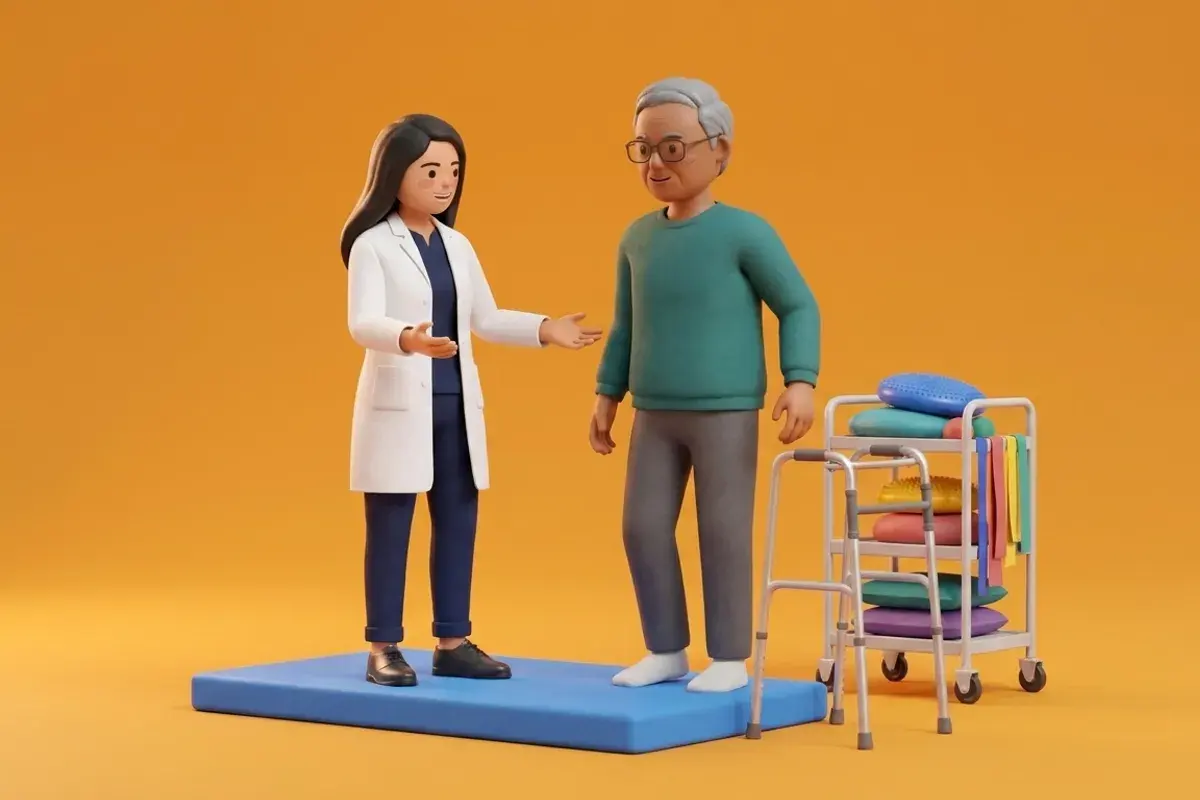
In Indian home healthcare, many vertigo sufferers are elderly family members who have stiff arthritic spines, severe cervical spondylosis, or kyphotic posture that makes full 360-degree floor rolling nearly impossible. The Gufoni maneuver is exceptionally well tolerated in domestic settings because it requires only a single side-lying drop onto a standard bed or sofa. Home physiotherapists can safely support the patients trunk and head throughout the movement, avoiding excessive neck twisting.
Lateral Decubitus Deceleration and Angular Transitions
For apogeotropic HC-BPPV, the patient sits upright on the examination couch and is briskly lowered onto the affected side within 2 to 3 seconds. The sudden deceleration impacts the lateral canal ampulla, loosening debris adhered to the cupular surface. After resting for 1 to 2 minutes until paroxysmal nystagmus ceases, the head is rapidly rotated 45 degrees downward toward the mattress. This decisive second step directs the loosened otolith mass toward the non-ampullated posterior limb. After another 2 minutes in this position, the patient is assisted back to an upright seated posture.
Remember that in apogeotropic horizontal canal BPPV, the affected ear is the side with the WEAKER nystagmus during the supine roll test. Performing the apogeotropic Gufoni toward the wrong side will drive particles deeper into the ampullary recess, worsening symptoms.
Post-Gufoni Re-Testing and Conversion Verification
Following the apogeotropic Gufoni maneuver, wait 10 to 15 minutes before performing a repeat supine roll test. In approximately 65 to 75 percent of cases, the maneuver successfully converts apogeotropic nystagmus into geotropic canalithiasis. If conversion occurs, the clinician immediately proceeds with a geotropic Gufoni maneuver (lying on the unaffected side with head turned upward 45 degrees) to complete utricular evacuation.
Seated Lateral Vestibulospinal Realignment Exercise
Objective: Re-establish dynamic trunk stability and vestibular symmetry following lateral repositioning
- 1Sit upright on a stable dining chair with your back straight and feet grounded shoulder-width apart.
- 2Place your right hand on your left shoulder and your left hand on your right shoulder, crossing your arms across your chest.
- 3Keep your eyes fixed firmly on a small sticker placed at eye level on the opposite wall.
- 4Slowly lean your upper torso 15 degrees to the right over 3 seconds without moving your head or breaking gaze.
- 5Hold for 2 seconds, return to vertical, and repeat smoothly to the left side while breathing calmly.
Gufoni Maneuver Variations: Geotropic vs Apogeotropic Protocols
| Protocol Stage | Geotropic Variant (Healthy Side) | Apogeotropic Variant (Affected Side) |
|---|---|---|
| Initial Lateral Drop | Drop onto UNAFFECTED (healthy) side | Drop onto AFFECTED (symptomatic) side |
| Head Rotation in Side-Lying | Rotate head 45 deg DOWNWARD toward bed (or 45 deg upward in modified) | Rotate head 45 deg DOWNWARD toward bed |
| Biomechanical Goal | Evacuate free-floating debris into utricle | Dislodge cupular debris and migrate into posterior limb |
| Typical Outcome | Complete resolution of positional vertigo | Conversion to geotropic BPPV or full clearance |
Red Flags Requiring Emergency Medical Review
If lateral decubitus positioning elicits acute diplopia, severe facial numbness, Horner syndrome, or persistent dysarthria, suspend positional procedures immediately and escalate for emergency stroke evaluation.
Frequently Asked Questions
Is the Gufoni maneuver more effective than the barbecue roll for horizontal canal BPPV?
Systematic reviews and clinical trials demonstrate comparable cure rates exceeding 80 to 90 percent between the Gufoni maneuver and the barbecue roll. However, the Gufoni maneuver is significantly faster to administer and far easier for elderly patients with limited spinal mobility.
How do I book a certified vestibular physiotherapist on BookPhysio.in?
You can book directly with an experienced vestibular physiotherapist on BookPhysio.in without needing a hospital referral. Under the NCAHP Act 2021, physiotherapists in India practice autonomously. You pay transparently per session with zero platform subscription charges or advance lock-ins.
Related condition guides

Related recovery guides & articles
BookPhysio.in Editorial Team
The BookPhysio.in editorial team writes and maintains this content, checking it against reliable clinical sources. Content follows our medical review policy: general information only, and no page claims a clinical review until a named registered physiotherapist has signed it off.
Read our medical review policy