
Incentive Spirometry vs Positive Expiratory Pressure (PEP)
In short
Comparative physiology of Incentive Spirometry vs Positive Expiratory Pressure (PEP) in post-weaning atelectasis. Master alveolar recruitment and device selection.
In this guide (4 sections)
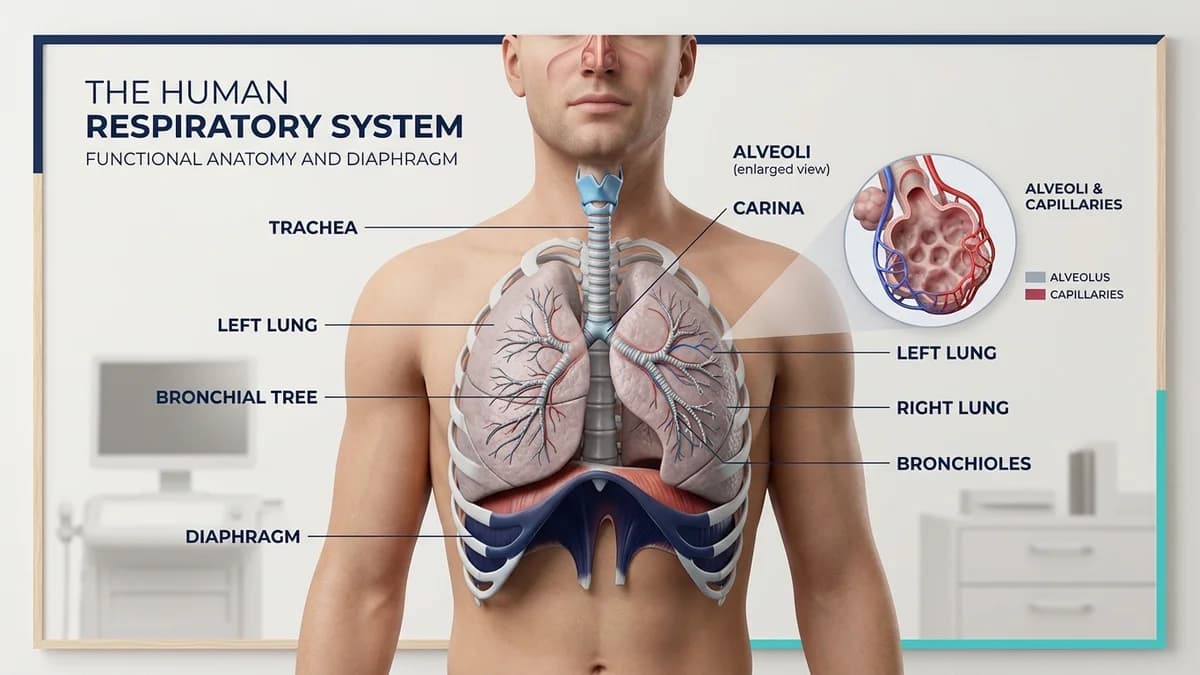
Basilar atelectasis is one of the most pervasive pulmonary complications following ventilator weaning and extubation. Prolonged recumbency, residual anesthetic and sedative depression, diaphragmatic weakness, and blunted sigh reflexes lead to widespread alveolar collapse. For decades, Incentive Spirometry (IS) and Positive Expiratory Pressure (PEP) therapy have been prescribed to reverse post-extubation atelectasis. Examining the distinct biophysical mechanisms of negative-pressure inspiratory expansion versus positive-pressure expiratory splinting reveals why PEP is frequently superior in weak, recovering patients.
Transpulmonary Pressure Gradients, Alveolar Hysteresis, and Airway Splinting
Incentive Spirometry utilizes Sustained Maximal Inspiration (SMI), generating negative pleural pressure to expand transpulmonary pressure gradients and pull air into alveoli from the outside. However, in patients recovering from critical illness who suffer from respiratory muscle weakness, the patient cannot generate sufficient negative pleural pressure to overcome the opening pressure of collapsed basilar units. Furthermore, three-ball flow-oriented spirometers encourage rapid, turbulent inspiratory flow, recruiting upper lobes while leaving dependent collapsed bases unventilated. Conversely, PEP therapy generates positive intraluminal pressure (10 to 20 cmH2O) during active expiration against a fixed or oscillating resistor. This positive back-pressure splints unstable bronchioles open, prevents dynamic airway collapse, and channels gas through collateral channels (pores of Kohn) directly behind mucus plugs, stabilizing alveoli from within.
| Physiological Dimension | Incentive Spirometry (SMI) | Positive Expiratory Pressure (PEP) | Clinical Advantage | |
|---|---|---|---|---|
| Driving Pressure Mechanism | Negative pleural pressure (suction) | Positive intraluminal pressure (splint) | PEP works even in patients with severe inspiratory weakness | |
| Collateral Ventilation | Minimal; flow favors open units | Extensive; positive back-pressure opens pores | PEP recruits collapsed alveoli behind mucus plugs | |
| Work of Breathing | High; fatigues weakened diaphragm | Low to moderate; unloads inspiratory pump | PEP prevents post-extubation respiratory exhaustion | |
| Airway Secretion Clearance | Zero clearance; requires separate cough | High; oscillatory shear moves secretions | PEP simultaneously re-expands lung and clears sputum |
Device Selection and Threshold PEP Prescription Protocol
In patients with documented post-weaning basilar atelectasis and muscle weakness, threshold or oscillatory PEP is the modality of choice. If incentive spirometry is utilized in cooperative patients with preserved muscle strength, a volume-oriented (piston-type) device should be selected rather than a flow-dependent ball unit. The patient performs 10 consecutive PEP breaths at 10 to 15 cmH2O resistance, followed by 2 forced expiratory huffs, repeated across 3 cycles.
Five-Step Threshold PEP Lung Recruitment Protocol
Objective: Apply positive expiratory pressure to stabilize small bronchioles, recruit atelectatic alveoli, and mobilize secretions.
- 1Position the patient in an upright 90-degree sitting posture with the chest wall fully expanded.
- 2Instruct the patient to seal their lips tightly around the PEP mouthpiece, holding the device horizontal.
- 3Guide a slow, steady inhalation through the one-way valve to approximately 75 percent of total lung capacity.
- 4Instruct the patient to exhale smoothly against the resistance, maintaining 10 to 15 cmH2O pressure on the manometer for 3 to 4 seconds.
- 5Execute 10 consecutive resistance breaths, followed by 2 gentle forced expiratory huffs to clear mobilized secretions.
Pharmacy Equipment Realities in Indian Healthcare
In Indian commercial pharmacies, inexpensive plastic three-ball flow spirometers are widely sold, but patients universally misuse them by taking rapid, violent gasps that exhaust accessory neck muscles without recruiting lower lung fields. Visiting physiotherapists must re-educate families, replacing flow-oriented devices with volume-based incentive spirometers or adapted oscillating PEP units (such as Acapella Choice) that provide verifiable clinical benefit.
Discontinue PEP therapy and evaluate immediately if the patient develops sudden sharp pleuritic chest pain or acute dyspnea, as aggressive positive pressure recruitment carries a small risk of barotrauma and pneumothorax.
Clinical Questions and Evidence-Based Practice
Why is a volume-oriented incentive spirometer clinically superior to a flow-oriented three-ball device?
Volume-oriented spirometers measure true inspired volume and reward a slow, sustained inspiratory flow rate, promoting laminar distribution to dependent alveoli. Three-ball flow devices encourage rapid, jerky inhalations that generate high turbulence, depositing air only in non-dependent upper airways.
Do patients need a doctor referral to start respiratory physiotherapy or tracheostomy weaning at home?
Under the National Commission for Allied and Healthcare Professions (NCAHP) Act 2021, patients in India have direct access to registered physiotherapists without requiring a mandatory doctor prescription. At BookPhysio.in, you connect directly with verified cardiorespiratory physiotherapists and pay per session without hidden fees or platform commissions.
Related recovery guides & articles
BookPhysio.in Editorial Team
The BookPhysio.in editorial team writes and maintains this content, checking it against reliable clinical sources. Content follows our medical review policy: general information only, and no page claims a clinical review until a named registered physiotherapist has signed it off.
Read our medical review policy