
Intercostal Neuralgia and Costochondritis: Subcostal Nerve Gliding and Rib Cage Mobilization
In short
Stabbing rib pain radiating along the chest wall requires differentiating costochondral inflammation from intercostal nerve entrapment in the subcostal groove.
In this guide (4 sections)
The Anatomy and Pathomechanics of the Intercostal Neurovascular Bundle
The intercostal nerves are the anterior rami of the first through eleventh thoracic spinal nerves (T1 to T11). As each nerve exits the intervertebral foramen, it traverses the costovertebral and costotransverse joints before running along the inferior margin of each rib within the subcostal groove, nestled directly beneath the intercostal vein and artery (VAN structure: Vein, Artery, Nerve).
The intercostal nerve lies sandwiched between the internal intercostal and innermost intercostal muscle layers. Thoracic spine hypomobility, costovertebral joint subluxation, trauma, chronic coughing, or thoracic surgical scars (thoracotomy) can compress or tether the nerve within this groove. This produces intercostal neuralgia: sharp, shooting, lancinating pain that wraps circumferentially along the rib dermatome.
Differential Diagnosis: Intercostal Neuralgia vs Costochondritis vs Tietze
| Clinical Entity / Condition | Pathological Substrate | Palpation & Provocation Hallmarks | Physiotherapy Management | |
|---|---|---|---|---|
| Intercostal Neuralgia | Entrapment/irritation of intercostal nerve in subcostal groove | Lancinating band-like dysesthesia; hyperalgesia along rib dermatome | Costovertebral joint mobilizations; lateral costal nerve glides | |
| Costochondritis | Inflammation of costochondral/chondrosternal junctions (multiple) | Localized anterior tenderness without swelling; reproduced by deep breath | Rib cage expansion breathing; anterior pectoral fascial release | |
| Tietze Syndrome | True inflammatory swelling of 2nd or 3rd costochondral cartilage | Visible, palpable fusiform enlargement; erythema, warmth, sharp pain | Cold cryotherapy; gentle thoracic rotation; avoid direct cartilage loading | |
| Slipping Rib Syndrome (Cyriax) | Hypermobility of 8th, 9th, or 10th false ribs (interchondral disruption) | Positive Hooking Maneuver (finger hooked under costal margin reproduces click) | Trunk stabilization; tape stabilization; avoid vigorous rib thrusts |
Standardized Clinical Rehabilitation Protocols and Manual Rib Mobilization
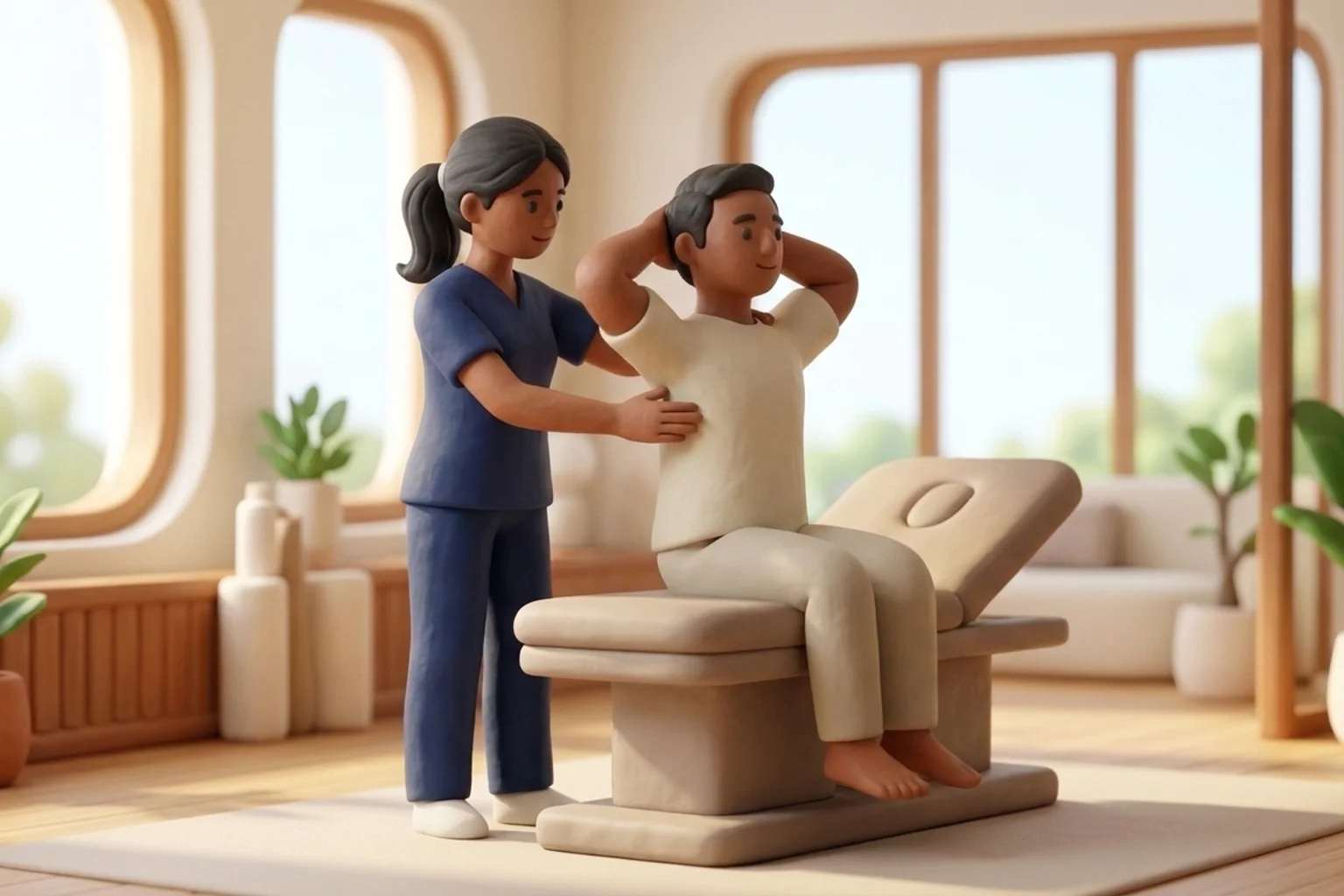
- Costovertebral and Costotransverse Maitland Mobilizations: Position the patient prone; apply gentle Grade II/III posterior-to-anterior (P-A) oscillations directly over the rib angles 2 to 3 cm lateral to the thoracic spinous processes; mobilizing posterior rib joints unloads anterior subcostal entrapment points.
- Lateral Costal Expansion with Intercostal Muscle Release: Position the patient in side-lying over a small bolster with the painful side up; apply gentle, broad-contact ischemic myofascial release between the intercostal spaces during slow, relaxed expiration passes.
- Hooking Maneuver Screening and Lower Rib Cage Stabilization: Perform Cyriax's hooking maneuver by hooking your curved fingers beneath the anterior costal margin and pulling anteriorly; a reproducible painful pop or click confirms slipping rib syndrome, managed with dynamic abdominal oblique and serratus anterior motor control.
Frequently Asked Questions
How can I tell if my sharp chest wall pain is a heart issue or a pinched rib nerve?
Heart-related chest pain typically feels like a heavy pressure, squeezing, or fullness in the center of the chest that spreads to the jaw, neck, or left arm and worsens with exertion. Pinched rib nerve pain is sharp and stabbing, gets noticeably worse when you take a deep breath, twist your torso, or press with your finger directly on the rib space. If in doubt, an ECG and medical evaluation must always come first.
Why does taking a deep breath or coughing make my rib pain shoot like lightning?
Every time you breathe in deeply or cough, your rib cage expands and your ribs spread apart. If an intercostal nerve is pinched or inflamed in the groove beneath your rib, this stretching motion tugs directly on the irritated nerve, causing sharp shooting pain.
Can slouching at a desk cause rib and chest nerve pain?
Yes. Slouching for hours squashes your chest and locks your back rib joints in a stiff, compressed position. This tightens your intercostal muscles and can pinch the nerve running along your rib, leading to burning pain that wraps around to your front chest.

Related recovery guides & articles
BookPhysio.in Editorial Team
The BookPhysio.in editorial team writes and maintains this content, checking it against reliable clinical sources. Content follows our medical review policy: general information only, and no page claims a clinical review until a named registered physiotherapist has signed it off.
Read our medical review policy