
Ischial Tuberosity Compression in Hard Chair Sitting and Long Commute Driving
In short
Discover the mechanics of ischial tuberosity compression during prolonged sitting and driving, and learn practical ergonomic and clinical offloading solutions.
In this guide (4 sections)
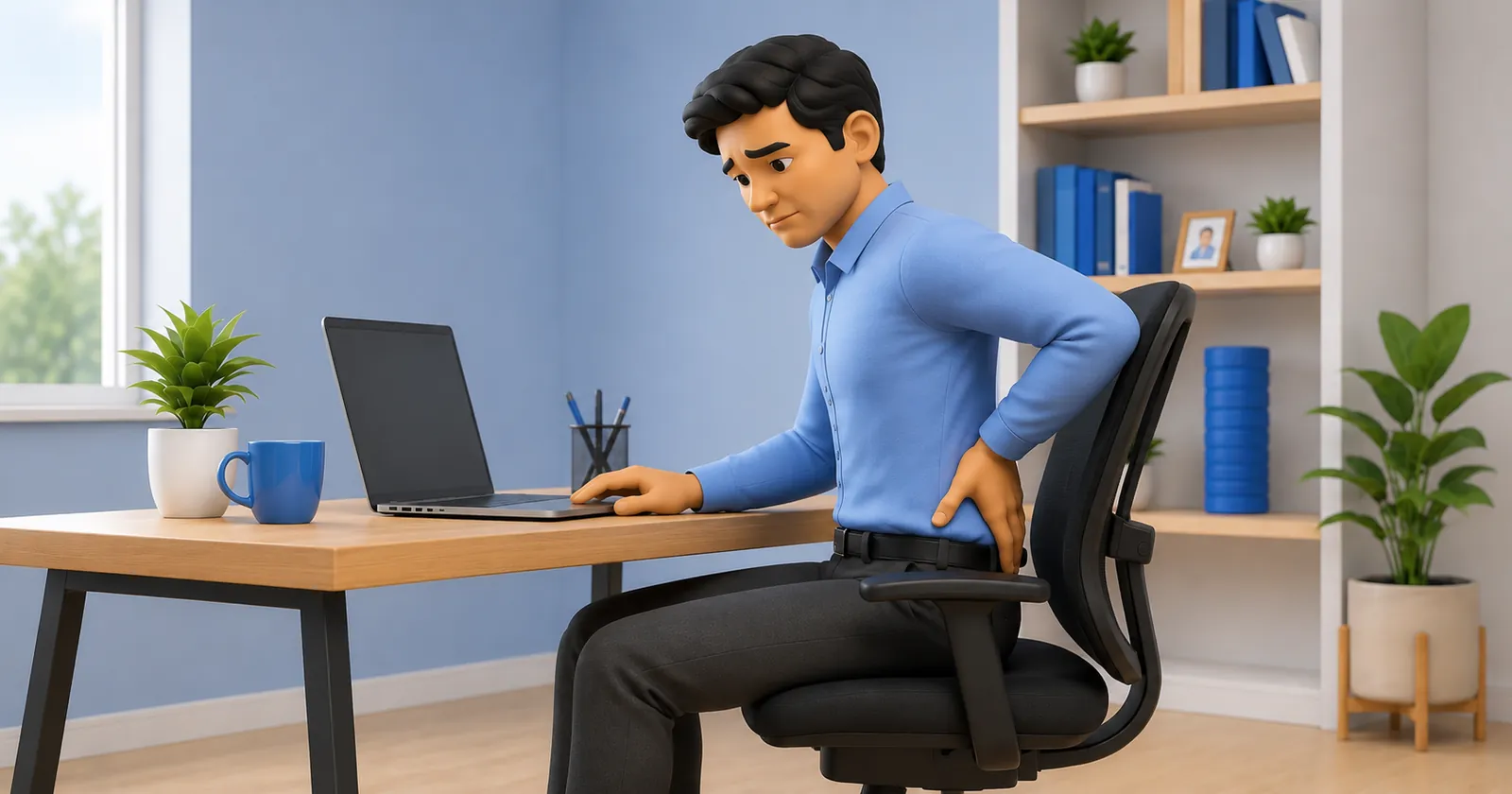
Prolonged sitting is the most pervasive aggravating factor for patients with proximal hamstring tendinopathy and ischial bursitis. When an individual sits on a flat, unyielding surface, approximately 75 percent of the total upper body weight is transferred directly onto the pelvic ischial tuberosities. In an upright or forward-slumped seated posture, the hip joint is flexed to 90 degrees or more. This substantial hip flexion pulls the proximal hamstring tendon complex taut, compressing it tightly against the bony contour of the ischial tuberosity. For an inflamed or degenerate tendon, this focal mechanical pressure creates localized ischemia, stimulates sensory nociceptors, and provokes intense buttock pain that intensifies as sitting duration increases.
Urban Traffic Jams, Unpadded Auto Seats, and Low Office Stools
In Indian metropolitan centres such as Mumbai, Bengaluru, Gurugram, and Chennai, daily commutes routinely involve 60 to 90 minutes of seated travel in slow-moving traffic. Driving a manual transmission car requires repeated left-leg clutch depression, which combines hip flexion with repeated eccentric and concentric hamstring contractions while the ischium remains compressed into the seat base. Commuters travelling in autorickshaws or on two-wheelers encounter unpadded seats and sudden vertical road impacts that transmit sharp compressive shocks directly into the ischial enthesis. In traditional family businesses, shopkeepers and traders sit for 8 to 10 hours on wooden counters, wooden benches, or firm diwans with minimal postural variation.
Ischial Bursal Friction, Tenocyte Hypoxia, and Nociceptive Sensitization
Between the proximal hamstring tendon origin and the bony ischium lies the deep ischiogluteal bursa, an anatomical cushion designed to facilitate smooth gliding. Sustained high-pressure sitting produces a dual pathological response: mechanical microtrauma to the bursa (ischiogluteal bursitis) and compressive avascularity within the tendon insertional zone. Repetitive compressive strain suppresses local capillary perfusion, driving tenocyte hypoxia and stimulating the secretion of inflammatory mediators including prostaglandin E2, tumor necrosis factor alpha, and vascular endothelial growth factor. Over weeks to months, this ongoing irritation leads to peripheral nociceptive sensitization, where even gentle sitting pressure triggers severe burning or throbbing buttock ache.
Biomechanical Offloading, Ergonomic Modifications, and Active Extension Breaks
Breaking the vicious cycle of sitting pain requires aggressive mechanical offloading combined with progressive tissue capacity training. Ergonomic interventions focus on reducing hip flexion angles and eliminating direct pressure over the ischial tuberosities. Utilizing specialized wedge cushions with posterior cutouts effectively suspends the ischial bones in free space, transferring sitting load to the anterolateral thighs. Adjusting office chair height so that the hips remain higher than the knees reduces the wrap-around compressive angle of the hamstring tendon. Patients are educated to take standing micro-breaks every 30 minutes, performing gentle standing hip extensions to restore local arterial blood flow.
Standing Hip Extension Micro-Break with Gluteal Squeeze
Objective: Relieve ischial compressive tension, stimulate local capillary blood flow, and activate posterior chain extensors
- 1Stand tall with your feet hip-width apart, placing your hands firmly on your hips or resting lightly against a sturdy desk.
- 2Maintain a tall spine with your chest lifted and your core gently engaged.
- 3Shift your weight onto your unaffected leg while keeping your affected knee completely straight.
- 4Slowly extend your affected leg backward 15 to 20 degrees by squeezing your gluteal muscle firmly, without arching your lower back.
- 5Hold the contraction at the peak for 3 seconds, feeling the gluteus maximus contract, then return smoothly to the start.
| Seating Parameter | Problematic Configuration | Therapeutic Recommendation |
|---|---|---|
| Seat Pan Height | Low seat height placing knees higher than hips (hip flexion > 90 degrees) | Elevated seat height positioning hips 5 to 10 degrees higher than knees |
| Cushioning Support | Hard wooden, metal, or thin foam surface exerting direct ischial pressure | High-density memory foam cushion with dedicated posterior ischial cutout relief |
| Backrest Recline Angle | Upright 90-degree angle or forward slumping increasing hamstring tension | Slight backward recline of 100 to 110 degrees with firm lumbar roll support |
| Vehicle Commute Protocol | Continuous uninterrupted driving with low bucket car seat | Seat angle tilted forward, firm wedge cushion placed beneath hips, rest stops hourly |
In patients with diabetes, immunosuppression, or recent local injections, severe throbbing buttock pain accompanied by localized warmth, erythema, extreme tenderness to light palpation, or systemic fever is not simple mechanical bursitis. These symptoms raise immediate suspicion of septic ischiogluteal bursitis or a deep pelvic abscess, requiring emergent blood cultures, diagnostic imaging, and urgent surgical consultation.
Frequently Asked Questions
Can I use a regular doughnut cushion to relieve my hamstring sitting pain?
Standard ring or doughnut cushions are generally not recommended for proximal hamstring tendinopathy because the rigid outer ring often presses directly into the hamstring tendon insertion, worsening localized compression. A specialized wedge cushion with an open posterior cutout or a firm wedge that tilts the pelvis forward is far more effective in reducing tendon wrap-around stress.
Do I need a doctor referral to rehabilitate a hamstring strain on BookPhysio.in?
BookPhysio.in does not require a doctor referral. Under the National Commission for Allied and Healthcare Professions (NCAHP) Act 2021, patients across India enjoy direct access to autonomous registered physiotherapists. Through BookPhysio.in, you connect directly with verified clinicians and pay per session with transparent fees, completely free from advance package commitments, commission markups, or platform subscription charges.
Related recovery guides & articles
BookPhysio.in Editorial Team
The BookPhysio.in editorial team writes and maintains this content, checking it against reliable clinical sources. Content follows our medical review policy: general information only, and no page claims a clinical review until a named registered physiotherapist has signed it off.
Read our medical review policy