
Low Sofa and Soft Cushion Ergonomic Adjustments for Lumbar Disc Herniations
In short
Understand why deep, low sofas aggravate lumbar disc herniations through posterior pelvic tilting, and learn practical home modifications for pain-free sitting.
In this guide (4 sections)
In modern domestic households, living room seating is predominantly designed for aesthetic luxury rather than spinal biomechanics. Plush low sofas, deep foam sectionals, and overstuffed armchairs represent some of the most provocative furniture pieces for individuals with lumbar disc herniations and active sciatica. When a person sits on a low, ultra-soft sofa, their pelvis sinks deep below the level of their knees, forcing the pelvis into an acute posterior tilt. This pelvic rotation instantly flattens or reverses the natural lumbar lordosis, locking the lower spine into end-range flexion under the full weight of the upper torso. The resulting hydrostatic pressure pushes vulnerable nuclear disc material straight backward against inflamed annular fibers and the thecal sac, often transforming a manageable recovery into a severe flare-up.
Two-Wheeler Pothole Shocks, Indian Squatting Commode Hazards, and IT Chair Stress
In Indian social life, the living room sofa or diwan is the center of family interaction, entertainment, and hospitality. Guests and family members spend hours seated on deep foam sofas watching television, conversing, or relaxing after work. When a patient with a disc herniation attempts to rise from a deep low couch, they face a severe mechanical challenge: because their hips are trapped lower than their knees, standing up requires rocking forward into deep spinal flexion and thrusting upward with explosive effort. This sudden flexion-extension torque places extreme shear forces on the L4-L5 and L5-S1 disc spaces. Patients frequently report an immediate jolt of electric nerve pain shooting down their leg the moment they push off a low sofa, leading to an instinctive fear of sitting.
Annular Disruption, Chemical Radiculitis, and Dermatomal Nerve Root Compression
The patho-mechanics of low, soft seating involve sustained flexion deformation and the elimination of active muscular stabilization. On a firm chair, the ischial tuberosities provide stable skeletal purchase, allowing the pelvis to maintain a neutral or anterior tilt that preserves lumbar lordosis. On a soft cushion, the supportive bones sink unevenly into compliant foam, rolling the sacrum backward and stretching the posterior longitudinal ligament, flaval ligaments, and dorsal annular lamellae. This sustained tensile strain provokes mechanosensitive C-fibers in the outer annulus. Simultaneously, the profound hip flexion (often exceeding 100 degrees) tensions the sciatic nerve trunk around the greater sciatic notch. Compressing the sciatic nerve against the back of the sofa while stretching it over an extruded disc produces rapid intraneural ischemia, manifesting as numbness and throbbing leg ache.
McKenzie Centralization, Neural Dynamic Sliders, and Graded Lumbar Mobilization
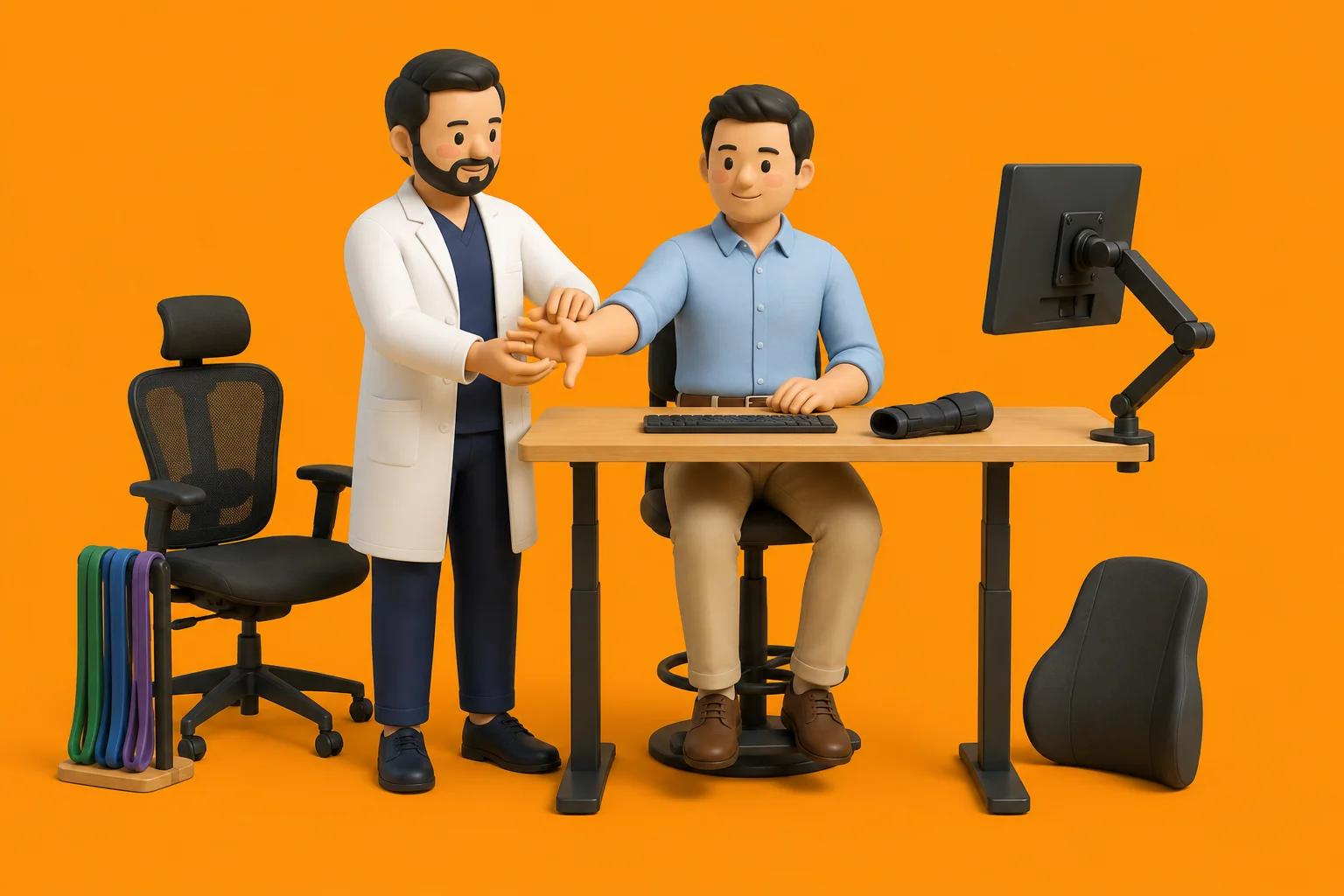
Ergonomic modification of domestic seating is a mandatory component of conservative disc rehabilitation. Patients should be instructed to avoid deep soft sofas completely during the acute and subacute recovery phases, choosing instead a firm, straight-backed dining chair or wooden armchair. If a family sofa must be used, practical retrofitting is required. Placing a firm wooden board beneath the sofa cushion prevents the foam from bottoming out. A high-density foam wedge should be placed on top of the cushion, elevating the patient hips 2 to 3 inches above the level of their knees. A supportive cylindrical lumbar roll placed behind the lower back maintains lordosis, while placing a firm cushion behind the mid-back prevents the torso from reclining into deep slumping.
Hip-Hinge Sit-to-Stand Technique with Neutral Spine Maintenance
Objective: Transition safely from seated to standing positions without flexing or shearing vulnerable lumbar discs
- 1Scoot forward to the very front edge of the chair or sofa so your feet rest flat and firm on the floor.
- 2Position your feet slightly wider than shoulder-width apart, pulling your heels back slightly behind your knees.
- 3Place your hands on your thighs or the armrests, keeping your chest tall, shoulders back, and spine in neutral lordosis.
- 4Hinge forward from your hips (not your waist) until your nose is aligned over your toes, keeping your back straight.
- 5Drive through your heels and squeeze your gluteal muscles firmly to stand straight up, avoiding any rounding of your spine.
| Seating Furniture Type | Biomechanical Hazard Profile | Intradiscal Pressure Impact | Recommended Practical Modification |
|---|---|---|---|
| Deep Plush Low Sofa / Sectional | Pelvis sinks lower than knees; acute posterior tilt; end-range lumbar flexion | Severe pressure spike (180-200% baseline); high risk of nuclear extrusion | Place firm board under cushion; use 3-inch firm wedge; insert firm lumbar roll |
| Traditional Diwan with Soft Mattress | Lack of backrest forces unsupported slumping; legs often crossed or outstretched | High continuous tensile strain on posterior annulus and sciatic nerve | Sit with back against wall; use firm triangular bolster; avoid crossing legs |
| Firm Wooden Armchair or Dining Chair | Firm seat prevents pelvic sinking; upright backrest supports natural alignment | Moderate, controlled pressure (120-140%); lowest domestic sitting risk | Add small lumbar cushion; keep feet flat on floor; stand up every 30 minutes |
Struggling to stand up from a low sofa can cause a sudden massive disc rupture under explosive muscle force. If rising from a sofa results in immediate loss of bowel or bladder control, numbness between your legs, or inability to move your foot, seek emergency hospital care immediately.
Frequently Asked Questions
Why does my sciatica hurt so much more after sitting on my comfortable sofa than on a hard chair?
Soft sofas feel comfortable at first because they relieve surface pressure on your skin. However, your pelvis sinks deep into the cushions, forcing your lower back into a rounded slump. This posture wedges your lumbar discs open at the back and pushes the herniated gel directly against your sciatic nerve. A firm chair holds your pelvis steady and keeps pressure off the nerve.
Do I need a doctor referral to treat a herniated disc on BookPhysio.in?
BookPhysio.in does not require a doctor referral. Under the National Commission for Allied and Healthcare Professions (NCAHP) Act 2021, patients across India enjoy direct access to autonomous registered physiotherapists. Through BookPhysio.in, you connect directly with verified clinicians and pay per session with transparent fees, completely free from advance package commitments, commission markups, or platform subscription charges.
Related condition guides


Related recovery guides & articles
BookPhysio.in Editorial Team
The BookPhysio.in editorial team writes and maintains this content, checking it against reliable clinical sources. Content follows our medical review policy: general information only, and no page claims a clinical review until a named registered physiotherapist has signed it off.
Read our medical review policy