
Mental Practice and Motor Imagery in Severe Acute Hemiparesis
In short
Prescribing mental practice and kinesthetic motor imagery in severe acute stroke. Cortical network activation without peripheral physical fatigue.
In this guide (2 sections)
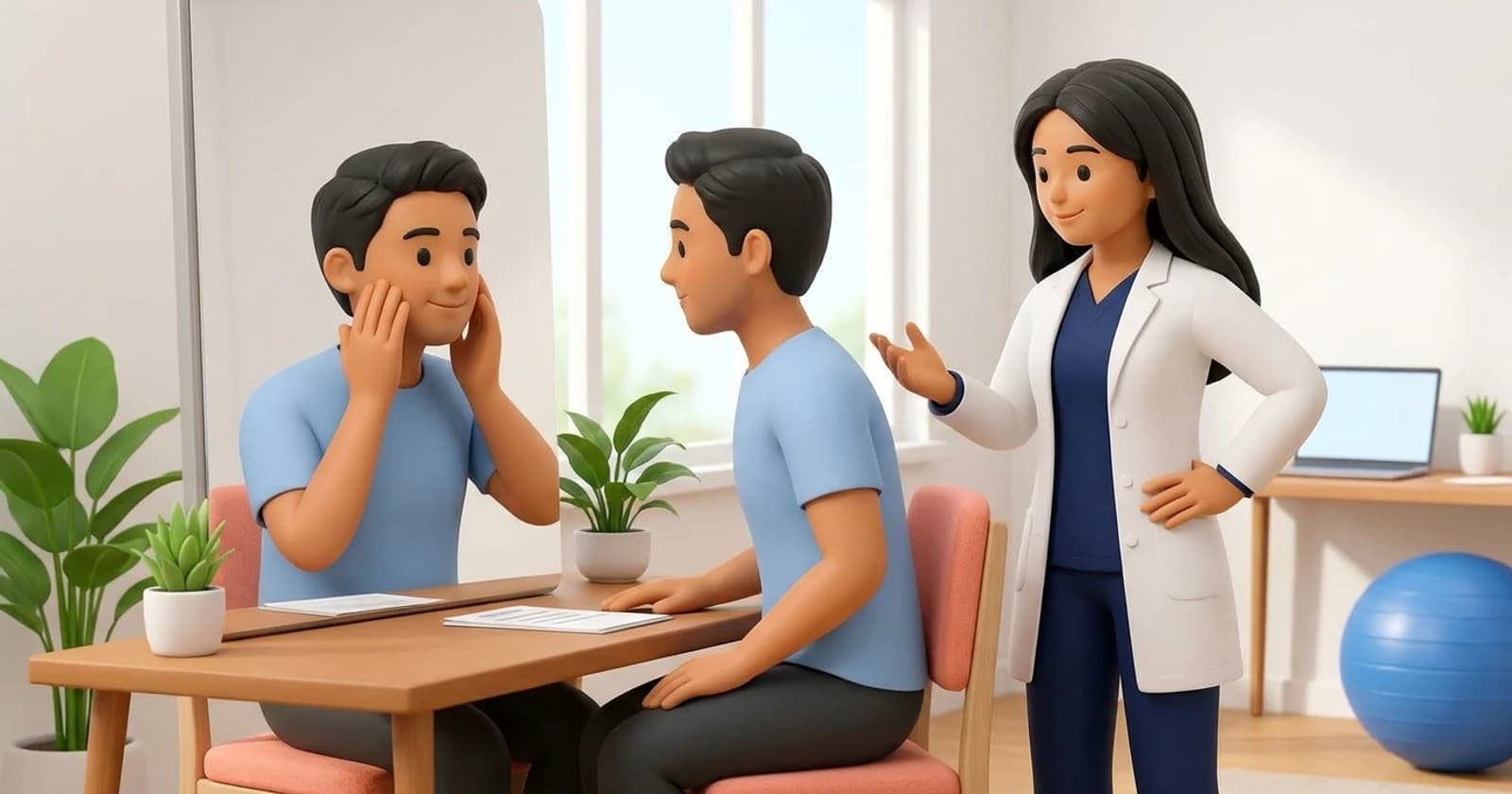
Severe acute hemiparesis often leaves stroke survivors physically unable to perform repetitive physiotherapy drills, leading to prolonged immobility and rapid cortical representation shrinkage. Mental practice through structured motor imagery (MI), the internal simulation of a specific motor action without any physical movement, provides a scientifically validated method to recruit motor control networks, stimulate synaptic plasticity, and prepare the nervous system for active physical rehabilitation.
Functional Neuro-Anatomy of Kinesthetic Motor Imagery
Functional neuroimaging studies (fMRI and PET) prove that kinesthetic motor imagery activates virtually the same neural architecture as actual physical execution: the supplementary motor area (SMA), premotor cortex, primary motor cortex (M1), basal ganglia, and cerebellum. By imagining the physical sensations of movement (kinesthetic imagery) rather than merely visualizing an external picture (visual imagery), the patient generates descending subliminal corticospinal volleys that increase spinal motoneuron pool excitability.
| Imagery Modality | Internal Perspective | Target Neural Networks | Clinical Indication in Stroke | |
|---|---|---|---|---|
| Kinesthetic Imagery | First-person feeling of muscle contraction and joint angle | SMA, premotor cortex, primary somatosensory cortex | Dense flaccidity, severe paresis; preparing for physical effort | |
| Visual Internal Imagery | First-person visual view of limb moving from patient eyes | Parieto-occipital pathways, dorsal visual stream | Apraxia, motor planning deficits, spatial disorientation | |
| Action Observation + MI | Watching therapist video followed immediately by mental rehearsal | Mirror neuron system, inferior frontal gyrus | Difficulty generating spontaneous mental imagery | |
| Mental Practice + Physical | Alternating 5 minutes of imagery with passive or active assist | Sensorimotor integration, synaptic LTP reinforcement | Transitioning from flaccidity to active motor recruitment |
Stepwise Bedside Motor Imagery Script and Audio Protocol
Mental practice is conducted in a quiet environment free of clinical alarms. The patient is guided through deep breathing into a relaxed state before structured kinesthetic imagery scripts are recited in a slow, calm cadence.
Kinesthetic Arm Elevation and Finger Opening Mental Rehearsal
Objective: Re-activate premotor and supplementary motor cortical maps for upper extremity reaching without muscular exertion.
- 1Position the patient comfortably in high Fowler bed recline with eyes gently closed.
- 2Guide the patient through three slow nasal breaths, relaxing the forehead, neck, and shoulder musculature.
- 3Read the script: 'Feel your shoulder gently gliding forward. Feel the warmth and tension building in your shoulder muscle.'
- 4Read the script: 'Feel your arm lifting smoothly off the bed, floating effortlessly forward as your fingers open wide.'
- 5Instruct the patient: 'Hold that feeling of openness and strength for five seconds, then feel your arm resting softly back down.'
Voice-Recorded Home Imagery Practice in Indian Families
In busy Indian joint families, finding a silent space for mental practice can be challenging. Physiotherapists record personalized guided imagery scripts onto the family smartphone in the patient mother tongue (such as Hindi, Marathi, Tamil, or Bengali). Using simple headphones allows the stroke survivor to practice undisturbed amid daily domestic activities.
Long-Term Motor Drive and Movement Preparation Trajectory
Combining mental practice with standard bedside physiotherapy produces significantly greater improvements in Fugl-Meyer motor scores at 4 and 8 weeks compared to physiotherapy alone. Imagery builds neural pathways that accelerate physical skill acquisition as voluntary movement emerges.
- Kinesthetic Over Visual: Instruct patients to feel the movement internally from within their body rather than watching themselves like a spectator.
- Quiet Environment Essential: Conduct sessions in a quiet space or use headphones to minimize distracting hospital or household noise.
- Short Focused Sessions: Keep mental practice intervals under 15 minutes to avoid cognitive fatigue and maintain sharp mental focus.
Mental practice is mentally taxing. If the patient appears restless, yawns frequently, or exhibits signs of mental exhaustion, end the session immediately and allow them to rest.
How do you know if a stroke patient is actually performing motor imagery?
Clinicians use the Kinesthetic and Visual Imagery Questionnaire (KVIQ) or observe autonomic markers: during genuine motor imagery, heart rate and respiratory rate increase subtly, mirroring physical exercise.
Can motor imagery cause physical harm in acute stroke?
No. Motor imagery is completely safe, imposes zero physical strain or joint shear, and causes no hemodynamic spikes, making it an ideal intervention during the first 48 hours post-stroke.
Do I need a doctor referral to begin home neuro-physiotherapy in India?
Under the National Commission for Allied and Healthcare Professions (NCAHP) Act 2021, patients in India enjoy direct access to registered physiotherapists without requiring a mandatory doctor referral. At BookPhysio.in, you consult verified physiotherapists and pay directly per session without hidden fees or platform commissions.
Related recovery guides & articles
BookPhysio.in Editorial Team
The BookPhysio.in editorial team writes and maintains this content, checking it against reliable clinical sources. Content follows our medical review policy: general information only, and no page claims a clinical review until a named registered physiotherapist has signed it off.
Read our medical review policy