
NCAHP Act 2021: Direct Physiotherapy Access for Facial Nerve Rehabilitation in India
In short
The National Commission for Allied and Healthcare Professions Act 2021 grants patients in India the statutory right of direct first-contact access to registered physiotherapists. Learn how this accelerates facial recovery.
In this guide (4 sections)
The passage of the National Commission for Allied and Healthcare Professions (NCAHP) Act 2021 by the Parliament of India represents a landmark statutory milestone in modern Indian healthcare. For decades, outdated administrative conventions led patients to believe that physiotherapy required an intermediary prescription or referral from a general physician. The NCAHP Act 2021 decisively ended this ambiguity, formally recognizing registered physiotherapists as independent healthcare professionals with autonomous first-contact authority to evaluate, diagnose, and rehabilitate neuromusculoskeletal conditions.
Domestic Realities and Environmental Safeguards in India
In the urgent context of acute facial nerve palsy, time is tissue. Under traditional multi-tiered referral systems, patients frequently spent vital days or weeks shuttling between busy hospital outpatient departments, waiting for general physician consultations, and obtaining referral slips before ever seeing a physiotherapist. During this delay, acute corneal protection was neglected and patients were exposed to unscientific family remedies. Direct access under the NCAHP Act 2021 empowers Indian patients to consult qualified facial neuro-physiotherapists immediately, preserving eye health and initiating early recovery.
Statutory Framework and First-Contact Autonomous Competence
Under Section 2(d) and the First Schedule of the NCAHP Act 2021, physiotherapy is classified as an autonomous profession requiring rigorous university education, clinical residency, and state council registration. Registered physiotherapists possess statutory authority to conduct comprehensive physical and functional examinations, utilize validated clinical grading tools (such as the House-Brackmann and Sunnybrook scales), establish differential diagnoses, screen for critical red flags (such as central stroke, acoustic neuroma, or corneal ulceration), and initiate independent rehabilitation without third-party authorization.
Accelerating the Facial Rehabilitation Timeline Through Direct Access
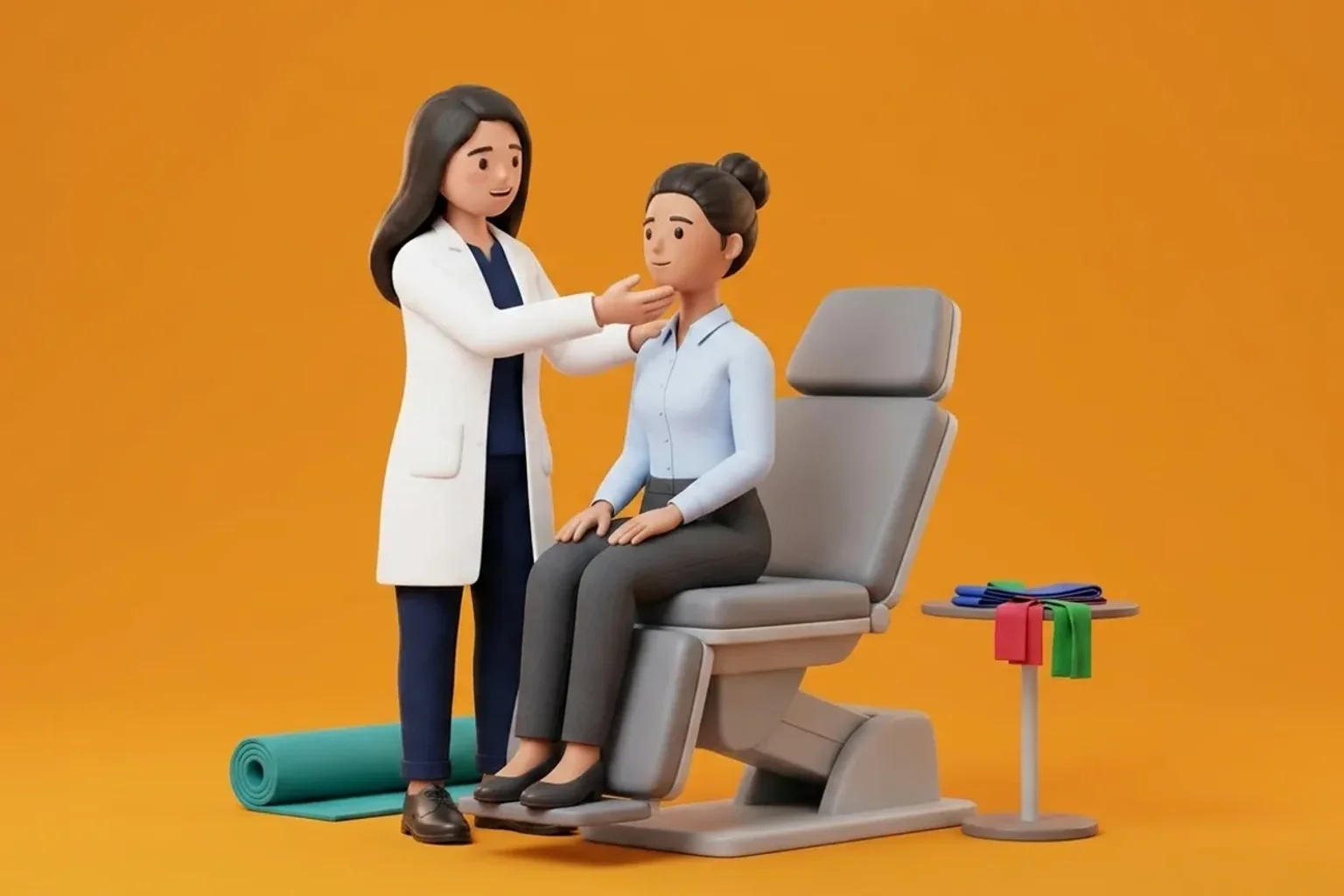
Direct access transforms the clinical trajectory of facial palsy into an agile, patient-centered care pathway. Upon noticing sudden facial asymmetry or inability to close the eye, the patient can consult an experienced physiotherapist on Day 1. The physiotherapist immediately performs an emergency stroke screen, establishes vital daytime lubrication and nighttime eyelid taping protocols, implements gentle anti-gravity facial support, and educates the patient against harmful electrical shocks, coordinating with medical neurologists and otolaryngologists as needed.
Direct-Access Acute Self-Screening and Safety Assessment
Objective: Verify key neurological safety markers before beginning home rehabilitation exercises
- 1Stand before a mirror and attempt to raise both eyebrows together: check if the forehead moves on both sides.
- 2Smile gently, showing your teeth: verify whether the facial asymmetry is isolated to one side of your face.
- 3Raise both arms horizontally in front of you for 10 seconds: verify that neither arm drifts downward or feels weak.
- 4Speak a full sentence out loud (e.g., "Today is a sunny morning"): verify that your speech comprehension is clear.
- 5If forehead movement is completely normal while your lower face is weak, or if your arm feels weak, seek emergency medical care.
| Healthcare Dimension | Traditional Multi-Tiered Referral Model | Direct First-Contact Access (NCAHP Act 2021) |
|---|---|---|
| Initial Access Time | Days to weeks waiting for general physician referral slips and hospital appointments. | Immediate Day 1 access. Patients book directly with specialized neuro-physiotherapists. |
| Corneal Defense Window | Frequently delayed; patient receives no eye taping or drop advice during initial days. | Immediate implementation of nocturnal eyelid taping, moisture chambers, and lubricating drops. |
| Autonomous Clinical Scope | Physiotherapy restricted to generic script instructions written by non-physiotherapists. | Comprehensive clinical evaluation, Sunnybrook grading, and tailored neuromuscular retraining. |
| Economic Efficiency | Compounded consultation fees for multiple intermediary visits; mandatory hospital overheads. | Transparent, direct pay-per-session pricing; zero middleman fees or mandatory package traps. |
Direct access carries rigorous clinical responsibility. Registered physiotherapists are trained to immediately recognize medical red flags, including central stroke (forehead sparing, hemiparesis), Ramsay Hunt syndrome (ear vesicles), and acute mastoiditis, referring patients immediately to emergency medical departments when detected.
Frequently Asked Questions
Will insurance companies reimburse direct-access physiotherapy in India?
With the formal implementation of the NCAHP Act 2021, leading health insurers and Third-Party Administrators (TPAs) increasingly recognize outpatient physiotherapy receipts issued by state-council-registered physiotherapists. Patients should review their policy terms for outpatient rehabilitation coverage.
How does BookPhysio.in uphold the NCAHP Act 2021 standards for patient care?
BookPhysio.in verifies every clinician's registration under the NCAHP Act 2021 or relevant State Allied Healthcare Councils. Patients enjoy direct, unhindered access to qualified facial rehabilitation specialists, paying transparently per session with zero advance commitments or platform fees.
Related recovery guides & articles
BookPhysio.in Editorial Team
The BookPhysio.in editorial team writes and maintains this content, checking it against reliable clinical sources. Content follows our medical review policy: general information only, and no page claims a clinical review until a named registered physiotherapist has signed it off.
Read our medical review policy