
NCAHP Central Register in 2026: Enrolment, Verification & Section 32 Rules
In short
Section 32 of the NCAHP Act 2021 establishes the Central Allied and Healthcare Professionals Register. Discover how state council records migrate to the national register, how the AHPR enrolment portal works in 2026, and how to verify statutory practice status.
In this guide (10 sections)
What is the NCAHP Central Register under Section 32?
Under Section 32 of the NCAHP Act 2021, the Central Register is the national digital repository compiled from State Council registers. The current AHPR portal (ahpr.abdm.gov.in) collects nationwide practitioner data, while statutory practice licenses remain issued and verified by State Allied and Healthcare Councils.
The enactment of the National Commission for Allied and Healthcare Professions (NCAHP) Act 2021 introduced a unified two-tier registry system across India: State Registers maintained under Section 31, and a Central Register maintained under Section 32. For practicing clinicians, clinic owners, and patients, understanding how these registers operate in 2026 clarifies legal practice rights and credential verification.
Section 31 vs Section 32: The statutory migration framework
The NCAHP Act establishes a structured hierarchy for professional registration. Section 31 directs every State Allied and Healthcare Council to maintain an official State Register containing the names of all qualified professionals holding recognized qualifications. Section 32 mandates that the Central Commission maintain a National Central Register, which aggregates and synchronizes data forwarded by State Councils.
| Registry Tier | Governing Section | Statutory Authority | Operational Function in 2026 |
|---|---|---|---|
| State Register | Section 31 | State Allied & Healthcare Council | Issues the legal statutory license required to practice physiotherapy within the state. |
| Central Register | Section 32 | National Commission (NCAHP) | Central digital database of registered practitioners populated via state council submissions. |
| AHPR Enrolment Portal | MoHFW / ABDM Initiative | Ministry of Health & Family Welfare | Nationwide digital data collection portal assigning Healthcare Professional IDs (HPID). |
Why AHPR enrolment is not statutory registration
The official Allied and Healthcare Professionals Enrolment portal (ahpr.abdm.gov.in) explicitly clarifies that its current online onboarding process is a nationwide data collection exercise rather than statutory registration. Practitioners enrolling on AHPR receive an enrolment number and a digital ID under the Ayushman Bharat Digital Mission (ABDM).
Until statutory registration regulations and Central Register verification APIs are formally notified and integrated with State Councils, independent clinical practice in India remains anchored in valid registration with the relevant State Allied and Healthcare Council.
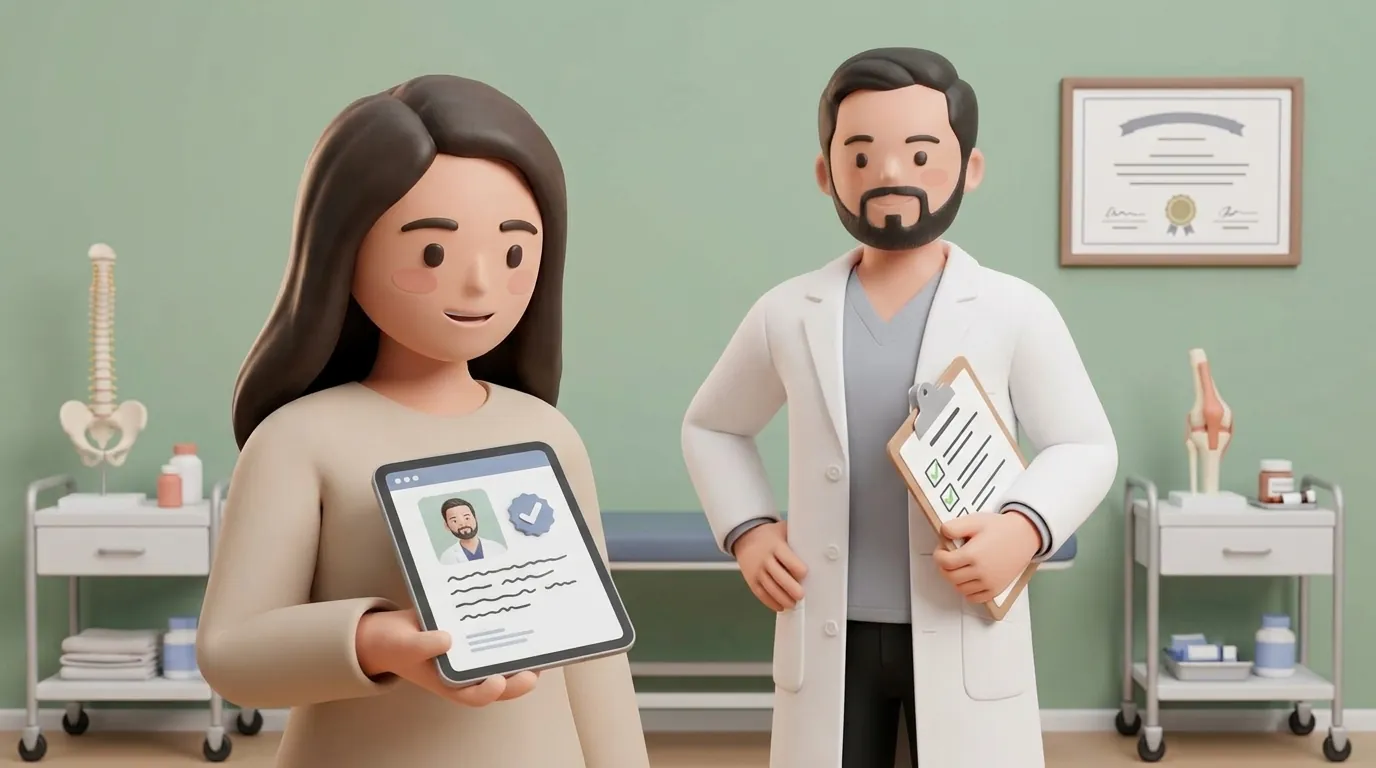
How patients and employers should verify credentials in 2026
- 1. Check the State Council certificate: Request the practitioner’s State Council registration certificate (such as DCPTOT in Delhi, MSOTPT in Maharashtra, or the Gujarat Council) and confirm active standing.
- 2. Confirm recognized degree qualifications: Verify that the clinician holds a full-time Bachelor of Physiotherapy (BPT) or Master of Physiotherapy (MPT) from an institution recognized by the UGC and NCAHP guidelines.
- 3. Verify on BookPhysio.in: Every practitioner listed on BookPhysio.in undergoes document review to confirm State Council registration or verified academic qualifications before receiving booking inquiries.
List your verified physiotherapy practice on BookPhysio.in
BookPhysio.in provides verified Indian physiotherapists with a zero-commission appointment platform for clinic consultations and home visits. With no listing fees and direct patient payments, clinicians maintain full practice autonomy while reaching patients in their local neighborhood.
Are you a qualified BPT or MPT clinician? Build your verified practitioner profile on BookPhysio.in with ₹0 listing fees and direct patient payments.
Create Your Free ProfileFrequently asked questions
Can I practice physiotherapy in India with only an AHPR enrolment number?
AHPR enrolment is a national digital health identifier and data collection mechanism. To practice legally, clinicians must hold valid statutory registration from their State Allied and Healthcare Council where one exists.
What is Section 32 of the NCAHP Act 2021?
Section 32 of the NCAHP Act mandates the creation and maintenance of the Central Allied and Healthcare Professionals Register, which serves as the nationwide master register derived from State Council records.
Is professional association membership the same as Central Register registration?
No. A voluntary professional membership (such as with the Indian Association of Physiotherapists) is an association affiliation. It does not constitute statutory registration under Section 31 or Section 32 of the NCAHP Act.
Does BookPhysio.in display NCAHP enrolment details?
Yes. BookPhysio.in allows clinicians to display their NCAHP/AHPR reference, clearly distinguishing national data collection enrolment from statutory State Council practice registration.
Evidence reviewed 20 September 2026. General information only.
The Architecture of Section 31 and Section 32: National Registration Migration
The National Commission for Allied and Healthcare Professions Act, 2021 creates a robust two-tiered registry architecture designed to eliminate quackery and guarantee clinical standards across all Indian states and union territories.
Section 31 of the Act mandates the maintenance of State Registers by respective State Allied and Healthcare Councils. Section 32 mandates that the National Commission shall maintain an online, publicly accessible Central Register containing the details of all registered allied and healthcare professionals. The relationship between these registers is symbiotic: state councils verify the original academic credentials, character, and clinical internship of practitioners, and subsequently migrate their verified records into the Central Register.
Integration with the Ayushman Bharat Digital Mission (ABDM) and Healthcare Professionals Registry
In 2026, the statutory rollout under Section 32 is converging with India's digital health infrastructure through the Ayushman Bharat Digital Mission (ABDM). Under this initiative, registered allied health professionals receive a unique Healthcare Professional ID (HPID) within the National Healthcare Professionals Registry (HPR).
This integration allows verified physiotherapists to issue digital health records, securely log treatment progress in electronic health records (EHR), and receive verified referrals from hospitals. For Indian citizens, it creates an airtight anti-fraud mechanism: verifying in seconds whether the person treating their back pain in an apartment or clinic is a genuine university-trained physiotherapist or an unregistered masseur masquerading as a clinician.
Why Registration Verification Matters for Patients and Hospital Employers in 2026
Prior to the unified Central Register, verifying a physiotherapist's credentials was cumbersome and prone to forgery. Unscrupulous individuals could produce counterfeit certificates from defunct societies and secure employment in private clinics or offer home visits.
With the digital Central Register roll-out: 1. Instant Digital Credential Verification: Patients and healthcare employers can enter a practitioner's registration number on official government portals to immediately view their verified university degrees, registration validity, and specialization. 2. Elimination of Disbarred Practitioners: If a practitioner is found guilty of professional misconduct, negligence, or sexual harassment, their registration can be suspended or revoked nationally: preventing them from simply moving to another Indian state to resume practice.
| Verification Step | Primary Document / Registry | Verification Action | Red Flag Warning Signs |
|---|---|---|---|
| 1. University Degree Check | BPT / MPT Degree Certificate & Marksheets | Verify degree from a UGC-recognized university; check 4.5-year duration | Correspondence, distance-learning, or 1-year diploma certificates |
| 2. Statutory Council License | State Council Registration Certificate (e.g. DCPTOT, MSPC) or Central NCAHP ID | Check valid registration number, issue date, and periodic renewal stamp | Displaying only a voluntary association membership certificate (e.g. IAP) |
| 3. Clinical Practice Identity | ABDM Healthcare Professional ID (HPID) / Central Register Entry | Cross-check government portal listing with practitioner's government photo ID | Practitioner refuses to provide registration details or registration name differs |
What is the "Grandfathering Clause" in the NCAHP Act for experienced physiotherapists?
The NCAHP Act includes transitional provisions (grandfathering) for existing physiotherapists who qualified before the Act came into effect. Practitioners holding recognized degrees from UGC-approved universities who have been in active clinical practice are eligible for enrolment on the State and Central Registers upon verifying their existing qualifications and internships.
How does BookPhysio.in verify physiotherapists listed on the platform?
BookPhysio.in enforces strict statutory verification: every listed practitioner must provide proof of a recognized university degree (BPT or MPT) and active registration with an official State Council or Central NCAHP authority. Voluntary association memberships alone are never accepted as practice licenses.
Sources reviewed
National Commission for Allied and Healthcare Professions (NCAHP) Act 2021 (Act No. 14 of 2021), Sections 31 & 32; Ministry of Health and Family Welfare (MoHFW) AHPR Portal Guidelines; Gazette of India notifications.
Related condition guides


Related recovery guides & articles
BookPhysio.in Editorial Team
The BookPhysio.in editorial team writes and maintains this content, checking it against reliable clinical sources. Content follows our medical review policy: general information only, and no page claims a clinical review until a named registered physiotherapist has signed it off.
Read our medical review policy