
Pain Neuroscience Education (PNE) for Chronic Post-Surgical Back Pain
In short
Discover how pain neuroscience education (PNE) helps demystify chronic post-surgical pain, separates hurt from harm, and rebuilds movement confidence.
In this guide (4 sections)
In patients experiencing chronic post-surgical back pain, symptoms frequently persist long after biological tissues, incisional wounds, and bony fusions have structurally healed. When surgical interventions fail to eliminate discomfort, patients often fall into cycles of fear, anxiety, and severe physical avoidance, assuming that ongoing pain indicates active tissue damage or failed spinal hardware. Pain neuroscience education (PNE) is an evidence-based clinical intervention that shifts the therapeutic focus from an exclusively structural-pathology model to a modern neurobiological understanding of chronic pain. By explaining how the nervous system processes danger messages, how the spinal cord dorsal horn amplifies signals, and why pain functions as a protective alarm rather than a measure of tissue damage, PNE reconceptualizes pain for the patient. Integrating PNE with progressive active physiotherapy reduces fear-avoidance beliefs, decreases nervous system threat sensitivity, and empowers patients to re-engage in daily movement without fear of reinjury.
Indian Cultural Beliefs: Complete Rest, Family Overprotection, and Fear of Moving
Cultural perceptions surrounding spinal surgery in India frequently reinforce severe movement fear. Following back surgery, well-meaning multigenerational family members often insist that the patient remain completely bedridden for months, discouraging any participation in domestic life, temple visits, or social functions. Patients are warned that bending forward, sitting on dining chairs, or walking outside will snap surgical screws or displace implants. This prolonged immobilization accelerates physical deconditioning, increases stiffness, and sensitizes the nervous system to even minor movements. Homemakers feel demoralized being barred from their own kitchens, while family elders develop profound helplessness. Pain neuroscience education plays a vital role in Indian family settings by educating both the patient and their caregivers that movement is biologically nourishing for the spine, that spinal implants are exceptionally durable, and that gradual return to domestic activity is safe and therapeutic.
Neuroplastic Remodeling, Synaptic Plasticity, and the Sensitive Alarm Metaphor
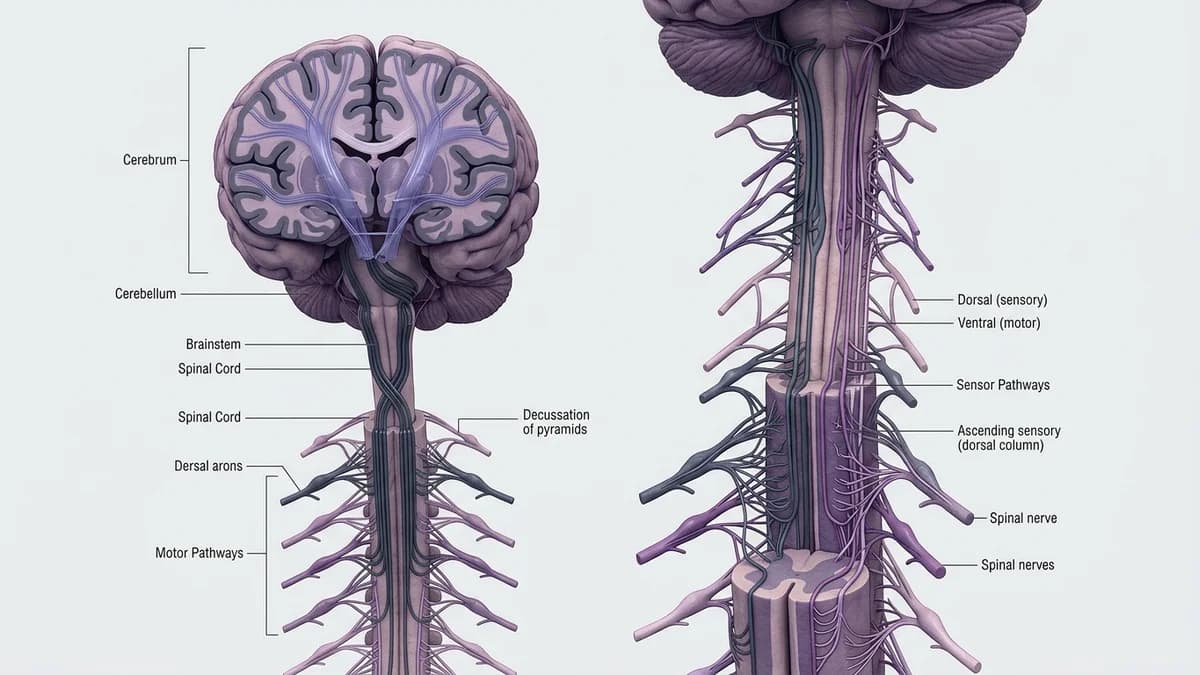
The transition from acute post-surgical nociception to chronic persistent pain involves extensive neurobiological remodeling across the central nervous system. Following surgical tissue trauma and nerve irritation, continuous bombardment of primary afferent nociceptors induces long-term potentiation in the second-order dorsal horn neurons of the spinal cord. In a healthy state, non-nociceptive tactile signals from Abeta fibers are separated from pain-carrying Adelta and C fibers through inhibitory interneurons utilizing gamma-aminobutyric acid (GABA). In chronic sensitized states, these inhibitory interneurons undergo apoptosis, allowing ordinary mechanical signals from light touch, gentle bending, or muscle contraction to cross over and activate pain pathways (allodynia). In pain neuroscience education, this phenomenon is explained using the sensitive house alarm metaphor: the nervous system has recalibrated its sensitivity so that a gentle gust of wind triggers the siren, even though no intruder is present. Teaching patients that pain represents alarm sensitivity rather than structural harm reduces cerebral threat appraisal and down-regulates pain signaling.
Integrating Metaphors with Graded Movement Exposure and Calming Drills
Pain neuroscience education is most effective when paired immediately with active, graded movement exposure. Theoretical explanations alone cannot convince a sensitized nervous system that bending is safe; the patient must physically experience pain-free or well-tolerated movement to update internal threat perceptions. Physiotherapists introduce low-threat movement exploration, such as supine pelvic tilts, gentle hip circles, and supported diaphragmatic breathing drills. Diaphragmatic breathing stimulates the vagus nerve, promoting parasympathetic tone, reducing systemic sympathetic arousal, and decreasing muscle guarding. Movement is framed not as a test of spinal fragility, but as a method of calming the sensitive alarm system and re-educating cortical movement maps. Patients learn to interpret post-exercise soreness as a natural sign of sensitive nerves rather than catastrophic hardware failure, allowing them to expand their activity envelope safely.
Supported Diaphragmatic Breath in Hook-Lying Posture
Objective: Activate the parasympathetic nervous system, down-regulate sympathetic threat appraisal, and relax guarded paraspinal muscles
- 1Lie comfortably on your back on a supportive mat or bed, bending both knees with your feet resting flat on the surface.
- 2Place one hand on your upper chest and the other hand on your lower belly just below your navel.
- 3Inhale slowly and quietly through your nose for a count of 4, focusing on allowing your lower abdomen to rise gently while keeping your chest quiet.
- 4Pause for a brief, relaxed count of 2 at the top of your breath without tensing your neck or jaw.
- 5Exhale slowly and smoothly through slightly parted lips for a count of 6, feeling your abdomen fall naturally and visualizing your spinal muscles softening.
| Conceptual Dimension | Traditional Biomedical Model | Pain Neuroscience Model (PNE) |
|---|---|---|
| Meaning of Pain | Pain is an exact indicator of ongoing tissue damage, hardware failure, or structural breakdown | Pain is a protective alarm generated by the brain when danger messages outweigh safety messages |
| Response to Flare-Ups | Strict bedrest, immobilization, immediate medication escalation, and catastrophic fear of reinjury | Active pacing, calming diaphragmatic breathing, gentle movement, and recognizing alarm sensitivity |
| View of the Spine | Fragile, damaged mechanical structure with delicate screws that could break at any moment | Robust, adaptable biological system supported by strong bone, durable hardware, and trainable muscles |
| Rehabilitation Goal | Complete avoidance of all uncomfortable postures; reliance on passive modalities and rest | Gradual desensitization of the nervous system, restoring movement confidence, and functional freedom |
While pain neuroscience education reassures patients that chronic pain does not equal structural damage, clinicians and patients must remain vigilant for true physiological emergencies. Progressive neurological deficits, new bowel or bladder incontinence, numbness in the saddle area, unexplained weight loss, or high fever with surgical wound inflammation are not benign alarm errors; they require immediate medical and surgical evaluation.
Frequently Asked Questions
Does pain neuroscience education mean my back pain is all in my head?
Not at all. Your pain is completely real. Pain neuroscience education explains that all pain is produced by the brain as an authentic protective response. When pain becomes chronic after surgery, the nervous system becomes hypersensitive, amplifying normal nerve signals into pain. Understanding this neurobiology helps calm the nervous system so you can move with confidence.
Do I need a doctor referral to see a post-spinal surgery physiotherapist on BookPhysio.in?
BookPhysio.in does not require a doctor referral. Under the National Commission for Allied and Healthcare Professions (NCAHP) Act 2021, patients across India enjoy direct access to autonomous registered physiotherapists. Through BookPhysio.in, you connect directly with verified clinicians and pay per session with transparent fees, completely free from advance package commitments, commission markups, or platform subscription charges.
Related condition guides

Related recovery guides & articles
BookPhysio.in Editorial Team
The BookPhysio.in editorial team writes and maintains this content, checking it against reliable clinical sources. Content follows our medical review policy: general information only, and no page claims a clinical review until a named registered physiotherapist has signed it off.
Read our medical review policy