
Home visit physiotherapy equipment checklist: what to pack in your clinical kit
In short
Building an efficient, professional home visit physiotherapy practice starts with the right mobile kit. Review the complete checklist of portable assessment tools, exercise equipment, and modalities to deliver clinical-grade care at patient homes.
In this guide (11 sections)
Delivering physiotherapy directly at a patient home offers a realistic clinical view of their daily environment, functional hurdles, and mobility challenges. To deliver safe and authoritative care outside a traditional hospital setup, mobile physiotherapists must pack a lightweight, durable, and comprehensive clinical kit.
Tier 1: Essential clinical assessment and vital monitoring tools
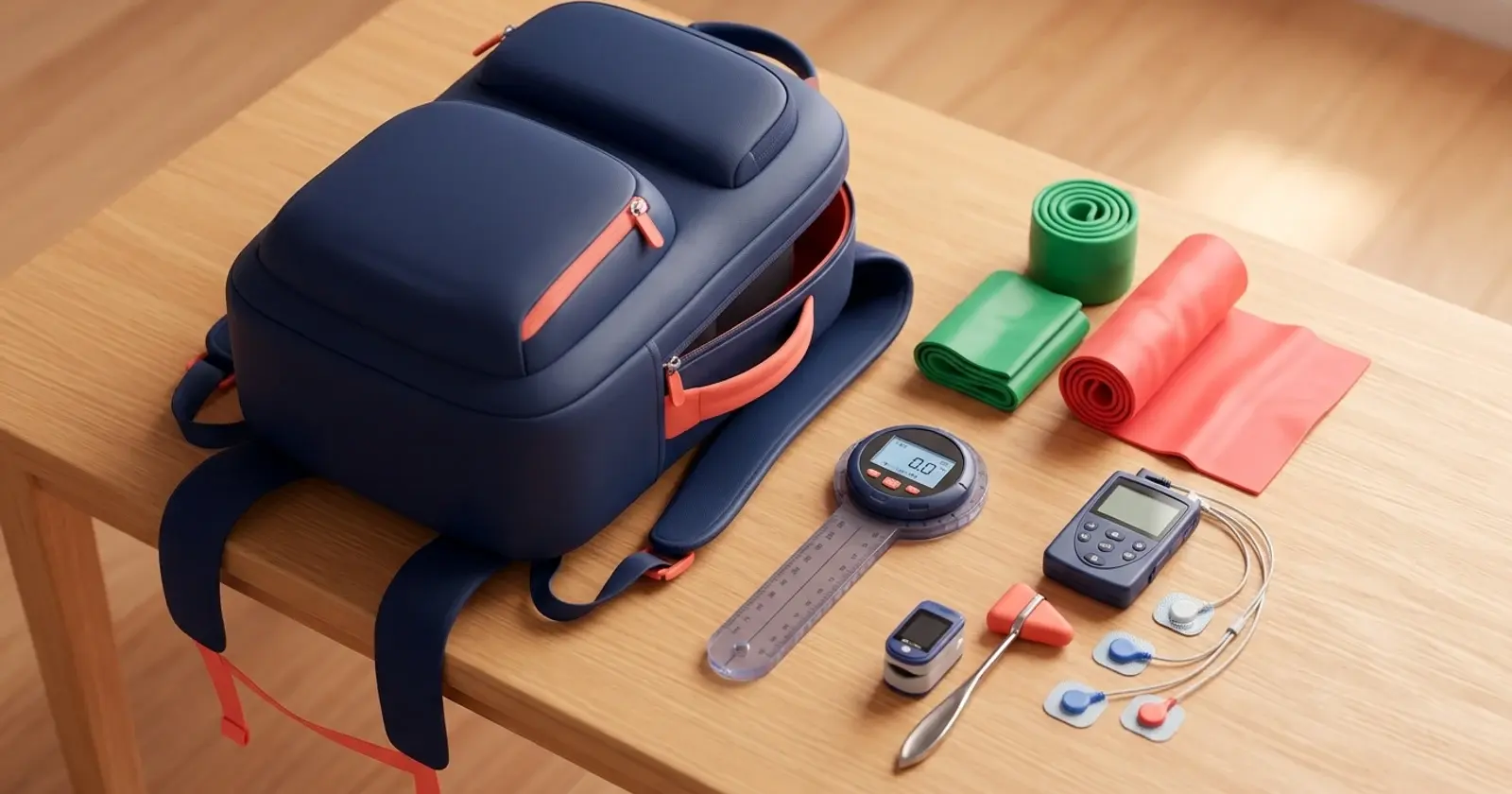
- Digital blood pressure monitor and pulse oximeter: Screening baseline vitals before and after exertion is non-negotiable for geriatric, cardiac, and neurological home care patients.
- Universal 360-degree clear goniometer: Objective range of motion measurement provides tangible proof of joint recovery to patients, family members, and referring physicians.
- Reflex hammer and sensory monofilaments: Crucial for conducting rapid dermatomal and deep tendon reflex evaluations in cases of radiculopathy, disc prolapse, or peripheral neuropathy.
- Non-stretch medical measuring tape: Allows accurate documentation of limb girth changes due to muscular atrophy or post-surgical lymphedema.
Tier 2: Active rehabilitation and progressive resistance gear
| Rehabilitation Item | Clinical Purpose | Portability & Maintenance | Estimated Cost (₹) |
|---|---|---|---|
| Color-coded resistance bands and loops | Progressive loading for rotator cuff, hip abductors, and postural muscles | Extremely lightweight, easily washed with mild disinfectant | ₹800 to ₹1,500 |
| Inflatable balance cushion / wobble disc | Proprioceptive retraining and ankle stability drills | Deflatable for travel, fits neatly into a standard backpack | ₹600 to ₹1,200 |
| Rigid strapping tape and kinesiology tape | Joint offloading, patellofemoral taping, and edema reduction | Takes minimal space, requires medical scissors in your kit | ₹400 to ₹800 per roll |
| Silicone myofascial release cups | Decompressing tight muscle fascia and scar tissue | Unbreakable, easily sanitized with hospital-grade alcohol wipes | ₹900 to ₹1,800 |
Tier 3: Portable electrotherapy and pain management modalities
While active exercise is the core of long-term recovery, pain modulation often facilitates earlier active participation. A dual-channel portable TENS or EMS battery unit (costing ₹1,500 to ₹3,500) offers targeted pain relief for acute sprains and paraspinal spasms without adding heavy bulk to your travel bag. Always carry spare lead wires and fresh alkaline batteries.
Hygiene and professional presentation standards
Professionalism in domiciliary care is defined by strict hygiene. Carry alcohol-based hand rub, surface disinfectant wipes to clean equipment before and after every patient contact, disposable paper couch rolls, and clean shoe covers for rain and monsoon visits. Presenting a pristine clinical kit builds immediate patient trust.
What is the average total cost to assemble a home visit physiotherapy kit?
A comprehensive professional kit in India costs between ₹6,000 and ₹12,000, which is typically recouped within the first 10 to 15 home visit sessions.
Should I carry heavy therapeutic ultrasound machines on home visits?
No. Heavy mains-powered ultrasound machines add unnecessary travel strain; active exercise, manual therapy, and compact TENS units are more practical and evidence-supported.
Evidence reviewed 25 September 2026. General information only.
Ergonomic Kit Packing: Balancing Clinical Utility with Portability
A common mistake made by new home visit physiotherapists is carrying an excessively heavy bag that strains their own spine over months of travel. A medical kit that weighs over 6 kilograms quickly becomes an occupational hazard when climbing narrow stairs in multi-story residential apartments without elevators. A professional domiciliary kit should weigh between 3.5 and 5.0 kg, organized into distinct modular pouches inside a padded, water-resistant backpack.
| Equipment Tier & Item | Clinical Purpose | Estimated Weight | Average 2026 Cost in India |
|---|---|---|---|
| Digital Oximeter & BP Monitor | Screening baseline vitals and post-exertional cardiac response | 350 grams | ₹1,500 to ₹2,500 |
| 360° Clear Goniometer & Inclinometer | Objective joint range of motion documentation | 120 grams | ₹400 to ₹900 |
| Graded Resistance Bands (Set of 4) | Progressive loading for rotator cuff, glutes, quadriceps | 250 grams | ₹600 to ₹1,200 |
| Dual-Channel Portable TENS/EMS Unit | Bedside neuromodulation, acute muscle spasm inhibition | 450 grams | ₹1,800 to ₹3,500 |
| Medical Disinfection & Hygiene Kit | Alcohol wipes, hand sanitizer, disposable plinth sheets | 500 grams | ₹350 per month |
| Emergency Glucose & Saline Wipes | Rapid bedside triage for diabetic or hypertensive elderly patients | 150 grams | ₹200 |
Sanitization and Infection Control Protocols Between Patient Homes
Cross-contamination between patient homes is a serious clinical concern, especially when treating vulnerable post-ICU, geriatric, or immunocompromised individuals. Strict hygiene invariants include: 1. Hand Hygiene: Perform hand rubbing with 70% isopropyl alcohol immediately upon entering and before leaving the home. 2. Modality Disinfection: Wipe TENS lead wires, blood pressure cuffs, and goniometers with hospital-grade disinfectant wipes after every patient. 3. Electrode Dedication: Never share adhesive TENS electrodes between patients; assign a dedicated sealed electrode pack to each individual client.
Emergency Readiness: Essential Triage Tools for Solo Practitioners
In domestic environments, clinicians lack emergency hospital code teams. A well-prepared practitioner carries basic emergency triage items: glucose chewable tablets or sachets (for managing sudden exercise-induced hypoglycaemic episodes in diabetic seniors), emergency contact sheets for local ambulance services, and adhesive wound dressings for minor accidental skin tears.
Digital Record-Keeping on the Go: Paperless Assessment Apps
Carrying bulky paper clipboards and medical assessment forms adds unnecessary weight. Modern clinicians utilize secure, password-protected tablets or smartphones with dedicated clinical charting templates. This allows instant documentation of range of motion, photo-recording of wound healing or posture, and automated generation of PDF exercise handouts sent directly to the patient WhatsApp or email.
Vehicle Trunk Organisation and Weather Protection in Indian Monsoons
Transporting medical equipment during intense Indian monsoons or extreme summer heat requires deliberate protective measures. Electronic modalities (such as digital blood pressure monitors, pulse oximeters, and TENS units) must be housed in waterproof dry bags or sealed Pelican-style hard cases. Keeping a secondary change of clean clinic footwear, a spare clinical apron, and moisture-absorbing silica gel packs inside electronic equipment pouches ensures that sensitive medical hardware remains fully functional and protected against humidity damage even during intense monsoon downpours.
Biohazard and Medical Waste Segregation in Domiciliary Practice
Home visit physiotherapists performing invasive modalities: such as trigger point dry needling: must adhere strictly to the Biomedical Waste Management Rules 2016. Always carry a puncture-resistant, rigid yellow sharps container with a secure biohazard lock. Never dispose of contaminated needles, alcohol prep swabs, or bloodstained cotton into domestic household trash bins. All clinical waste must be transported back to your clinic base or affiliated disposal facility for certified incineration.
What type of bag is best for carrying home visit physiotherapy equipment?
A water-resistant, multi-compartment ergonomic backpack with padded shoulder straps and lumbar support is vastly superior to a shoulder tote or messenger bag, as it balances weight symmetrically across both shoulders.
Can I carry a portable ultrasound therapy unit for home visits?
While compact portable ultrasound machines exist (weighing 1 to 2 kg), active exercise therapy and manual joint mobilisations generally provide superior evidence-based outcomes for most home care conditions without the added baggage weight.
How do I manage patients who do not have a suitable bed or couch for exercises?
Carry a compact, high-density roll-up exercise mat in your vehicle. For elderly patients who cannot get down onto the floor, bed-level exercises, sturdy dining chairs with armrests, and hallway walls provide effective surfaces for rehabilitation.
Should I carry dry needles for home visits in India?
If you hold certified dry needling credentials and have clinical justification, you may carry sealed, single-use sterile needles along with a puncture-proof yellow sharps disposal container compliant with biomedical waste norms.
How often should home visit equipment be calibrated or replaced?
Blood pressure monitors and digital pulse oximeters should be calibrated every 6 to 12 months. Elastic resistance bands should be inspected weekly for micro-tears and replaced immediately if chalking or fraying occurs.
Sources reviewed
Indian Association of Physiotherapists Guidelines for Domiciliary Practice; World Physiotherapy Standards of Clinical Practice; Infection Prevention in Ambulatory Healthcare Settings Guidelines.
Related recovery guides & articles
BookPhysio.in Editorial Team
The BookPhysio.in editorial team writes and maintains this content, checking it against reliable clinical sources. Content follows our medical review policy: general information only, and no page claims a clinical review until a named registered physiotherapist has signed it off.
Read our medical review policy