
Symphysis Pubis Dysfunction: Postpartum Waddling Gait, Bed Transfers, and Mobility Guide in India
In short
Severe groin pain, a clicking pubic bone, and a waddling gait after childbirth signal symphysis pubis dysfunction. Learn practical bed transfer techniques and safe physiotherapy exercises.
In this guide (6 sections)
Symphysis pubis dysfunction (SPD), also classified under pregnancy-related pelvic girdle pain, involves excessive laxity, misalignment, or inflammatory stress at the fibrocartilaginous joint connecting the two pubic bones. Mothers in India frequently describe excruciating pain in the front of the pelvis that radiates down the inner thighs, accompanied by an audible clicking or grinding sensation when walking. Everyday tasks like getting out of an auto-rickshaw, rolling over in bed, or parting the knees to dress trigger sharp, incapacitating groin spasms, leading to a compensatory waddling gait. Targeted physiotherapy aims to restore anterior pelvic stability and prevent chronic joint shear.
1. Functional Biomechanics: Shearing Forces on the Pubic Fibrocartilage
The symphysis pubis is an amphiarthrodial joint reinforced by the superior and arcuate pubic ligaments. Under non-pregnant conditions, physiologic joint translation is negligible (under 1 millimetre). During childbirth, hormonal relaxation allows physiological widening up to 9 millimetres. However, if asymmetrical shearing forces occur, such as during single-leg weight bearing or forceful hip abduction, one pubic bone shifts vertically relative to the other. This vertical translation stretches the rich nociceptive nerve network of the pubic periosteum, causing intense localized tenderness and reflex adductor muscle spasm.
2. Domestic Indian Context: Daily Chores, Ergonomics, and Privacy
Indian home architecture and transport present multiple challenges for SPD. Stepping into auto-rickshaws, climbing high bus footboards, straddling two-wheelers as a pillion passenger, and separating the knees on traditional Indian squat toilets directly shear the pubic joint. Furthermore, turning in bed on standard cotton floor mattresses (gadda) without support is intensely painful. Physiotherapists advise keeping the knees clamped together like a mermaid when getting into vehicles, sitting down to wear salwar or sarees, and placing a firm pillow between the knees when sleeping.
3. Clinical Special Tests and Physical Examination
Clinical diagnosis involves direct palpation of the superior border of the pubic symphysis (eliciting exquisite localized tenderness), the Trendelenburg single-leg stance test (evaluating pelvic drop and pain), and the Stork test to assess sacroiliac-pubic kinetic linkage. An inter-pubic distance exceeding 10 to 12 millimetres on ultrasound or radiograph indicates significant diastasis requiring strict stabilization.
| Severity Grade | Clinical Presentation | Gait Pattern | Required Domestic Adaptation |
|---|---|---|---|
| Mild SPD | Groin ache after prolonged walking | Slight limp at end of day | Limit single-leg stance, wear flat shoes |
| Moderate SPD | Sharp pain with rolling in bed, stairs | Pronounced waddling gait | Pillow between knees, pelvic belt, small steps |
| Severe Pubic Diastasis | Severe pain, audible clicking, inability to walk | Unable to bear weight unilaterally | Rigid pelvic orthosis, crutches, home physio |
| Recovery Phase | Minimal pain with controlled transfers | Symmetrical walking pace | Gradual reintroduction of single-leg loading |
4. Stage-by-Stage Functional Physiotherapy Protocol
Rehabilitation prioritises eliminating asymmetrical shear forces, relaxing hypertonic adductor muscles, and building isometric transverse abdominal and gluteal support.
Phase 1: Symmetrical Mermaid Bed Transfers and Pillow Support
Objective: Eliminate vertical shearing forces on the pubic symphysis during bed mobility and sitting transitions.
- 1When resting in side-lying, place a firm pillow between your knees and ankles so your legs remain parallel.
- 2To sit up from bed, squeeze your knees together firmly as if holding a coin between them.
- 3Roll your entire body as a single unit onto your side without allowing your knees to separate.
- 4Swing your lower legs off the edge of the bed together while pushing down with both hands to rise smoothly into sitting.
Phase 2: Gentle Isometric Adductor Squeeze with Breath Coordination
Objective: Reset symmetrical neuromuscular tone across the pubic ramus without creating shearing strain.
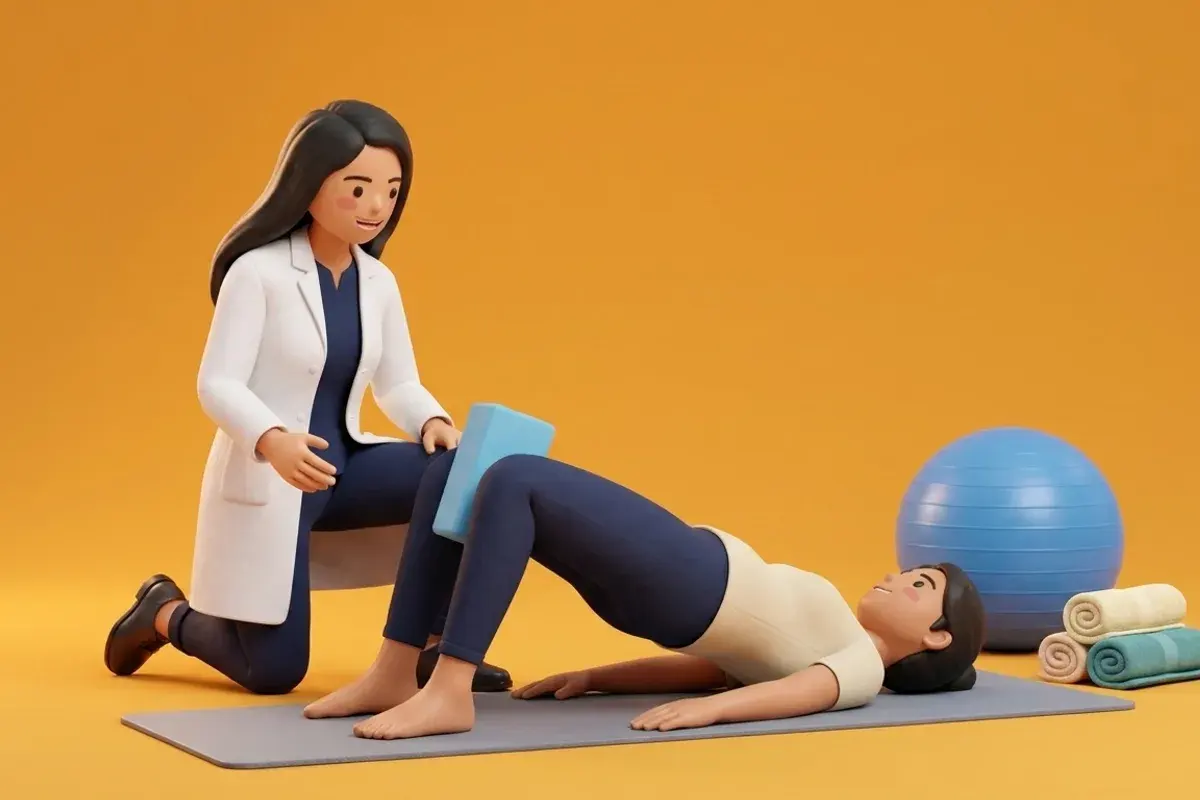
- 1Lie on your back with knees bent at 90 degrees and feet flat on the floor.
- 2Place a soft 6-inch rubber ball or folded small pillow between your knees.
- 3Inhale gently to prepare. As you exhale slowly, apply a soft 20-30 percent squeeze into the ball.
- 4Hold the gentle squeeze for 5 seconds, breathing smoothly without straining.
- 5Gradually release the pressure over 3 seconds and rest before the next repetition.
Phase 3: Symmetrical Seated Gluteal Sets with Abdominal Bracing
Objective: Strengthen posterior pelvic stabilisers to reduce compensatory waddling gait mechanics.
- 1Sit upright on a sturdy chair with your feet flat on the floor and knees hip-width apart.
- 2Place your hands on your lower abdomen to ensure deep core engagement.
- 3Firmly squeeze your buttocks together as if trying to rise slightly off the seat.
- 4Hold the isometric contraction for 5 seconds while keeping your breathing steady.
- 5Relax the muscles completely and repeat without shifting your pelvis.
Seek emergency orthopaedic and obstetric evaluation if you experience: sudden inability to bear any weight on your legs, a palpable widening or gap at the front of your pubic bone following delivery, severe incontinence, or high fever with intense local pubic warmth, which could indicate osteitis pubis or joint infection.
5. Clinic Consultation, Home Visits, and Transparent Fee Benchmarks
Under the National Commission for Allied and Healthcare Professions (NCAHP) Act 2021, patients in India can consult a registered physiotherapist directly without an upfront referral, though BookPhysio.in does not ask for one. Because SPD severely restricts mobility, domiciliary home visits are often the safest option during the acute postpartum weeks. Clinic consultations across Indian urban centres typically range from ₹500 to ₹1,500, while personalised home visits range from ₹700 to ₹2,000. Patients pay the physiotherapist directly at each appointment, with no platform commission.
6. Frequently Asked Questions
Can I use an Indian squat toilet if I have symphysis pubis dysfunction?
Using a traditional squat toilet forces the hips into extreme abduction and deep flexion, which places severe shearing tension across the pubic joint. It is strongly advised to use a western commode or fit a raised portable commode chair over the squat toilet until the pubic joint stabilizes.
How long does it take to recover from postpartum SPD in India?
With proper activity modification, pelvic belt support, and targeted physiotherapy, most women experience substantial pain relief within 4 to 8 weeks. Complete resolution and return to vigorous walking typically occur within 3 to 4 months as pelvic ligaments regain stiffness.
Related condition guides
Related recovery guides & articles
BookPhysio.in Editorial Team
The BookPhysio.in editorial team writes and maintains this content, checking it against reliable clinical sources. Content follows our medical review policy: general information only, and no page claims a clinical review until a named registered physiotherapist has signed it off.
Read our medical review policy