
Transversus Abdominis and Oblique Strengthening to Unload the Pubic Symphysis
In short
Detailed clinical guide to deep core stabilization, detailing how transversus abdominis and internal oblique strengthening dynamically unloads the pubic symphysis.
In this guide (4 sections)
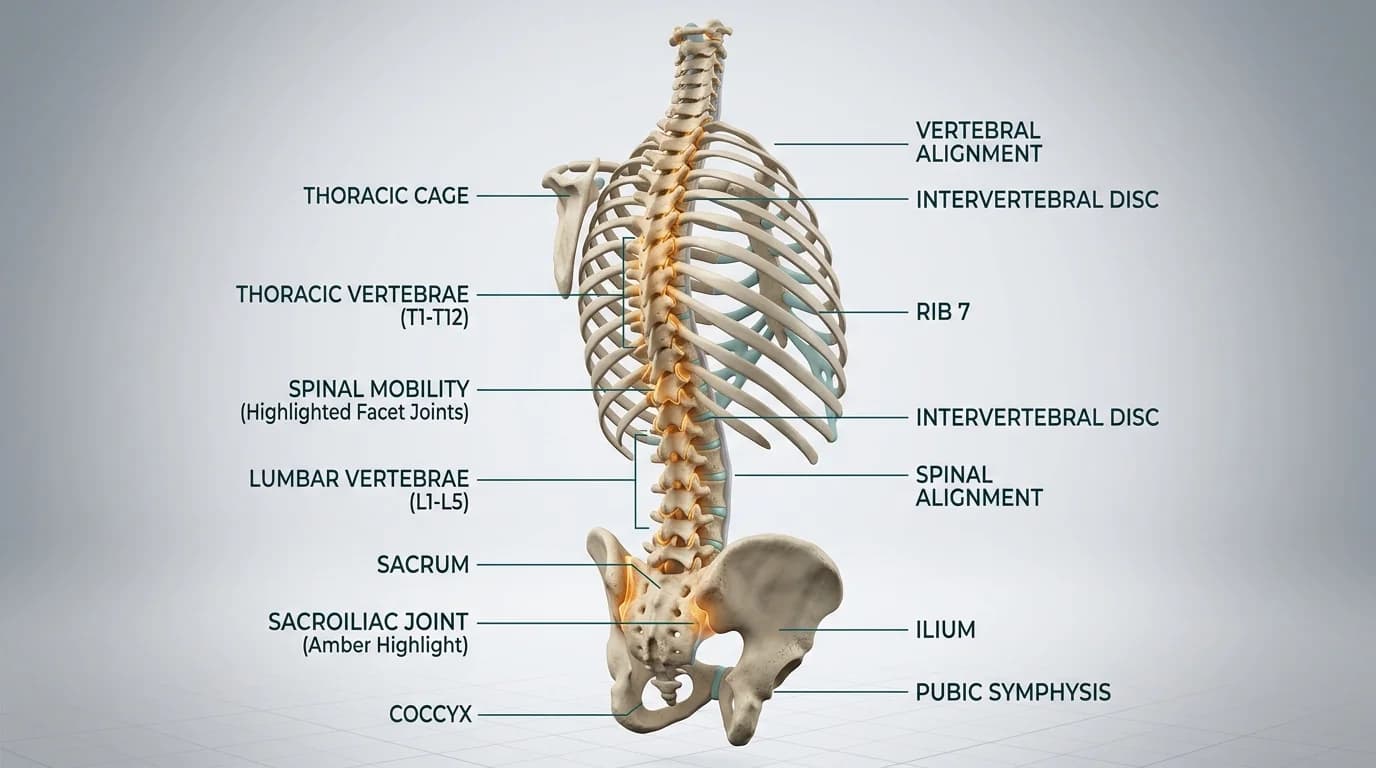
In the management of athletic pubalgia, sports hernia, and osteitis pubis, the deep muscular corset formed by the transversus abdominis and internal oblique musculature plays a decisive role. Biomechanically, the pubic symphysis is vulnerable to destructive vertical, horizontal, and rotational shear forces whenever the lower extremities move through high-velocity cutting, kicking, or acceleration. The rectus abdominis and adductor longus attach directly to the anterior pubic bone, creating strong tensile vectors that can pull the joint apart if left unbuffered. The transversus abdominis and internal oblique, by contrast, insert via the conjoint tendon and broad thoracolumbar fascia, encircling the abdominal cavity like a supportive weight-belt. When these deep stabilizers contract, they generate intra-abdominal pressure and active lateral tension that compresses the pelvic ring, stabilizing the sacroiliac joints and directly unloading the fragile pubic symphysis.
Monsoon Scooter Slipping, Heavy Kitchen Water Cans, and Domestic Postures
In India, weakness of the deep transversus abdominis and oblique musculature frequently turns routine domestic activities into severe groin pain triggers. Commuters riding two-wheelers across broken Indian roads encounter sudden potholes and speed breakers that jar the entire pelvic framework; without active deep abdominal bracing, each vertical impact transfers directly into the pubic bone. Maneuvering heavy twenty-litre packaged drinking water cans (Bisleri or Kinley jars) to invert them onto water dispensers requires sudden forward-bending and twisting under load, placing immense strain on the lower abdominal aponeurosis. Similarly, rising from low wooden stools or the floor while holding a heavy brass kadai or bucket of water forces an unconditioned pelvic ring to absorb asymmetrical loads. Retraining feed-forward deep core bracing transforms how the body handles these daily domestic physical demands.
Conjoint Tendon Mechanics, Inguinal Wall Reinforcement, and Symphyseal Stress Shielding
The anatomical intimacy between the internal oblique, transversus abdominis, and the inguinal canal underscores the mechanism of athletic pubalgia. The lower free borders of the internal oblique and transversus abdominis fuse medially to form the conjoint tendon, which arches over the spermatic cord (or round ligament) to insert into the pubic crest and pectineal line. Immediately deep to this muscular arch lies the transversalis fascia, which forms the posterior floor of the inguinal canal. In athletes with chronic groin pain, ultrasound and magnetic resonance imaging frequently reveal thinning, fenestration, or avulsion of this posterior wall. When the transversus abdominis contracts, its horizontal fibers pull the conjoint tendon inferiorly and laterally, acting like a protective shutter that compresses the inguinal canal and shields the pubic symphysis against the disruptive traction exerted by the adductor muscles.
Progressive Deep Core Conditioning: From Static Drawing-In to Dynamic Anti-Rotation
Rehabilitation progresses from isolated motor control retraining to high-load functional stability. Phase one focuses on conscious activation of the transversus abdominis in supine or four-point kneeling using the abdominal draw-in maneuver (ADIM), verified through palpation medial to the anterior superior iliac spine (ASIS) without compensatory rectus abdominis bulking. Phase two integrates limb movement while maintaining deep core tension, incorporating heel slides, dead bug variations, and side planks to challenge the internal and external oblique slings. Phase three advances to upright closed-kinetic-chain drills, such as standing anti-rotation Pallof presses, cable wood-chops, and suitcase carries with unilateral weight. By conditioning the deep core to fire automatically prior to limb movement, the patient establishes permanent neuromuscular protection for the pubic symphysis.
Dead Bug with Contralateral Isometric Knee Press and Abdominal Bracing
Objective: Train deep transversus abdominis and oblique co-contraction to dynamically stabilize the pelvis against limb shear
- 1Lie on your back on a comfortable exercise mat with your hips and knees bent to ninety degrees in tabletop position, arms pointed toward ceiling.
- 2Gently draw your lower abdomen inward toward your spine, flattening your lumbar spine firmly against the floor without holding your breath.
- 3Place your right hand firmly against your left knee, pressing hand against knee and knee against hand to create active diagonal core tension.
- 4While maintaining that diagonal press, slowly extend your left arm overhead and lower your right leg straight toward the floor until your heel hovers just above the mat.
- 5Hold the extended position for two seconds, keeping your lower back firmly pressed to the floor, then return smoothly to the starting position.
| Rehab Phase | Primary Exercises and Cues | Biomechanical and Clinical Target |
|---|---|---|
| Phase 1: Isolated Motor Control | Supine abdominal draw-in maneuver with biofeedback; 4-point kneeling deep core hollowing | Recruits transversus abdominis; eliminates rectus dominance and establishes feed-forward firing |
| Phase 2: Dynamic Dissociation | Supine dead bug variations, modified side planks from knees, quadruped bird-dog holds | Reinforces internal oblique and posterior inguinal wall; resists pelvic rotational sway |
| Phase 3: Anti-Rotation Strength | Half-kneeling cable Pallof press, standing band anti-rotation holds, tall-kneeling diagonal lifts | Builds anterior oblique sling capacity; shields pubic joint against multidirectional athletic shear |
| Phase 4: Functional Loading | Unilateral farmer suitcase carries, rotational medicine ball decelerations, lateral slide lunges | Replicates field sport impact; restores automatic core pre-activation during high-speed cutting |
Patients with athletic pubalgia must be strictly cautioned against performing breath-holding Valsalva maneuvers during heavy resistance training. Massive spikes in intra-abdominal pressure against a closed glottis force abdominal viscera downward against the weakened posterior inguinal wall, accelerating fascial tearing and exacerbating conjoint tendon micro-tears. Emphasize continuous, relaxed exhalation during the exertion phase of every exercise.
Frequently Asked Questions
How do I know if I am activating my deep transversus abdominis correctly instead of just sucking in my stomach?
Place your fingertips two centimetres medial and slightly inferior to your pelvic hip bones (ASIS). When you gently draw your lower abdomen inward without moving your ribcage, you should feel a flat, deep tension firming up under your fingertips without the abdominal wall bulging outward. If the muscles dome upward into your fingers, you are using the superficial rectus abdominis rather than the deep transversus abdominis.
Do I need a doctor referral to treat groin pain and sports hernia on BookPhysio.in?
BookPhysio.in does not require a doctor referral. Under the National Commission for Allied and Healthcare Professions (NCAHP) Act 2021, patients across India enjoy direct access to autonomous registered physiotherapists. Through BookPhysio.in, you connect directly with verified clinicians and pay per session with transparent fees, completely free from advance package commitments, commission markups, or platform subscription charges.
Related recovery guides & articles
BookPhysio.in Editorial Team
The BookPhysio.in editorial team writes and maintains this content, checking it against reliable clinical sources. Content follows our medical review policy: general information only, and no page claims a clinical review until a named registered physiotherapist has signed it off.
Read our medical review policy