
Physiotherapy for AC Joint Injury (Shoulder Separation)
Quick answer
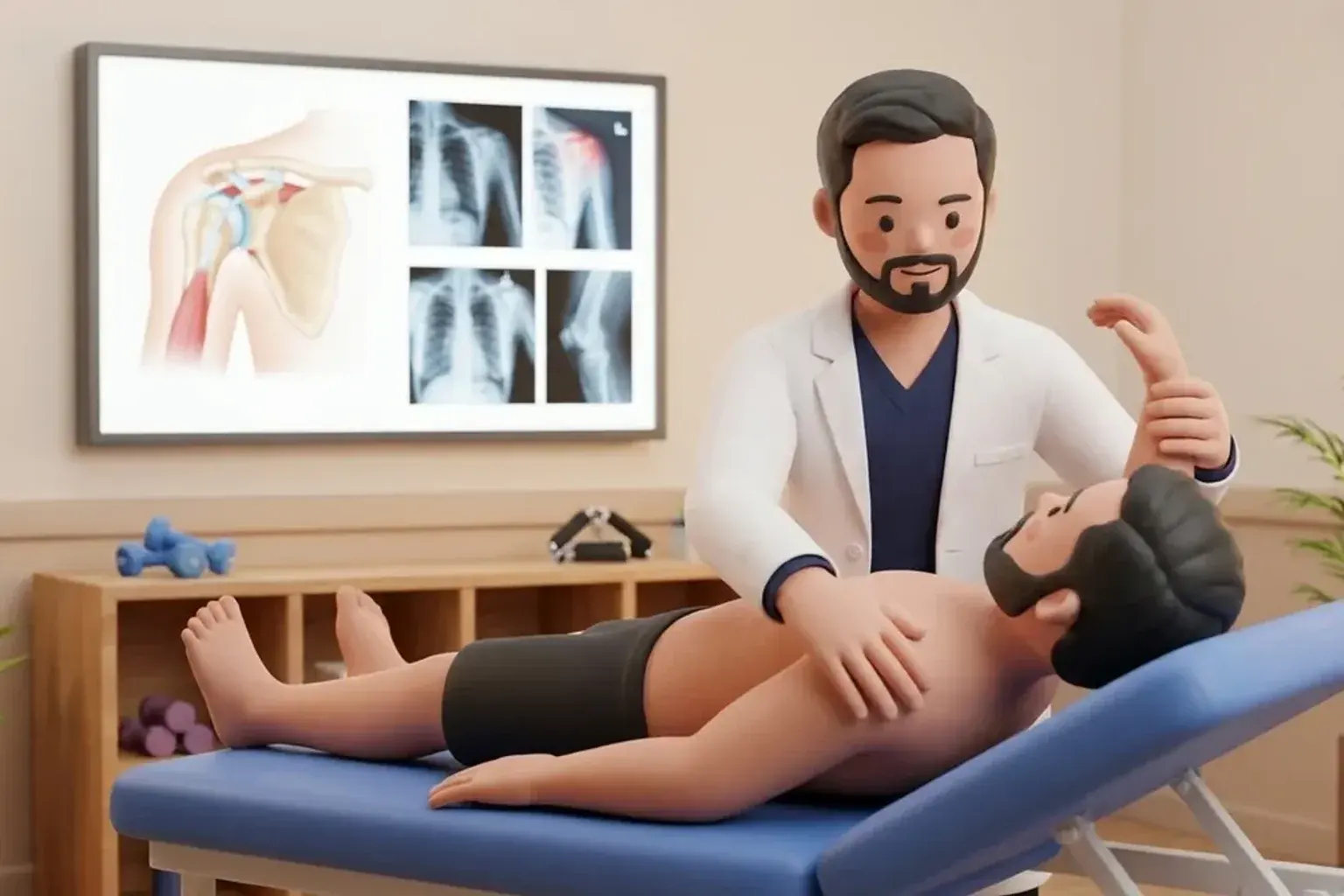
Physiotherapy is the primary conservative management for Grade I and II acromioclavicular (AC) joint sprains and post-surgical Grade III separations. A sports physiotherapist guides progressive rotator cuff and periscapular strengthening, restores overhead reaching, and safely unloads the joint during daily activities and sports.
- Ligament sprain at the top of the shoulder
- Common from direct falls onto the shoulder
- Grade I and II recover well without surgery
- Pain triggered by crossing the arm over chest
- Scapular training restores overhead reaching
What is an AC joint injury?
An acromioclavicular (AC) joint injury (commonly termed shoulder separation) occurs when a direct blow to the tip of the shoulder or a fall onto an outstretched hand damages the acromioclavicular and coracoclavicular ligaments. In sports such as cricket fielding, cycling, and motorcycle falls across India, AC joint sprains cause localized superior shoulder tenderness, pain with horizontal arm adduction (crossing the chest), and temporary overhead weakness. Evidence-based physiotherapy focuses on initial sling offloading, pain-free active-assisted range of motion, scapular upward rotation drills, and progressive deltoid and periscapular strengthening to restore confident upper limb function.

Sports Physiotherapy
AC Joint Injury is assessed and treated under Sports physiotherapy (athletic injuries). Injury prevention, athletic rehabilitation, and return-to-play programmes.
How physiotherapy helps
- Active assisted shoulder range of motion
- Rotator cuff and periscapular strengthening
- Scapular upward rotation neuromuscular drills
- Taping to offload superior shoulder joint
- Sport specific throwing and impact training
Common signs
- Focal tenderness and swelling directly over the top of the shoulder joint
- Sharp pain when reaching across the chest to touch the opposite shoulder (positive cross-body adduction)
- Pain and weakness when attempting to lift the arm overhead or carry heavy loads at the side
- A visible step deformity or prominence of the distal collarbone in higher-grade injuries
- Difficulty sleeping on the injured shoulder due to direct compressive pressure
In-clinic vs home visit physiotherapy
| What to compare | In-clinic | Home visit |
|---|---|---|
| Typical fee | ₹300 to ₹1,500 a session. It depends on your city. | ₹400 to ₹2,000 a session. It depends on your city. |
| Exact fee | Set by each physiotherapist and shown on their profile | Set separately for home visits and shown on their profile |
| Best for | Equipment-based rehab and first assessments | Limited mobility, post-surgery, and elderly care |
| Equipment | Full clinic setup | Portable equipment the physiotherapist brings |
| Travel | You travel to the clinic | The physiotherapist comes to you |
| Booking | Pick a clinic slot on search | Filter by home visit on search |
Clinical rehabilitation framework
Evidence-informed clinical progression and starter exercise targets for an AC joint injury.
Clinical progression criteria & key observations
- Grade the injury conceptually even without imaging: minimal step-off with pain (likely I-II, conservative) vs a visible obvious deformity (likely III+, worth an orthopaedic opinion) changes the conversation with the patient
- The AC joint is a small, high-load joint in overhead/bench-pressing activities: return-to-sport progression should specifically re-load those positions before clearing full return
Starter exercise targets & evidence-based dosage
When to seek urgent care
Physiotherapy is safe for most people. See a doctor urgently if you have any of these.
- Marked superior displacement or tenting of the skin over the collarbone suggesting a high-grade separation
- Associated numbness, tingling, or radiating weakness into the arm, forearm, or hand
- Severe unremitting pain or inability to move the arm, warranting exclusion of an acute clavicle fracture
- Loss of distal radial pulse or coldness in the hand requiring emergency vascular evaluation
Seek urgent medical care first. Physiotherapy comes after, when it is safe.
Frequently asked questions
Do I need surgery for an AC joint shoulder separation?
Can I get physiotherapy for ac joint injury at home?
How long does an AC joint injury take to heal with physiotherapy?
How much does physiotherapy for ac joint injury cost in India?
Related conditions & care



Clinical guides & articles for an AC joint injury
Evidence-informed articles, recovery timelines, and home care advice from our clinical library.
Rotator Cuff Related Shoulder Pain: Tendon Biomechanics, Load Management, and Physiotherapy in India
Rotator cuff related shoulder pain affects overhead reach, lifting, and sleep. Discover why tendons break down, why rest fails, and evidence-based loading exercises.
Cricket Batsman and Wicket-Keeper Shoulder Pain: SLAP Labral Tears and Throwing Mechanics
Boundary throws and power hitting place extreme rotational loads on the shoulder labrum. Discover how sports physiotherapy rehabilitates SLAP tears and rotator cuff strains.
Rotator Cuff Tendinopathy: Scapular Upward Rotation, Painful Arc Relief, and Overhead Strength
Painful arc pain when reaching overhead is the classic sign of rotator cuff tendinopathy. Learn how serratus anterior strengthening, scapular upward rotation, and progressive tendon loading can ease shoulder pain.
Rotator Cuff Shoulder Pain from Indian Cooking: Kadai Stirring, Rolling Pins (Belan), and Physio Rehab
Repetitive kadai stirring and single-handed pressure cooker lifting shred rotator cuff tendons. Discover ergonomic culinary modifications and strengthening physio.
Find physiotherapists for an AC joint injury by city
Verified physiotherapists treat an AC joint injury in these cities. Home visit and in-clinic options vary by physiotherapist.
Find a physiotherapist for an AC joint injury
Compare physiotherapists by fee, experience, and availability. Clinic visits and home visits across India.
This page is for general education and booking guidance. It does not diagnose your condition or replace medical care.
If your symptoms are severe, sudden, or getting worse, seek urgent medical care first. The same applies with fever, chest pain, breathlessness, fainting, new weakness, loss of bladder or bowel control, or unexplained bleeding.
Always consult a qualified physiotherapist or doctor about your condition.