
Physiotherapy for Achilles Tendinopathy
Quick answer
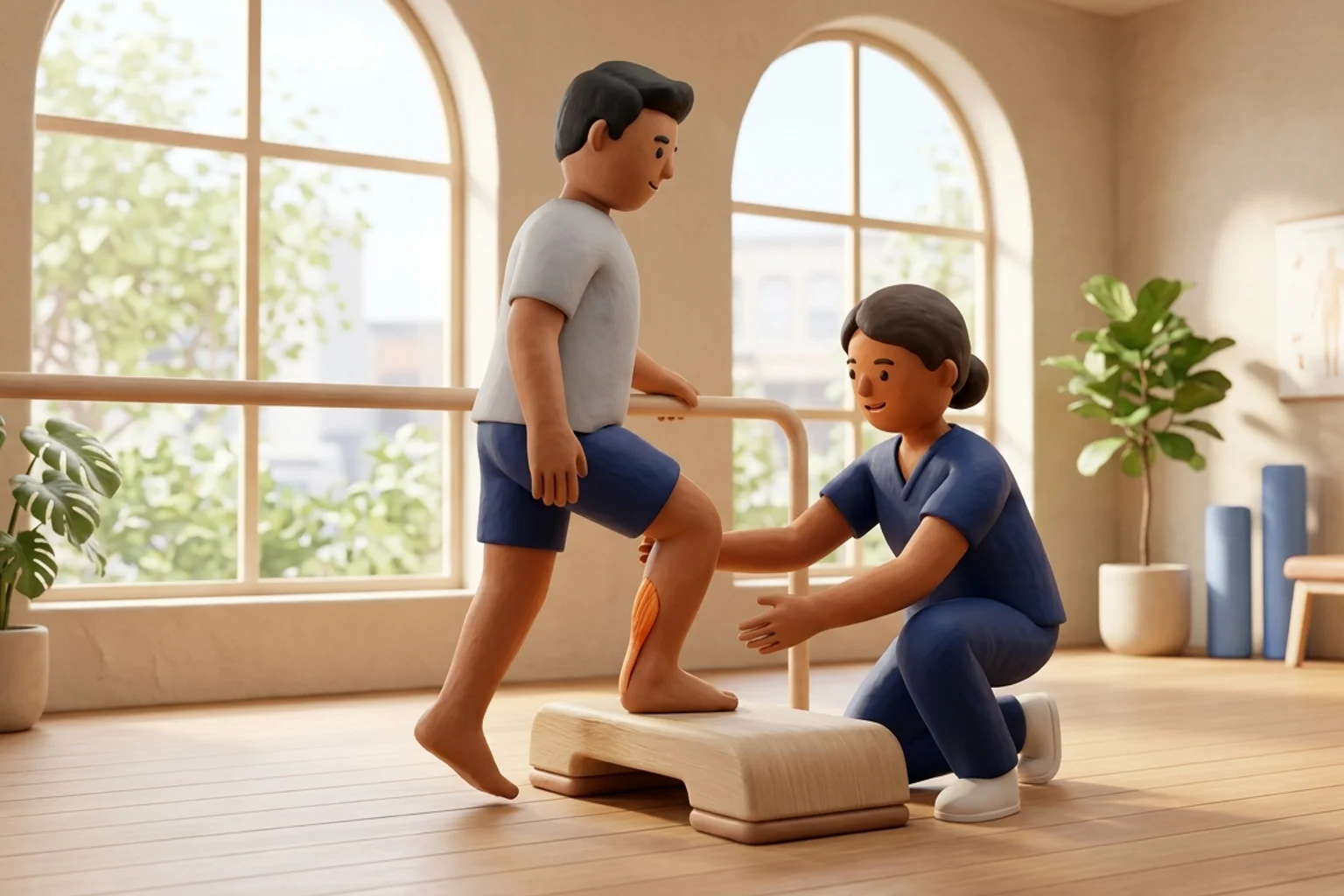
Physiotherapy is the proven, evidence-based gold standard for treating Achilles tendinopathy. A sports physiotherapist conducts load tolerance testing, identifies calf stiffness and kinetic chain deficits, and guides progressive tendon loading (such as the Alfredson eccentric protocol or heavy slow resistance training) to rebuild collagen strength and pain-free running.
- Morning tendon stiffness and focal tenderness
- Overuse tendon injury from running or jumping
- Progressive loading stimulates collagen repair
- Heavy slow resistance builds tendon strength
- Complete rest weakens the tendon further
What is achilles tendinopathy?
Achilles tendinopathy is an overuse injury causing pain, swelling, and morning stiffness in the Achilles tendon, usually either in the mid-substance (2 to 6 cm above the heel) or at its insertion on the calcaneus. In recreational runners, badminton and cricket players, and individuals resuming exercise after sedentary periods in India, sudden increases in running volume or hill walking often overload tendon fibers. Modern tendon research shows that passive rest weakens the tendon further; instead, progressive mechanical loading through isometric holds, heavy slow resistance, and controlled eccentric heel drops stimulates collagen remodeling and tendon spring capacity.

Sports Physiotherapy
Achilles Tendinopathy is assessed and treated under Sports physiotherapy (athletic injuries). Injury prevention, athletic rehabilitation, and return-to-play programmes.
How physiotherapy helps
- Isometric calf holds for immediate analgesia
- Heavy slow resistance and eccentric drops
- Ankle dorsiflexion and soleus mobilisation
- Running gait analysis and cadence retraining
- Gradual plyometric return-to-sport drills
Common signs
- Burning pain or aching 2 to 6 centimeters above the heel bone or directly at the back of the heel
- Morning stiffness and tightness in the tendon on the first few steps out of bed, easing after a short walk
- Tendon pain that warms up and eases during exercise, but throbs or stiffens several hours later
- Localized swelling, thickening, or a palpable nodule on the Achilles tendon
- Pain when running, jumping, hopping, or walking uphill
In-clinic vs home visit physiotherapy
| What to compare | In-clinic | Home visit |
|---|---|---|
| Typical fee | ₹300 to ₹1,500 a session. It depends on your city. | ₹400 to ₹2,000 a session. It depends on your city. |
| Exact fee | Set by each physiotherapist and shown on their profile | Set separately for home visits and shown on their profile |
| Best for | Equipment-based rehab and first assessments | Limited mobility, post-surgery, and elderly care |
| Equipment | Full clinic setup | Portable equipment the physiotherapist brings |
| Travel | You travel to the clinic | The physiotherapist comes to you |
| Booking | Pick a clinic slot on search | Filter by home visit on search |
Clinical rehabilitation framework
Evidence-informed clinical progression and starter exercise targets for achilles tendinopathy.
Clinical progression criteria & key observations
- Complete rest de-conditions the tendon: manage load, never zero it
- Insertional tendinopathy is compressed at end-range dorsiflexion; keep early loading above neutral
- Track progress with single-leg heel-raise count and a morning-stiffness rating, not pain alone
Starter exercise targets & evidence-based dosage
When to seek urgent care
Physiotherapy is safe for most people. See a doctor urgently if you have any of these.
- Sudden, audible pop or snap at the back of the heel with immediate inability to push off, indicating an acute Achilles tendon rupture
- A visible or palpable gap in the tendon with a positive Simmonds or Thompson squeeze test
- Sudden severe calf swelling, warmth, and redness, which may indicate deep vein thrombosis (DVT)
- Bilateral Achilles tendon pain accompanied by back stiffness or eye redness, suggesting spondyloarthritis
Seek urgent medical care first. Physiotherapy comes after, when it is safe.
Frequently asked questions
How many sessions does Achilles tendinopathy need?
Can I get physiotherapy for achilles tendinopathy at home?
Can I continue walking or running with Achilles tendinopathy?
How much does physiotherapy for achilles tendinopathy cost in India?
Related conditions & care



Clinical guides & articles for achilles tendinopathy
Evidence-informed articles, recovery timelines, and home care advice from our clinical library.
Box-Cricket Weekend Warrior Injuries: Calf Muscle Strain and Achilles Tendon Rehab
Sudden sprints on rooftop box-cricket turf frequently cause acute calf tears and Achilles strains. Discover how sports physiotherapy restores explosive sprinting.
Thompson's Test (Simmonds Test): Complete Achilles Tendon Rupture Guide
A complete Achilles tendon rupture is frequently misdiagnosed as an ankle sprain. Learn how Thompson calf squeeze test and the Matles test deliver 96 percent sensitivity to detect tendon rupture.
Achilles Tendinopathy: Heavy Slow Resistance (HSR) vs Alfredson Eccentric Loading
Midportion Achilles tendinopathy limits runners and walkers. Compare the Alfredson eccentric protocol with Heavy Slow Resistance (HSR), VISA-A scoring, and loading progressions.
Achilles Tendon Rupture: Percutaneous Repair vs Functional Bracing (Early Weight-Bearing)
Achilles rupture management has shifted toward early functional rehabilitation. Compare surgical repair with non-operative functional bracing, equinus wedge protocols, and calf rehab.
Find physiotherapists for achilles tendinopathy by city
Verified physiotherapists treat achilles tendinopathy in these cities. Home visit and in-clinic options vary by physiotherapist.
Find a physiotherapist for achilles tendinopathy
Compare physiotherapists by fee, experience, and availability. Clinic visits and home visits across India.
This page is for general education and booking guidance. It does not diagnose your condition or replace medical care.
If your symptoms are severe, sudden, or getting worse, seek urgent medical care first. The same applies with fever, chest pain, breathlessness, fainting, new weakness, loss of bladder or bowel control, or unexplained bleeding.
Always consult a qualified physiotherapist or doctor about your condition.