
Physiotherapy for Age-Related Balance Decline

Quick answer
Physiotherapy for age-related balance decline improves steadiness and confidence with balance, strength, and vestibular exercises, lowering the risk of falls as you get older.
- Balance is trainable at any age
- Home visits suit safe practice and a home check
- Book directly, we do not ask for a referral. Red-flag symptoms need medical care first
- We check every physiotherapist’s registration details before their profile goes live
What is age-related balance decline?
Balance can decline with age as the inner-ear, vision, muscle strength, sensation, and reaction systems change, which can make you feel less steady and raise the risk of falls. Physiotherapy trains balance, strength, and the vestibular system to keep you steady and confident on your feet.
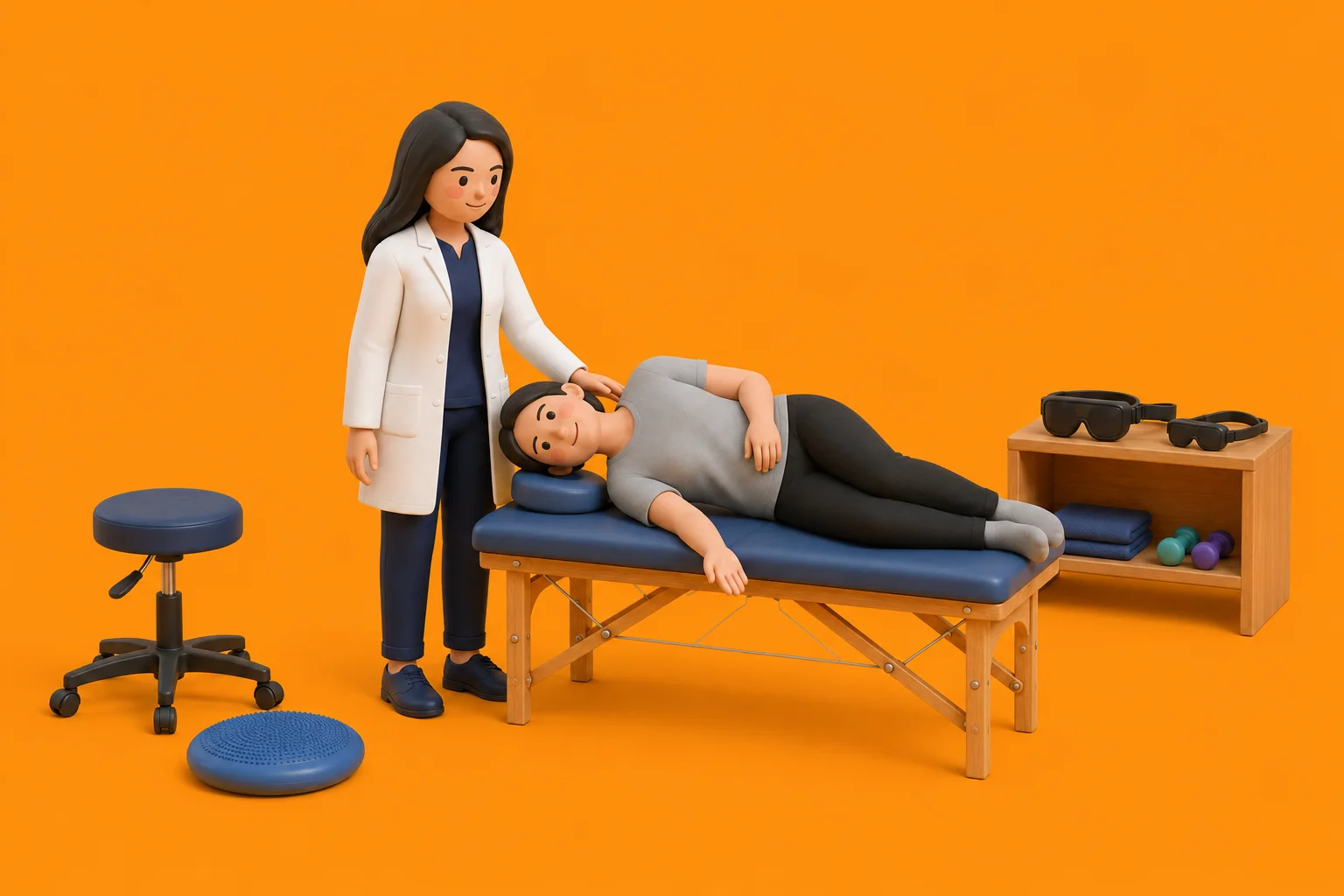
Vestibular Physiotherapy
Age-Related Balance Decline is assessed and treated under Vestibular physiotherapy (dizziness & balance). BPPV, vertigo, and balance problems from inner ear conditions. Requires relevant specialty training and works alongside your medical team where needed.
How physiotherapy helps
- A balance assessment
- Balance and strength training
- Vestibular exercises
- Walking practice
- Home safety and fall-prevention advice
Common signs
- Feeling less steady than before
- Holding on to things when walking
- Near-falls
- Dizziness on standing or turning
- Reduced confidence moving around
In-clinic vs home visit physiotherapy
| What to compare | In-clinic | Home visit |
|---|---|---|
| Indicative fee band | BookPhysio guide: ₹300 to ₹1,500 a session. This is not a measured average; check the physiotherapist's current profile for the exact fee. | BookPhysio guide: ₹400 to ₹2,000 a session. This is not a measured average; check the physiotherapist's current profile for the exact home-visit fee. |
| Exact fee | Set by each physiotherapist and shown on their profile when an in-clinic fee is listed | Set separately for home visits and shown on their profile when a home-visit fee is listed |
| Decision factors | A clinic setting may offer equipment or facilities that are useful for some sessions. Ask the physiotherapist what is available and appropriate for your appointment. | A home visit can reduce travel when mobility, transport, or convenience matters. Confirm the service area and whether a home visit is appropriate with the physiotherapist. |
| Equipment availability | Varies by clinic and physiotherapist. Ask what equipment or facilities are available. | Varies by physiotherapist and appointment. Ask what they bring for a home visit. |
| Travel | You travel to the clinic | The physiotherapist comes to you |
| Finding an option | Choose an in-clinic option only when the physiotherapist lists it on their profile | Use the home-visit filter and confirm the physiotherapist covers your area |
Clinical rehabilitation framework
Evidence-informed clinical progression and starter exercise targets for age-related balance decline.
Clinical progression criteria & key observations
- A Timed Up and Go longer than about 13.5 seconds is a commonly cited community falls-risk marker; use it to track change
- Exercise programmes need enough dose (around 3 hours weekly, balance-focused) to reduce falls; token frequencies underperform
- Always ask "can you get up from the floor?": teaching floor recovery reduces long-lie harm
Starter exercise targets & evidence-based dosage
When to seek urgent care
Physiotherapy is safe for most people. See a doctor urgently if you have any of these.
- A fall causing injury or a head knock, especially if you take blood-thinning medicine
- Sudden severe dizziness with weakness or slurred speech
- For these, seek urgent care
Seek urgent medical care first. Physiotherapy comes after, when it is safe.
Frequently asked questions
Is it too late to improve my balance?
Can I get physiotherapy for age-related balance decline at home?
How much does physiotherapy for age-related balance decline cost in India?
Related conditions & care


Clinical guides & articles for age-related balance decline
Evidence-informed articles, recovery timelines, and home care advice from our clinical library.
Fear of Falling (Ptophobia) in Indian Elders: Breaking the Deconditioning Cycle at Home
Fear of falling traps Indian elders in sedentary isolation, paradoxically doubling their fall risk. Discover clinical balance confidence protocols and home physio.
Diabetic Neuropathy: Balance Exercises, Numb Feet Sensory Checks, and Safe Walking
Numbness and tingling in the feet increase fall risk and ulcer vulnerability. Discover how physiotherapy balance drills and daily foot rituals protect your mobility.
Berg Balance Scale and Timed Up and Go (TUG): Fall Risk Stratification Guide
Objective balance testing allows clinicians and families to identify fall risk before a serious fracture occurs. Learn how the 14-item Berg Balance Scale (BBS) and the Timed Up and Go (TUG) test quantify physical instability and guide targeted geriatric rehabilitation.
Activities-specific Balance Confidence (ABC) Scale: 16 Items, Cut-Offs & Fall Risk
The Activities-specific Balance Confidence (ABC) Scale measures balance self-efficacy and fear of falling in older adults. Learn how to calculate scores and predict fall risk.
Search for a physiotherapist
Keep age-related balance decline as your search context, then review each current profile for specialties, listed conditions, visit types, fee and availability before you request an appointment.
This page is for general education and booking guidance. It does not diagnose your condition or replace medical care.
If your symptoms are severe, sudden, or getting worse, seek urgent medical care first. The same applies with fever, chest pain, breathlessness, fainting, new weakness, loss of bladder or bowel control, or unexplained bleeding.
Always consult a qualified physiotherapist or doctor about your condition.