
Physiotherapy for Desk-Work Neck Pain

Quick answer
Physiotherapy for desk-related neck pain relieves the stiffness and headaches caused by long hours at a screen, with hands-on treatment, exercises, and a workstation setup that prevents it returning.
- Helps reduce symptoms and address workstation contributors
- Book directly, we do not ask for a referral. Red-flag symptoms need medical care first
- Clinic and home visits available across India
- We check every physiotherapist’s registration details before their profile goes live
What is desk-work neck pain?
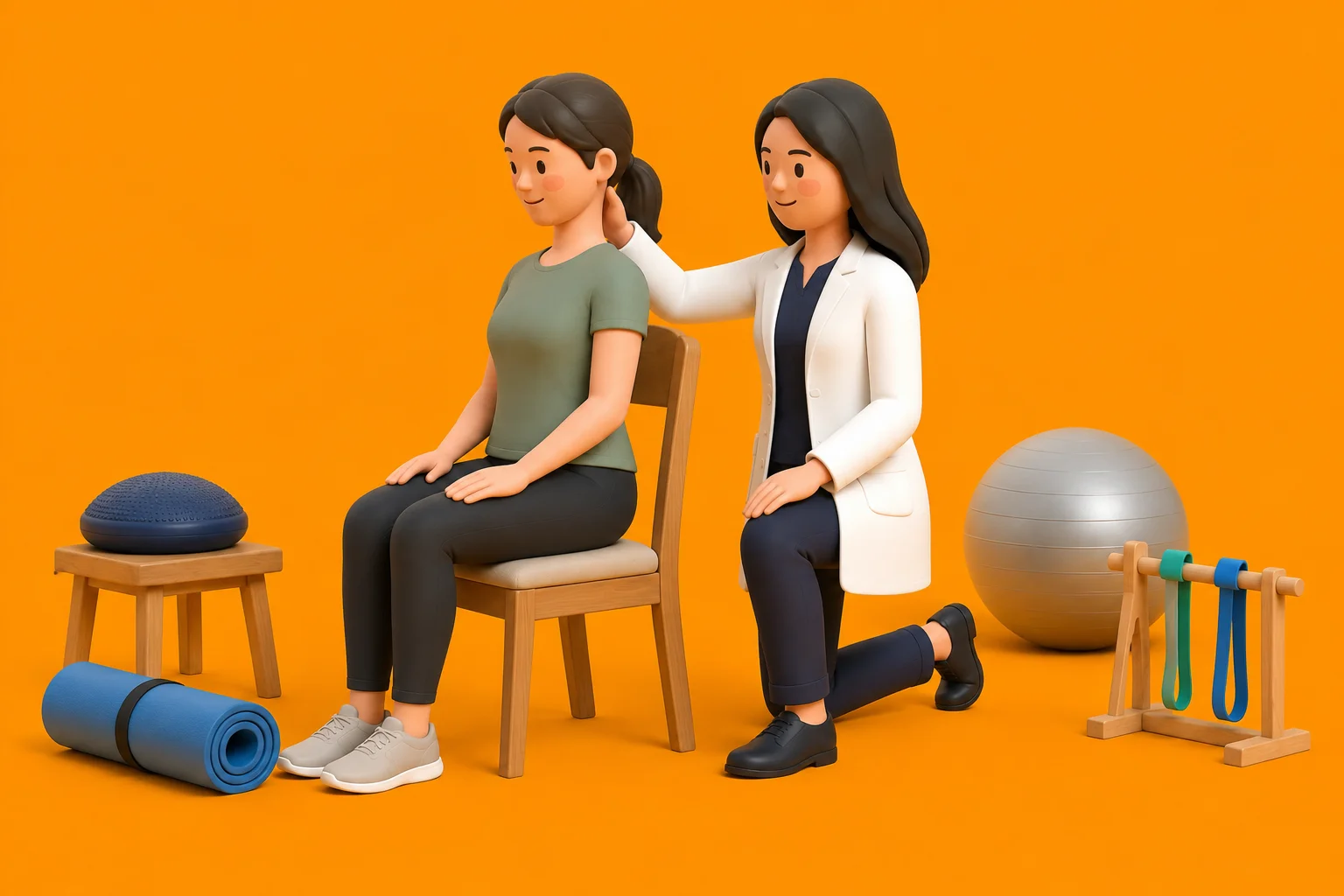
Long hours at a computer or phone, with the head held forward, are a common cause of neck pain, tight shoulders, and headaches. Physiotherapy can help reduce pain, strengthen the neck and upper back, and set up your workstation and habits so the pain is less likely to keep returning.

Industrial & Occupational Physiotherapy
Desk-Work Neck Pain is assessed and treated under Industrial & Occupational physiotherapy (workplace injuries). Repetitive strain, ergonomic assessment, and return-to-work rehabilitation.
How physiotherapy helps

- Hands-on therapy for the neck and upper back
- Neck and upper-back strengthening exercises
- Workstation and screen ergonomic setup
- Posture and micro-break advice
- Treatment for headaches linked to the neck
Common signs
- Neck stiffness or ache by the end of the day
- Headaches starting at the back of the head
- Tight, aching shoulders
- Pain into the upper back
- Tension that worsens with screen time
In-clinic vs home visit physiotherapy
| What to compare | In-clinic | Home visit |
|---|---|---|
| Indicative fee band | BookPhysio guide: ₹300 to ₹1,500 a session. This is not a measured average; check the physiotherapist's current profile for the exact fee. | BookPhysio guide: ₹400 to ₹2,000 a session. This is not a measured average; check the physiotherapist's current profile for the exact home-visit fee. |
| Exact fee | Set by each physiotherapist and shown on their profile when an in-clinic fee is listed | Set separately for home visits and shown on their profile when a home-visit fee is listed |
| Decision factors | A clinic setting may offer equipment or facilities that are useful for some sessions. Ask the physiotherapist what is available and appropriate for your appointment. | A home visit can reduce travel when mobility, transport, or convenience matters. Confirm the service area and whether a home visit is appropriate with the physiotherapist. |
| Equipment availability | Varies by clinic and physiotherapist. Ask what equipment or facilities are available. | Varies by physiotherapist and appointment. Ask what they bring for a home visit. |
| Travel | You travel to the clinic | The physiotherapist comes to you |
| Finding an option | Choose an in-clinic option only when the physiotherapist lists it on their profile | Use the home-visit filter and confirm the physiotherapist covers your area |
Clinical rehabilitation framework
Evidence-informed clinical progression and starter exercise targets for desk-work neck pain.
Clinical progression criteria & key observations
- Screen for myelopathy in every persistent neck presentation: gait change, clumsy hands, Hoffmann sign
- Radiculopathy usually recovers conservatively; a progressive motor deficit is the referral trigger
Starter exercise targets & evidence-based dosage
When to seek urgent care
Physiotherapy is safe for most people. See a doctor urgently if you have any of these.
- Weakness, numbness, or pins and needles in an arm or hand
- Dizziness or problems with coordination
- Severe neck pain after an accident or trauma
- Neck pain with fever, a severe headache, a rash, or feeling very unwell
Seek urgent medical care first. Physiotherapy comes after, when it is safe.
Frequently asked questions
How do I stop neck pain from coming back at my desk?
Can I get physiotherapy for desk-work neck pain at home?
How much does physiotherapy for desk-work neck pain cost in India?
Related conditions & care

Clinical guides & articles for desk-work neck pain
Evidence-informed articles, recovery timelines, and home care advice from our clinical library.
Neck Pain and Screen Work: Ergonomic Biomechanics, Tech Neck Strains, and Workplace Physiotherapy in India
Extended laptop and smartphone usage generates massive mechanical strain across the cervical spine. Learn the science of tech neck, workstation ergonomics, and physiotherapy corrective routines.
Two-wheeler commuting and neck or back pain in India: what may help
Daily two-wheeler commuting across Indian roads exposes the spine to relentless vertical shocks, pothole impacts, and prolonged postural fatigue. Discover clinical strategies to protect your neck and lower back.
Work-from-home neck and back pain for IT professionals in India
Long software coding shifts, improvised dining table desks, and marathon video calls take a heavy toll on Indian tech professionals. Learn how physiotherapy resolves WFH spinal strain.
Cervical Radiculopathy vs Postural Neck Strain: Symptoms, Dermatomes, and Evidence-Based Physiotherapy in India
Persistent neck and arm discomfort can stem from muscular fatigue or cervical nerve root compression. Discover the clinical differences, dermatome mapping, safe nerve glides, and physiotherapy protocols.
Search for a physiotherapist
Keep desk-work neck pain as your search context, then review each current profile for specialties, listed conditions, visit types, fee and availability before you request an appointment.
This page is for general education and booking guidance. It does not diagnose your condition or replace medical care.
If your symptoms are severe, sudden, or getting worse, seek urgent medical care first. The same applies with fever, chest pain, breathlessness, fainting, new weakness, loss of bladder or bowel control, or unexplained bleeding.
Always consult a qualified physiotherapist or doctor about your condition.