
Physiotherapy for Down Syndrome (Motor Milestones & Tone)

Quick answer
Physiotherapy helps children with Down syndrome overcome generalised hypotonia (low muscle tone) and joint hypermobility. Paediatric physiotherapists design play-based core stability, balance, and gait training routines, helping infants and toddlers achieve milestones (sitting, crawling, walking) on their unique developmental timeline.
- Generalised hypotonia and ligamentous laxity
- Milestones follow a predictable trajectory
- Core strengthening counteracts joint laxity
- Screening for atlanto-axial neck instability
- Gait training improves balance and posture
What is down syndrome?
Down syndrome (Trisomy 21) is associated with generalised hypotonia (low muscle tone) and ligamentous laxity (joint hypermobility), which cause motor milestones like rolling, sitting, crawling, and walking to develop on an altered, predictable timeline. Children with Down syndrome often adopt wide-based sitting and walking compensations that can strain joints. Paediatric physiotherapy provides play-based core and postural strengthening, improves balance, guides joint-protective alignment, and screens for atlanto-axial instability before dynamic sports, empowering children to explore their world with strength and confidence.
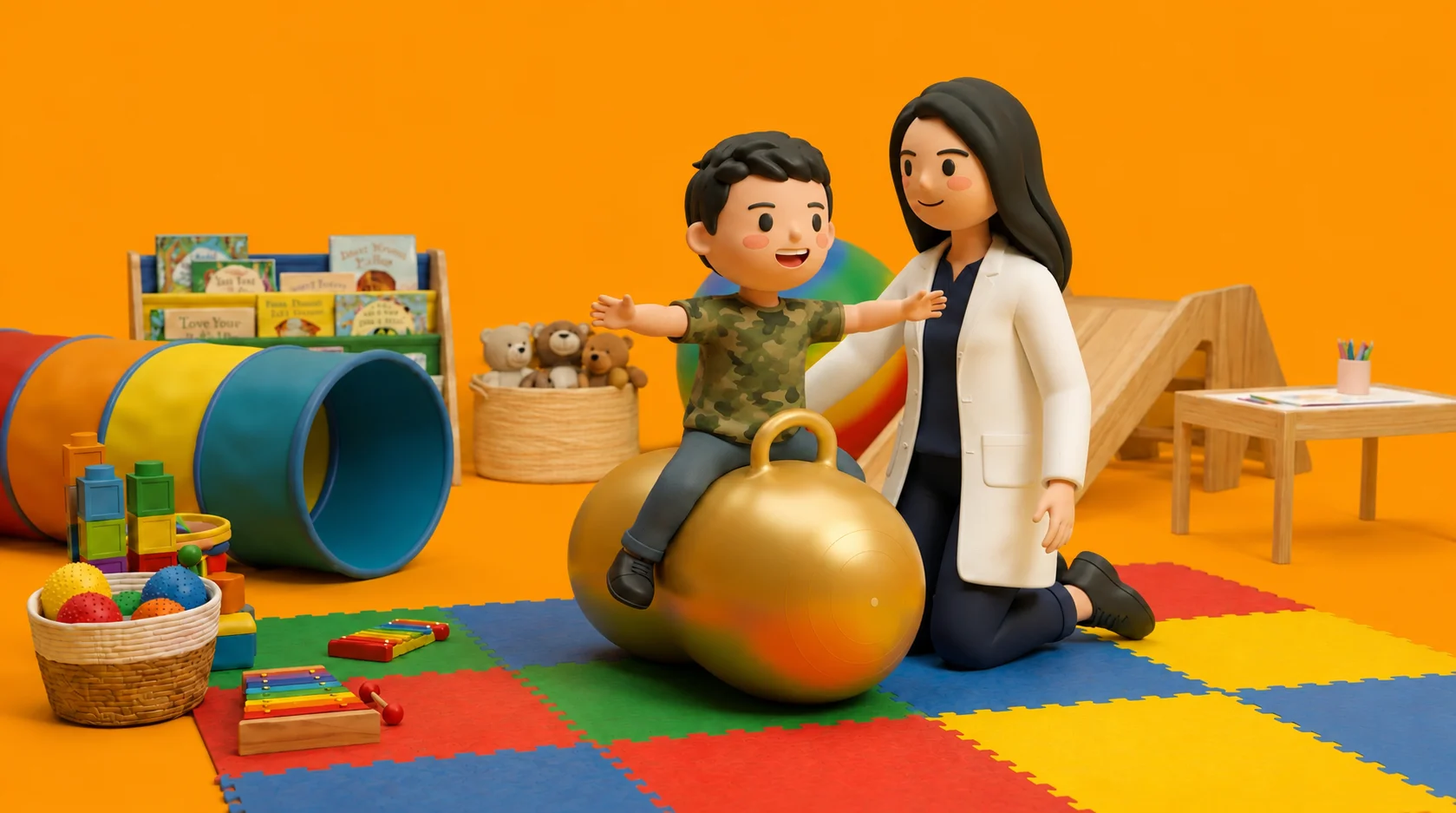
Paediatric Physiotherapy
Down Syndrome is assessed and treated under Paediatric physiotherapy (children). Developmental support, motor milestones, and early intervention for children. Requires relevant specialty training and works alongside your medical team where needed.
How physiotherapy helps
- Tummy time and core trunk stability drills
- Dynamic balance training using therapy balls
- Supported standing and narrow-base stepping
- Postural alignment and joint-protective play
- Parent coaching for daily milestone games
Common signs
- Generalised low muscle tone (hypotonia), giving the infant a floppy feel during handling and lifting
- Marked joint hypermobility and ligamentous laxity, allowing joints to extend beyond normal limits
- Delayed motor milestones including rolling, independent sitting, crawling, and walking on typical age curves
- Compensatory wide-based sitting (w-sitting or extreme leg straddling) to compensate for core abdominal weakness
- Flat feet (pes planus) with inward ankle rolling (valgus) during initial standing and walking attempts
In-clinic vs home visit physiotherapy
| What to compare | In-clinic | Home visit |
|---|---|---|
| Typical fee | ₹300 to ₹1,500 a session. It depends on your city. | ₹400 to ₹2,000 a session. It depends on your city. |
| Exact fee | Set by each physiotherapist and shown on their profile | Set separately for home visits and shown on their profile |
| Best for | Equipment-based rehab and first assessments | Limited mobility, post-surgery, and elderly care |
| Equipment | Full clinic setup | Portable equipment the physiotherapist brings |
| Travel | You travel to the clinic | The physiotherapist comes to you |
| Booking | Pick a clinic slot on search | Filter by home visit on search |
Clinical rehabilitation framework
Evidence-informed clinical progression and starter exercise targets for down syndrome.
Clinical progression criteria & key observations
- Always check atlanto-axial instability screening status before contact sports, tumbling, or any planned neck-flexion/extension stress activity
- Hypotonia plus hypermobility together explain much of the motor pattern (delayed milestones, wide gait, flat feet): target core stability, not just isolated milestone drilling
Starter exercise targets & evidence-based dosage
When to seek urgent care
Physiotherapy is safe for most people. See a doctor urgently if you have any of these.
- New onset of neck pain, head tilt (torticollis), progressive gait changes, or loss of bowel/bladder control (screen for atlanto-axial instability)
- Sudden regression or loss of previously acquired motor milestones, requiring prompt neurological evaluation
- Excessive fatigue, shortness of breath, or bluish discoloration around the lips during active play (screen congenital heart defect status)
- Persistent joint swelling, warmth, or tenderness warranting evaluation for paediatric inflammatory arthritis
Seek urgent medical care first. Physiotherapy comes after, when it is safe.
Frequently asked questions
Why is physiotherapy important for a child with Down syndrome?
Can I get physiotherapy for down syndrome at home?
What is atlanto-axial instability screening in Down syndrome?
How much does physiotherapy for down syndrome cost in India?
Related conditions & care


Clinical guides & articles for down syndrome
Evidence-informed articles, recovery timelines, and home care advice from our clinical library.
Paediatric Physiotherapy for Cerebral Palsy: GMFCS Staging, Early Intervention and Home Activities
Early paediatric physiotherapy maximizes gross motor potential, prevents contractures, and empowers children with cerebral palsy. Learn how GMFCS levels guide therapy and how playful home exercises build lifelong mobility.
Paediatric Flat Feet and In-Toeing Gait: Developmental Milestones and Physiotherapy
Parents often worry when a toddler appears flat-footed or walks with pigeon-toed feet pointing inward. Learn how paediatric physiotherapists differentiate normal developmental variations from structural conditions requiring intervention.
Cerebral Palsy GMFCS Levels I to V: Physiotherapy Milestones, Equipment and Home Care
The Gross Motor Function Classification System (GMFCS) is the global clinical gold standard for categorising functional mobility in children with cerebral palsy. Learn how paediatric physiotherapists structure therapy goals, adaptive equipment, and home positioning across all five levels.
Gross Motor Function Measure (GMFM-66 & GMFM-88): Protocol & GMFCS Tracking
The Gross Motor Function Measure (GMFM) evaluates gross motor capacity changes in children with cerebral palsy. Learn the difference between GMFM-88 and GMFM-66.
Find physiotherapists for down syndrome by city
Verified physiotherapists treat down syndrome in these cities. Home visit and in-clinic options vary by physiotherapist.
Find a physiotherapist for down syndrome
Compare physiotherapists by fee, experience, and availability. Clinic visits and home visits across India.
This page is for general education and booking guidance. It does not diagnose your condition or replace medical care.
If your symptoms are severe, sudden, or getting worse, seek urgent medical care first. The same applies with fever, chest pain, breathlessness, fainting, new weakness, loss of bladder or bowel control, or unexplained bleeding.
Always consult a qualified physiotherapist or doctor about your condition.