
Physiotherapy for Erb's Palsy (Brachial Plexus Birth Injury)
Quick answer
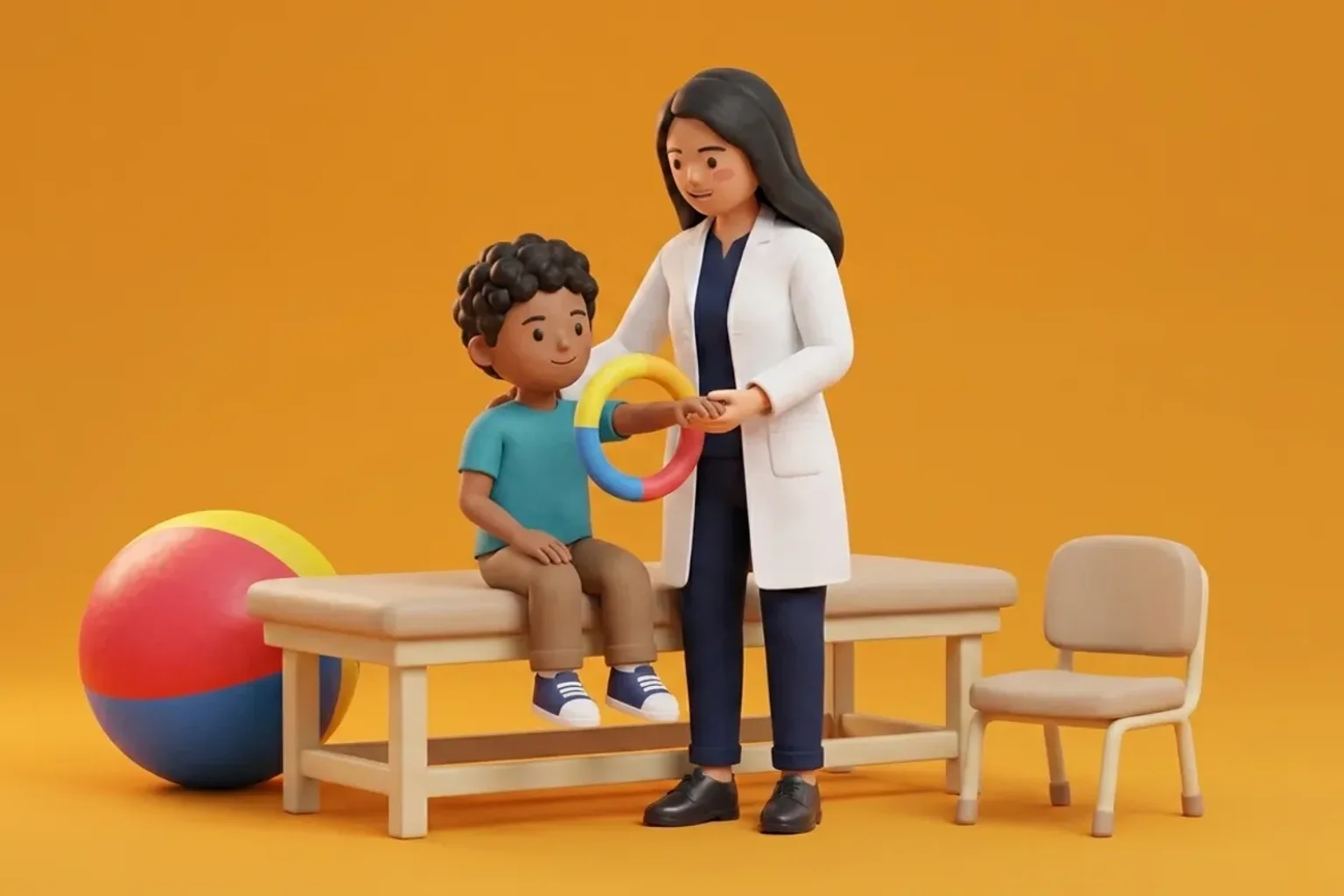
Physiotherapy is essential for infants with Erb's palsy (brachial plexus birth injury). Early gentle passive range of motion prevents shoulder contractures, sensory stimulation awakens limb awareness, and play-based bilateral reaching strengthens shoulder abductors and external rotators to maximise spontaneous nerve recovery.
- Upper brachial plexus C5-C6 birth injury
- Waiter's tip posture with inward shoulder
- Gentle passive movement prevents contracture
- Biceps return by 3 to 6 months guides care
- Sensory play encourages bilateral hand use
What is Erb's palsy?
Erb's palsy is an upper brachial plexus injury (affecting the C5-C6 and occasionally C7 nerve roots) sustained during a difficult birth, often associated with shoulder dystocia. The infant's arm rests in a characteristic 'waiter's tip' posture with the shoulder turned inward, elbow extended, and wrist flexed. Because nerve regeneration is gradual, early and consistent paediatric physiotherapy is crucial. Gentle passive range of motion prevents internal rotation contractures at the shoulder, while sensory play, positioning, and bimanual reaching stimulate neuromuscular development and spontaneous functional return.
Paediatric Physiotherapy
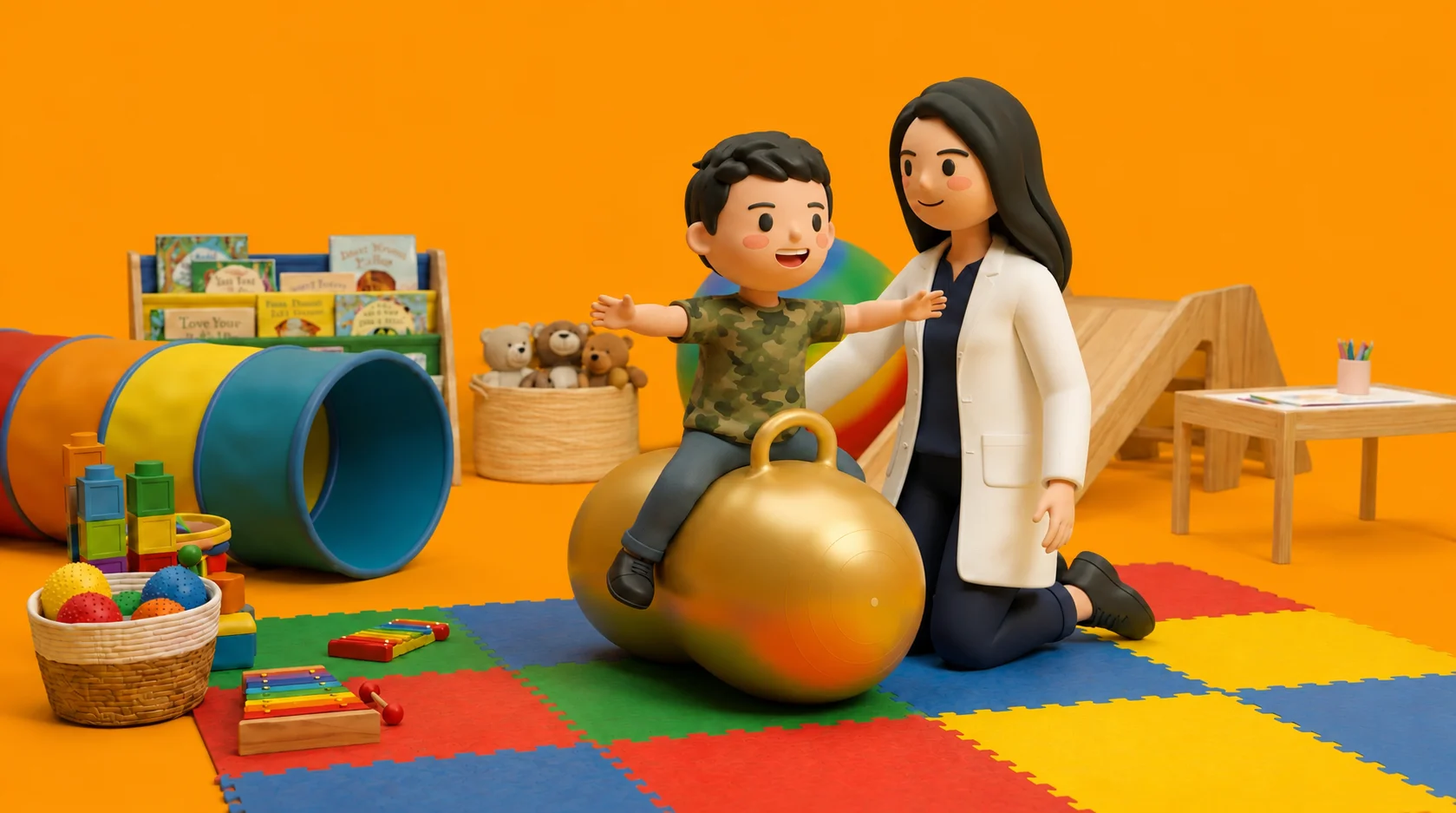
Erb's Palsy is assessed and treated under Paediatric physiotherapy (children). Developmental support, motor milestones, and early intervention for children. Requires relevant specialty training and works alongside your medical team where needed.
How physiotherapy helps
- Gentle passive shoulder external rotation
- Tactile sensory stimulation for arm awareness
- Tummy time and supported weight bearing play
- Bimanual play encouraging reaching and grasp
- Parent coaching for home handling and holding
Common signs
- Reduced or absent spontaneous active movement in one arm noticed in the newborn period
- Characteristic resting arm posture: shoulder internally rotated and adducted, elbow extended, and forearm pronated (waiter tip posture)
- Absent or asymmetrical Moro reflex on the affected side
- Normal finger grasp reflex in pure upper plexus lesions, contrasting with shoulder and elbow weakness
- Early tendency for shoulder internal rotation stiffness if passive stretching is not initiated promptly
In-clinic vs home visit physiotherapy
| What to compare | In-clinic | Home visit |
|---|---|---|
| Typical fee | ₹300 to ₹1,500 a session. It depends on your city. | ₹400 to ₹2,000 a session. It depends on your city. |
| Exact fee | Set by each physiotherapist and shown on their profile | Set separately for home visits and shown on their profile |
| Best for | Equipment-based rehab and first assessments | Limited mobility, post-surgery, and elderly care |
| Equipment | Full clinic setup | Portable equipment the physiotherapist brings |
| Travel | You travel to the clinic | The physiotherapist comes to you |
| Booking | Pick a clinic slot on search | Filter by home visit on search |
Clinical rehabilitation framework
Evidence-informed clinical progression and starter exercise targets for Erb's palsy.
Clinical progression criteria & key observations
- Track biceps return specifically and by a set timeframe: it is the single most-used clinical marker for whether to escalate to a specialist brachial plexus team
- Preventing a secondary shoulder internal-rotation contracture through consistent passive range of motion often matters more long-term than the original nerve recovery timeline
Starter exercise targets & evidence-based dosage
When to seek urgent care
Physiotherapy is safe for most people. See a doctor urgently if you have any of these.
- No evidence of active biceps recovery (elbow flexion) by 3 to 6 months of age, requiring timely referral to a paediatric brachial plexus surgeon
- Total limb flaccidity, drooping eyelid and small pupil on the affected side (Horner syndrome), indicating severe root avulsion
- Associated asymmetric breathing or respiratory distress, pointing to phrenic nerve involvement and hemidiaphragmatic paresis
- Sudden painful crying with gentle arm movement, indicating an associated clavicular or humeral fracture requiring medical splinting
Seek urgent medical care first. Physiotherapy comes after, when it is safe.
Frequently asked questions
How soon should an infant start physiotherapy for Erb's palsy?
Can I get physiotherapy for erb's palsy at home?
What is the most important milestone to monitor in Erb's palsy?
How much does physiotherapy for erb's palsy cost in India?
Related conditions & care


Clinical guides & articles for Erb's palsy
Evidence-informed articles, recovery timelines, and home care advice from our clinical library.
Infant Torticollis and Flat Head: Paediatric Physiotherapy Exercises and Tummy Time Guide
When a baby tilts their head to one side or develops a flat spot, early paediatric physiotherapy resolves muscle tightness and reshapes head symmetry quickly. Learn evidence-based stretches and positioning.
Congenital Muscular Torticollis and Plagiocephaly: Infant Neck Stretches and Tummy Time
Congenital muscular torticollis causes an infant to hold their head tilted to one side and turned to the other, often leading to flat spots on the skull (plagiocephaly). Learn how early paediatric physiotherapy, gentle neck stretches, and purposeful tummy time restore symmetrical alignment.
Erb's Palsy (Brachial Plexus Birth Injury): Narakas Classification and Exercises
Erb's palsy affects upper trunk cervical nerve roots during delivery. Learn the Narakas grading system, early passive ROM rules, and bimanual play facilitation.
Cervical Stingers and Burners: Brachial Plexus Traction in Contact Sports
A stinger produces immediate electric shooting shock down one arm; unilateral transient weakness differentiates benign neuropraxia from cervical cord emergencies.
Find physiotherapists for Erb's palsy by city
Verified physiotherapists treat Erb's palsy in these cities. Home visit and in-clinic options vary by physiotherapist.
Find a physiotherapist for Erb's palsy
Compare physiotherapists by fee, experience, and availability. Clinic visits and home visits across India.
This page is for general education and booking guidance. It does not diagnose your condition or replace medical care.
If your symptoms are severe, sudden, or getting worse, seek urgent medical care first. The same applies with fever, chest pain, breathlessness, fainting, new weakness, loss of bladder or bowel control, or unexplained bleeding.
Always consult a qualified physiotherapist or doctor about your condition.