
Physiotherapy for Stroke Recovery at Home

Quick answer
Physiotherapy for community stroke rehabilitation continues your recovery at home after hospital, rebuilding walking, strength, and independence in your own environment.
- Continues recovery at home after hospital
- Home visits work on real-life daily function
- Works alongside your medical team
- We check every physiotherapist’s registration details before their profile goes live
What is community stroke rehabilitation?
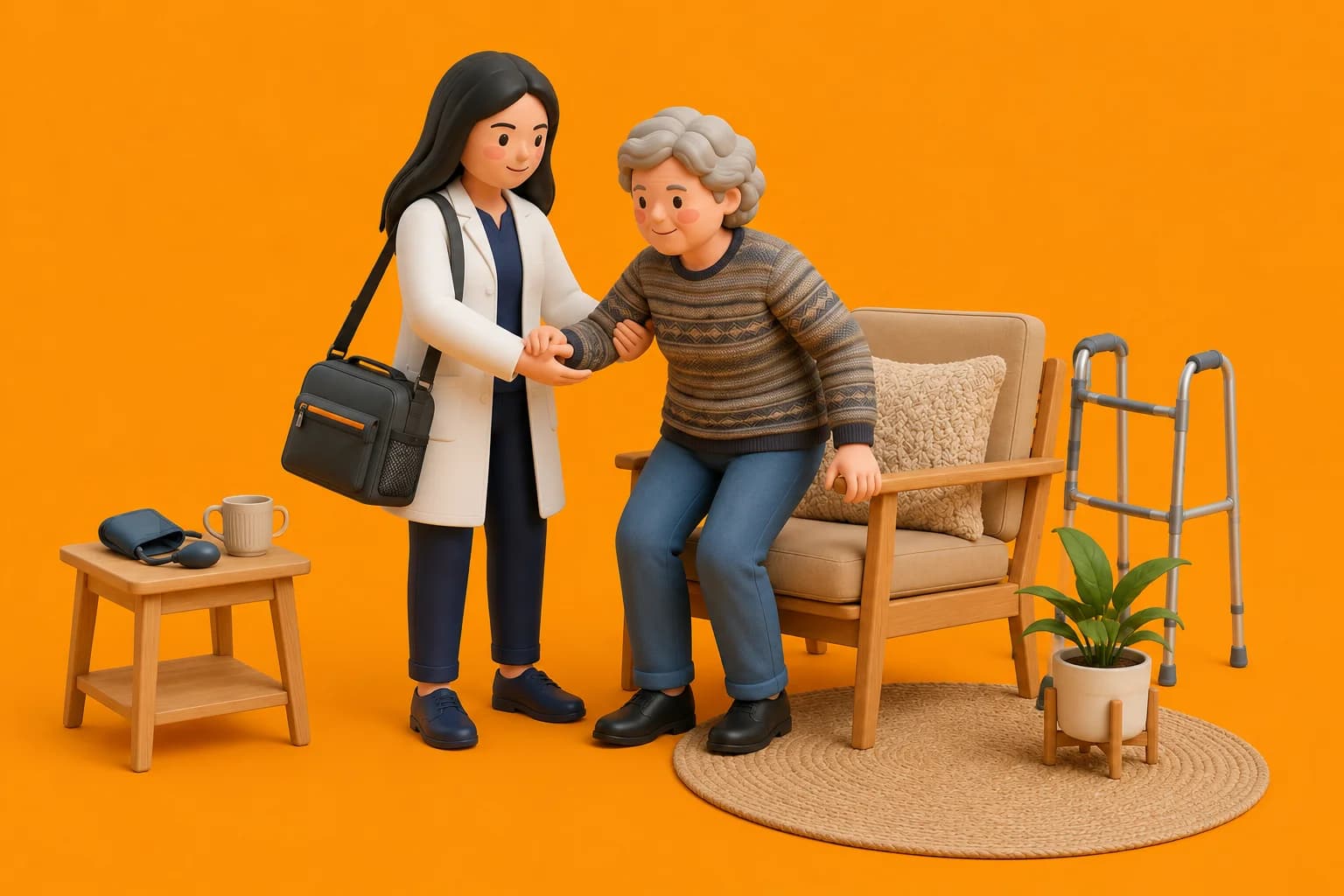
Stroke recovery continues well after leaving hospital, and a lot of progress happens at home. Community physiotherapy brings rehabilitation to your own environment, rebuilding walking, strength, and the ability to do everyday tasks where you actually do them, alongside your medical team. Home physiotherapy is not emergency care: call emergency services for any sudden deterioration, chest pain, severe breathlessness, new neurological symptoms, or a fall with injury.
Community Physiotherapy
Community Stroke Rehabilitation is assessed and treated under Community physiotherapy (home & outreach). At-home physiotherapy for people who cannot easily reach a clinic.
How physiotherapy helps

- Continuing walking and gait practice at home
- Strengthening the affected side
- Balance and fall prevention
- Practising real daily tasks in your environment
- Guidance for family and carers
Common signs
- Weakness on one side of the body
- Difficulty walking or with balance
- Reduced use of an arm or hand
- Fatigue
- Difficulty with daily tasks at home
In-clinic vs home visit physiotherapy
| What to compare | In-clinic | Home visit |
|---|---|---|
| Indicative fee band | BookPhysio guide: ₹300 to ₹1,500 a session. This is not a measured average; check the physiotherapist's current profile for the exact fee. | BookPhysio guide: ₹400 to ₹2,000 a session. This is not a measured average; check the physiotherapist's current profile for the exact home-visit fee. |
| Exact fee | Set by each physiotherapist and shown on their profile when an in-clinic fee is listed | Set separately for home visits and shown on their profile when a home-visit fee is listed |
| Decision factors | A clinic setting may offer equipment or facilities that are useful for some sessions. Ask the physiotherapist what is available and appropriate for your appointment. | A home visit can reduce travel when mobility, transport, or convenience matters. Confirm the service area and whether a home visit is appropriate with the physiotherapist. |
| Equipment availability | Varies by clinic and physiotherapist. Ask what equipment or facilities are available. | Varies by physiotherapist and appointment. Ask what they bring for a home visit. |
| Travel | You travel to the clinic | The physiotherapist comes to you |
| Finding an option | Choose an in-clinic option only when the physiotherapist lists it on their profile | Use the home-visit filter and confirm the physiotherapist covers your area |
Clinical rehabilitation framework
Evidence-informed clinical progression and starter exercise targets for community stroke rehabilitation.
Clinical progression criteria & key observations
- Dose matters: hundreds of task repetitions per session beat low-dose general exercise for motor recovery
- Position and handle the hemiplegic shoulder carefully from day one; never pull through the affected arm
- Screen swallow, mood, and neglect early: each silently limits rehab participation if missed
Starter exercise targets & evidence-based dosage
When to seek urgent care
Physiotherapy is safe for most people. See a doctor urgently if you have any of these.
- Signs of a new stroke: face drooping, arm or leg weakness, numbness on one side, slurred speech, or sudden loss of balance or coordination
- Sudden severe headache, confusion, or loss of vision
- For these, call emergency services immediately
Seek urgent medical care first. Physiotherapy comes after, when it is safe.
Frequently asked questions
Can stroke physiotherapy continue at home?
Can I get physiotherapy for stroke recovery at home?
How much does physiotherapy for stroke recovery cost in India?
Related conditions & care
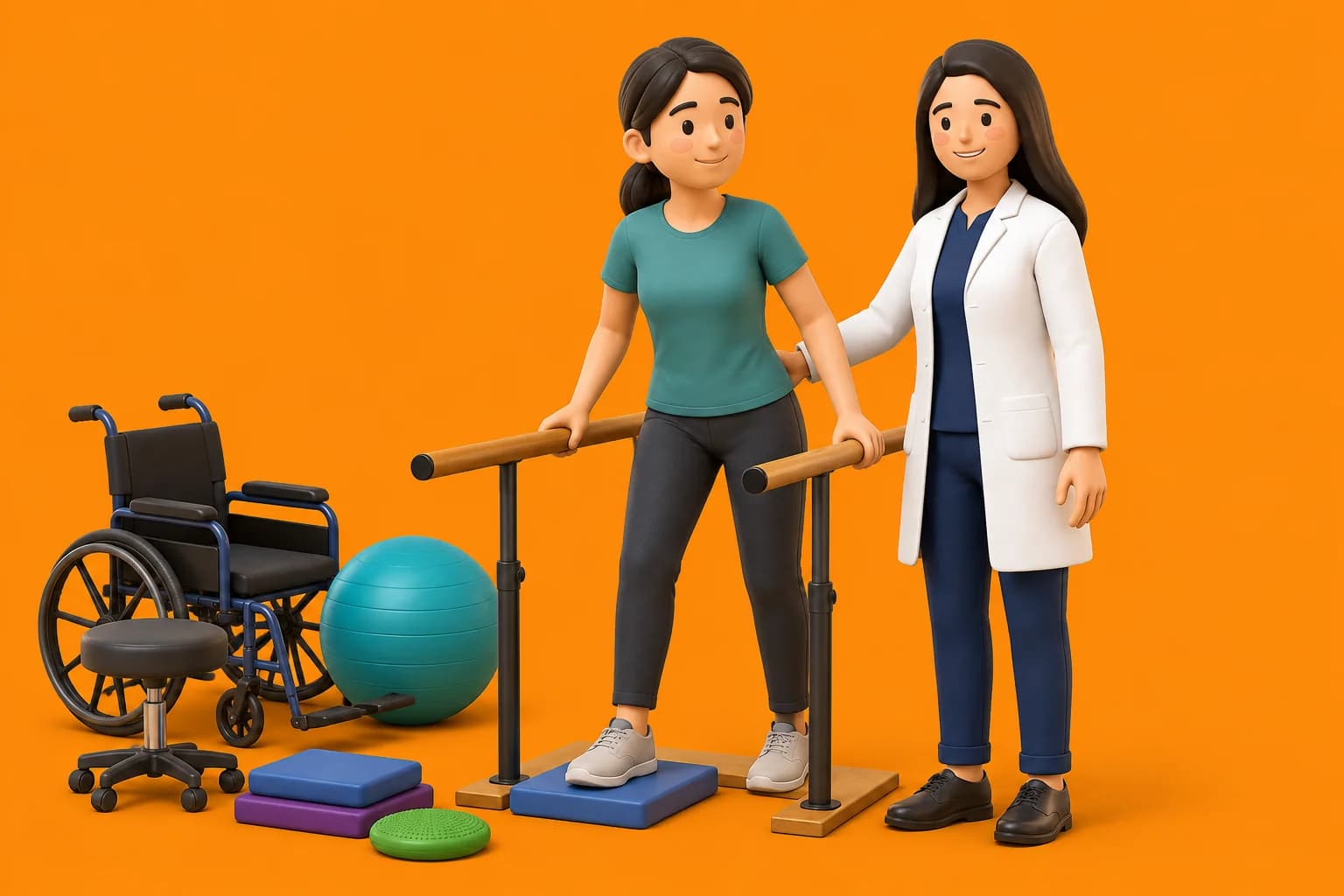

Clinical guides & articles for community stroke rehabilitation
Evidence-informed articles, recovery timelines, and home care advice from our clinical library.
Stroke rehabilitation at home in India: a caregiver guide
Home rehabilitation can be part of stroke recovery when it is clinically appropriate and coordinated with the person’s wider stroke care. Physiotherapy may address mobility and physical function, while stroke rehabilitation can also involve occupational therapy, speech and language therapy, medicine, nursing, psychology, and other services depending on need.
Bell's palsy physiotherapy: recovery timeline, facial exercises, and treatment stages
Bell's palsy causes sudden weakness or paralysis on one side of the face. Learn the clinical recovery timeline, gentle facial retraining exercises using mirror feedback, and why aggressive electrical stimulation should be avoided.
Stroke Rehabilitation at Home: Transfer Techniques, Gait Retraining, and Arm Recovery Guide
Home-based stroke rehabilitation harnesses the brain neuroplastic potential during the critical post-acute recovery window. Learn safe caregiver transfer techniques, spasticity management, and functional gait retraining.
Brunnstrom stages of stroke recovery: motor synergy evaluation, clinical timeline, and neuro-rehabilitation
Following a cerebrovascular accident, motor recovery often follows a stereotypical developmental sequence characterized by flaccidity, obligatory mass synergies, peak spasticity, and gradual emergence of voluntary isolated joint control. Learn how physiotherapists evaluate the 6 Brunnstrom stages and structure targeted rehabilitation.
Search for a physiotherapist
Keep community stroke rehabilitation as your search context, then review each current profile for specialties, listed conditions, visit types, fee and availability before you request an appointment.
This page is for general education and booking guidance. It does not diagnose your condition or replace medical care.
If your symptoms are severe, sudden, or getting worse, seek urgent medical care first. The same applies with fever, chest pain, breathlessness, fainting, new weakness, loss of bladder or bowel control, or unexplained bleeding.
Always consult a qualified physiotherapist or doctor about your condition.