
Physiotherapy for Trigger Finger
Quick answer
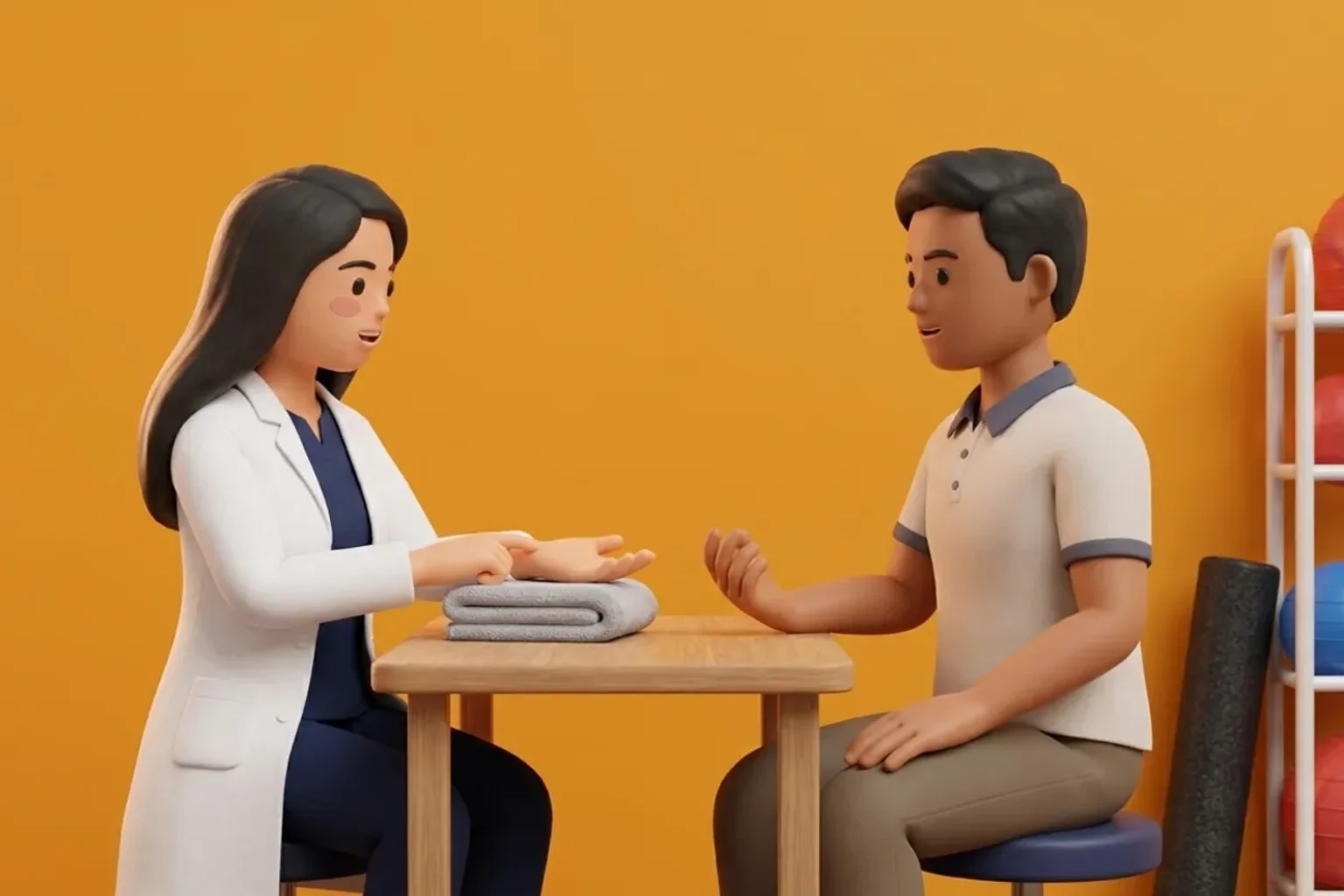
Physiotherapy is an effective conservative treatment for trigger finger (stenosing tenosynovitis). A specialized physiotherapist uses A1 pulley offloading splints, gentle flexor tendon gliding exercises, soft tissue mobilisation, and ergonomic grip modifications to relieve pain and eliminate painful finger clicking and locking.
- Painful finger catching, clicking, or locking
- Inflammation at the A1 pulley tendon sheath
- Common in repetitive gripping and diabetes
- Custom splinting offloads the caught tendon
- Tendon gliding drills restore smooth motion
What is trigger finger?
Trigger finger (stenosing tenosynovitis) occurs when inflammation, thickening, or nodule formation on the flexor tendon restricts its smooth glide through the first annular (A1) pulley at the base of the finger or thumb. In India, repetitive gripping, heavy domestic activities (such as wringing clothes, chopping, and sweeping), manual tool use, and underlying conditions like diabetes commonly precipitate the condition. As the nodule catches within the tightened pulley sheath, the digit snaps, clicks, or locks in a flexed posture. Conservative physiotherapy combines custom MCP joint splinting to prevent pulley irritation, tendon gliding exercises, gentle deep friction massage, and ergonomic utensil adaptations to restore smooth, painless finger excursion.
Orthopaedic Physiotherapy
Trigger Finger is assessed and treated under Orthopaedic physiotherapy (bones & joints). Bones, joints, muscles, and ligaments. Back pain, fractures, and post-surgery recovery.
How physiotherapy helps
- Custom MCP joint extension splinting
- Isolated flexor tendon gliding routines
- A1 pulley soft tissue friction massage
- Ergonomic tool and handle grip padding
- Hand intrinsic muscle rebalancing exercises
Common signs
- Pain and localized tenderness at the base of the affected finger or thumb on the palm side
- A clicking, popping, or snapping sensation when bending or straightening the digit
- Finger locking in a bent position that must be manually straightened with the other hand
- Morning finger stiffness that gradually eases as the hand is moved during the day
- A small, tender nodule or bump felt on the palm near the base of the finger
In-clinic vs home visit physiotherapy
| What to compare | In-clinic | Home visit |
|---|---|---|
| Typical fee | ₹300 to ₹1,500 a session. It depends on your city. | ₹400 to ₹2,000 a session. It depends on your city. |
| Exact fee | Set by each physiotherapist and shown on their profile | Set separately for home visits and shown on their profile |
| Best for | Equipment-based rehab and first assessments | Limited mobility, post-surgery, and elderly care |
| Equipment | Full clinic setup | Portable equipment the physiotherapist brings |
| Travel | You travel to the clinic | The physiotherapist comes to you |
| Booking | Pick a clinic slot on search | Filter by home visit on search |
Clinical rehabilitation framework
Evidence-informed clinical progression and starter exercise targets for trigger finger.
Clinical progression criteria & key observations
- A trial of splinting or corticosteroid injection is commonly used before surgical release is considered
- Multiple-digit or bilateral triggering should prompt a check for diabetes or inflammatory joint disease if not already known
Starter exercise targets & evidence-based dosage
When to seek urgent care
Physiotherapy is safe for most people. See a doctor urgently if you have any of these.
- Finger that is permanently locked in flexion and cannot be gently unlocked without severe pain
- Signs of local infection at the base of the finger, including spreading redness, warmth, or purulent swelling
- Loss of sensation or numbness in the fingertip
- Sudden inability to flex the finger following acute trauma, indicating a potential flexor tendon avulsion
Seek urgent medical care first. Physiotherapy comes after, when it is safe.
Frequently asked questions
How long does it take for trigger finger to resolve with physiotherapy?
Can I get physiotherapy for trigger finger at home?
Can physiotherapy help me avoid trigger finger surgery?
How much does physiotherapy for trigger finger cost in India?
Related conditions & care


Clinical guides & articles for trigger finger
Evidence-informed articles, recovery timelines, and home care advice from our clinical library.
De Quervain's Tenosynovitis and Smartphone Thumb: Clinical Rehabilitation and Offloading Protocol
Repetitive one-handed smartphone scrolling and rapid messaging inflame the abductor pollicis longus and extensor pollicis brevis tendons. Learn how thumb spica splinting, eccentric loading, and mobile adaptations cure texting thumb.
Finkelstein's test for De Quervain's tenosynovitis: procedure, Eichhoff's confusion, and thumb pain relief
Finkelstein's test is the classic diagnostic examination for De Quervain's tenosynovitis, evaluating inflammation of the abductor pollicis longus (APL) and extensor pollicis brevis (EPB) tendons. Common in new parents holding infants and heavy smartphone users, learn proper execution and therapy.
WHAT Test (Wrist Hyperflexion and Abduction): De Quervain Tenosynovitis Guide
Finkelstein and Eichhoff tests often produce false positives in healthy wrists. Learn how the WHAT test (Wrist Hyperflexion and Abduction of the Thumb) delivers superior 99 percent sensitivity for De Quervain tenosynovitis.
De Quervain's Tenosynovitis: Finkelstein vs WHAT Test, Thumb Spica and Tendon Gliding
Severe radial wrist pain during texting or lifting infants points to De Quervain's tenosynovitis. Learn the first dorsal compartment, accurate clinical tests, and spica splinting.
Find physiotherapists for trigger finger by city
Verified physiotherapists treat trigger finger in these cities. Home visit and in-clinic options vary by physiotherapist.
Find a physiotherapist for trigger finger
Compare physiotherapists by fee, experience, and availability. Clinic visits and home visits across India.
This page is for general education and booking guidance. It does not diagnose your condition or replace medical care.
If your symptoms are severe, sudden, or getting worse, seek urgent medical care first. The same applies with fever, chest pain, breathlessness, fainting, new weakness, loss of bladder or bowel control, or unexplained bleeding.
Always consult a qualified physiotherapist or doctor about your condition.