
Adenomyosis and Uterine Cramping: Pelvic Floor Co-Contraction and Pain Pacing in India
In short
Severe menstrual cramping, a heavy enlarged uterus, and pelvic floor muscle spasm characterize adenomyosis. Learn how pelvic physiotherapy relieves co-contraction pain.
In this guide (6 sections)
Adenomyosis, a benign gynaecological condition where endometrial glands and stroma break through the junctional zone to invade the muscular myometrium of the uterus, affects an estimated 20 to 35 percent of adult women in India. The condition causes a globally enlarged, boggy, tender uterus, resulting in severe heavy menstrual bleeding (menorrhagia) and debilitating dysmenorrhea that radiates down the thighs and lower back. When the myometrium contracts forcefully to expel blood during menstruation, adjacent pelvic floor and abdominal wall muscles co-contract in a protective spasm. Even when periods end, this secondary muscular co-contraction often persists as chronic, daily pelvic aching. Structured pelvic physiotherapy and pain pacing offer vital non-pharmacological relief.
1. Functional Biomechanics: Myometrial Hyper-Peristalsis and Pelvic Co-Contraction
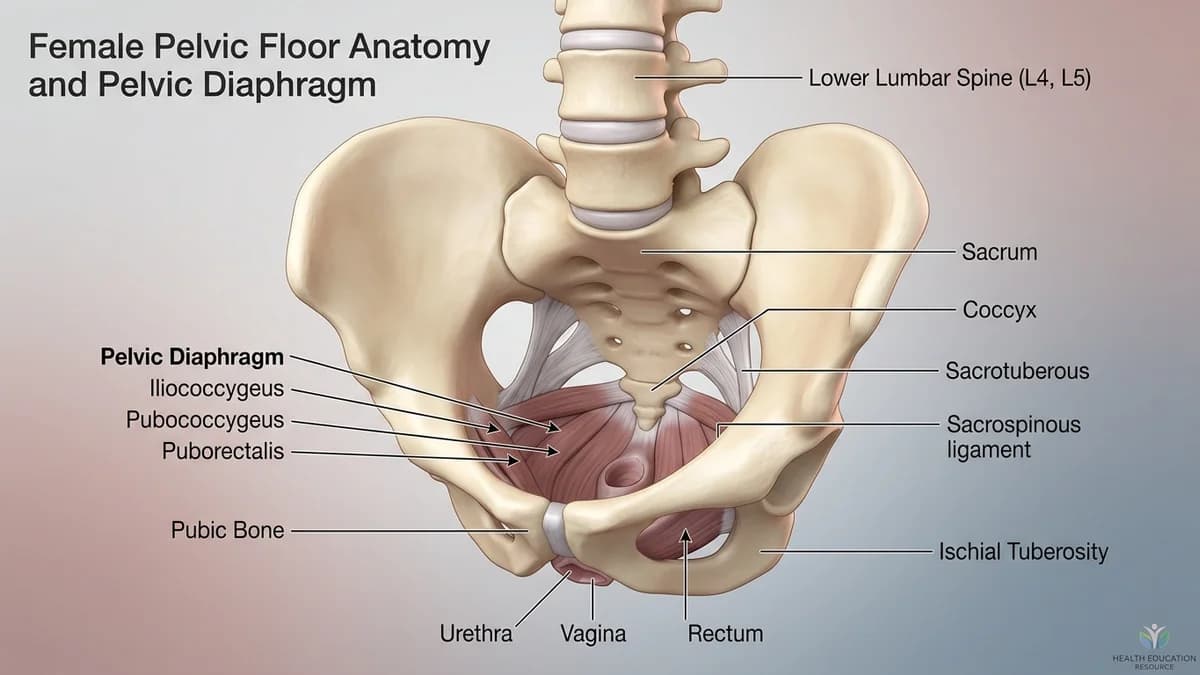
In a healthy uterus, sub-endometrial myometrial contractions follow coordinated peristaltic waves. In adenomyosis, disruption of the junctional zone architecture leads to dysregulated, hyper-peristaltic, and spastic myometrial contractions, generating intrauterine pressures that exceed 150 mm Hg. This severe visceral ischemia triggers intense visceral nociceptive transmission via hypogastric sympathetic nerves (T10-L2) and pelvic splanchnic nerves (S2-S4). In response, the brain initiates a continuous protective co-contraction of the abdominal wall (rectus abdominis, obliques) and the pelvic floor (puborectalis, iliococcygeus). This continuous co-contraction impairs local microcirculation, creating a secondary myofascial pain source that outlasts the menstrual period.
2. Domestic Indian Context: Daily Chores, Ergonomics, and Privacy
Women with adenomyosis in Indian joint family households face heavy physical burdens: standing for hours preparing meals, managing heavy kitchenware, and washing clothes by hand while coping with heavy bleeding and severe cramping. Cultural expectations often discourage resting, with women feeling guilty for taking sick leave. Many women manage with strong oral analgesics that cause gastric irritation. Physiotherapists collaborate with patients to develop realistic 'pacing calendars', introduce ergonomic high-stool seating in kitchens, and teach discreet, floor-based heat and breathing therapies that can be performed in privacy.
3. Clinical Special Tests and Physical Examination
Diagnosis is initially confirmed by gynaecologists via transvaginal ultrasound (TVUS) showing junctional zone thickening (>12 mm) or MRI. Physiotherapy evaluation assesses abdominal wall trigger points, palpates the anterior and posterior pelvic floor for hypertonic spasm, and evaluates respiratory diaphragm mobility during pain flare-ups.
| Clinical Feature | Uterine Myometrial Cramping | Secondary Pelvic Floor Spasm | Physiotherapy Management |
|---|---|---|---|
| Pain Sensation | Colicky, labor-like, deep central spasm | Constant dull ache, pressure, tightness | Downtrain muscle to lower baseline pain |
| Timing of Flare-ups | Strictly cyclical during menstrual flow | Present pre-, intra-, and post-menstruation | Daily home exercise and down-training |
| Physical Exam Sign | Enlarged, tender, globoid uterus on bimanual | Tender trigger points in levator ani | Manual myofascial trigger point release |
| Medical Therapy | Hormonal IUD (LNG-IUS), tranexamic acid | Muscle relaxation, heat, somatic pacing | Coordinated medical and physio care |
4. Stage-by-Stage Functional Physiotherapy Protocol
Rehabilitation centres on active somatic down-training, dampening sympathetic nervous drive, and teaching gentle non-straining movement patterns.
Phase 1: Supported Child's Pose (Balasana) with Pelvic Drop
Objective: Decompress the congested pelvis and encourage passive relaxation of the levator ani and lower back muscles.
- 1Kneel on a soft floor mat, keeping your knees wide and big toes touching.
- 2Place a thick bolster, firm pillow, or hot water bottle in front of you.
- 3Fold your torso forward onto the bolster, resting your chest and head comfortably.
- 4Place your hands loosely beside your head and close your eyes.
- 5Take slow, deep breaths into your lower back and pelvic bowl, feeling your pelvic floor widen and release tension with every exhale.
Phase 2: Pelvic Clock Pelvic Tilting for Lumbopelvic Mobility
Objective: Gently mobilize the sacrococcygeal and lumbar joints to break protective muscular rigidity.
- 1Lie on your back with knees bent and feet flat on the floor.
- 2Imagine a clock face resting flat beneath your pelvis, with 12 o'clock at your navel and 6 o'clock at your pubic bone.
- 3Gently tilt your pelvis to flatten your lower back toward 12 o'clock, then tip forward toward 6 o'clock.
- 4Smoothly rotate your pelvis in a circle: 12 to 3, 6, 9, and back to 12.
- 5Keep the movements tiny, fluid, and pain-free, breathing continuously.
Phase 3: The 'Pacing and Micro-Break' Household Strategy
Objective: Prevent cumulative muscle fatigue and co-contraction during daily domestic tasks.
- 1Break domestic tasks into 20-minute blocks rather than standing continuously for hours.
- 2After 20 minutes of standing cooking, sit on a high stool or armchair for 2 minutes.
- 3Take 3 deep diaphragmatic breaths, consciously releasing all tension from your lower belly and pelvic floor.
- 4Drink a glass of warm water before resuming work.
- 5This prevents the nervous system from locking into protective muscular spasm.
Seek immediate gynaecological or emergency care if you experience: sudden flooding with large blood clots soaking through two heavy menstrual pads per hour for two consecutive hours, dizziness, extreme pallor, or fainting (severe anaemia), acute severe unilateral pelvic pain with vomiting, or high fever with foul-smelling vaginal discharge.
5. Clinic Consultation, Home Visits, and Transparent Fee Benchmarks
Under the National Commission for Allied and Healthcare Professions (NCAHP) Act 2021, patients in India can consult a registered pelvic health physiotherapist directly without an upfront referral, though BookPhysio.in does not ask for one. Pelvic health physiotherapists provide private, compassionate manual therapy and pain-pacing strategies. Clinic consultations across Indian cities range between ₹500 and ₹1,500, with home visits ranging from ₹700 to ₹2,000 where available. Patients pay their physiotherapist directly at each consultation, with zero platform commission.
6. Frequently Asked Questions
Can pelvic floor physiotherapy shrink an adenomyotic uterus?
No. Physiotherapy cannot alter the internal myometrial glandular tissue or shrink the uterus. However, it effectively relieves the secondary pelvic floor muscle spasm, myofascial trigger points, and nerve hypersensitivity that cause a substantial portion of the chronic daily aching and intercourse pain.
Is local heat therapy safe for adenomyosis pain?
Yes. Applying a warm water bottle or heating pad to the lower abdomen or sacrum promotes vasodilation, improves pelvic blood flow, and calms reflex smooth muscle and striated pelvic floor spasm. Use moderate warmth wrapped in a cloth to protect your skin.
Related recovery guides & articles
BookPhysio.in Editorial Team
The BookPhysio.in editorial team writes and maintains this content, checking it against reliable clinical sources. Content follows our medical review policy: general information only, and no page claims a clinical review until a named registered physiotherapist has signed it off.
Read our medical review policy