
Apathy and Depression in Movement Disorders: Structured Daily Routines
In short
Apathy and depression are neurochemical realities of Parkinson's, not personal laziness. Discover how structured routines and behavioural activation restore engagement.
In this guide (6 sections)
Apathy and depression are among the most common and disabling non-motor features of Parkinson's disease, affecting up to 50 percent of patients. While depression is characterized by pervasive sadness, hopelessness, and negative self-evaluation, apathy represents a distinct syndrome of diminished motivation, emotional blunting, and loss of goal-directed initiative. Family members frequently misunderstand apathy as laziness or obstinacy, leading to family friction. In reality, apathy is a primary neurochemical consequence of mesocorticolimbic dopamine denervation.
Domestic and Cultural Indian Realities
In Indian households, an elder who withdraws from family conversations, stops praying at the home altar, and sits silently in an armchair all day is often assumed to be simply aging or accepting "vairagya" (spiritual detachment). Family members often unintentionally reinforce apathy by over-pampering: bringing water, food, and remote controls to the patient's chair, eliminating any physical reason for movement. Behavioural activation through fixed, predictable daily routines, designated household responsibilities, and external social accountability re-energizes neural motivation circuits.
Clinical Biomechanics and Basal Ganglia Neuroplasticity
Apathy results from degeneration of the mesocorticolimbic dopaminergic projections from the ventral tegmental area (VTA) to the nucleus accumbens, anterior cingulate cortex, and orbitofrontal cortex. This circuit computes the cost-benefit ratio of physical effort versus reward. When dopamine tone drops, the brain perceives even minor physical tasks (like getting out of a chair) as demanding excessive energetic cost for negligible reward. Behavioural activation physiotherapy utilizes structured external cues and predictable routines to bypass damaged internal initiation pathways.
Clinical Assessment of Non-Motor Neuropsychiatric Features
Assessment utilizes the Starkstein Apathy Scale (SAS), the Geriatric Depression Scale (GDS-15), and the MDS-UPDRS Part I (Non-Motor Aspects of Experiences of Daily Living). The clinician distinguishes between apathy (flat affect, lack of interest, low initiative without despair) and depression (tearfulness, guilt, worthlessness). Sleep quality, daytime somnolence, and medication on-off timing are carefully correlated with motivational fluctuations.
Targeted High-Amplitude and Balance Protocols
Rehabilitation employs structured behavioural activation: co-creating a visual, colour-coded daily schedule that pairs motor exercise with emotionally rewarding activities. Tasks are broken into micro-commitments (such as 5 minutes of marching during a favorite morning radio show), removing the psychological barrier of starting.
Behavioural Activation Micro-Commitment Movement Sequence
Objective: Overcome motivational initiation blocks through low-barrier structured motor routines
- 1Place a visual daily calendar at eye level in the living room with fixed exercise time blocks.
- 2At the scheduled time (e.g., 10:00 AM post-morning medication), have a family member provide an encouraging cue: "It is time for our 5-minute song."
- 3Play an upbeat, familiar cultural song that the patient loves.
- 4Begin seated in a comfortable chair, clapping hands and tapping feet in rhythm with the music.
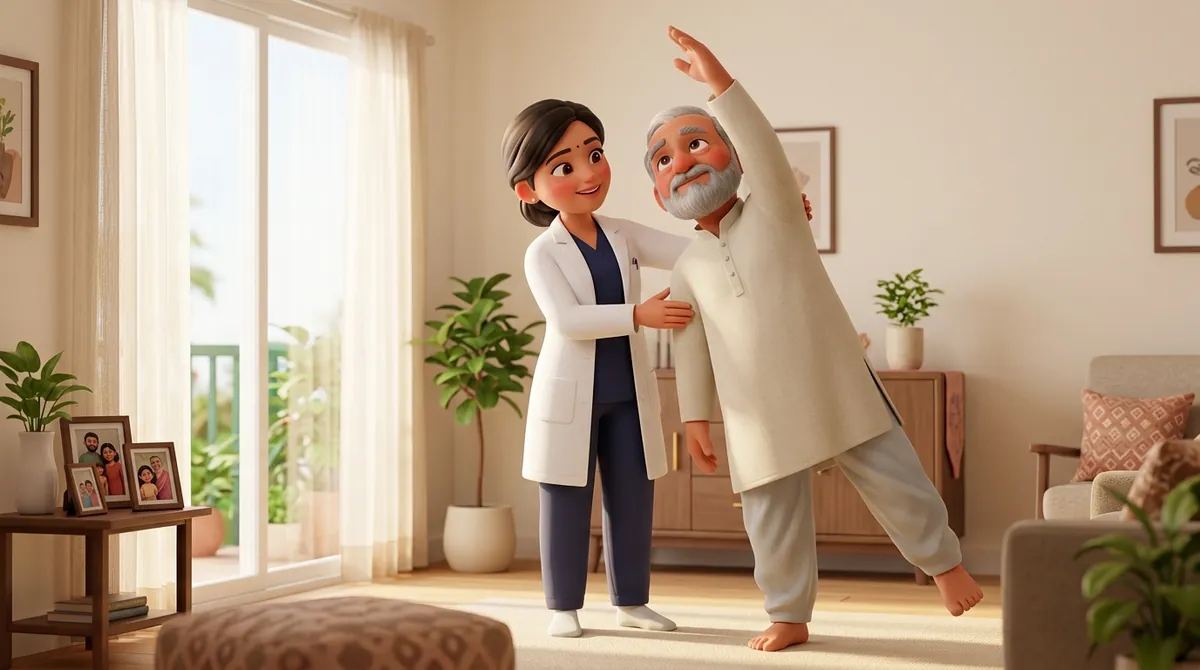
- 5Transition to standing with caregiver support, performing 10 high-amplitude arm reaches toward the ceiling while counting aloud.
- 6Mark a bright green checkmark on the visual calendar upon completion, celebrating the achievement.
| Clinical Dimension | Apathy (Motivation Deficit) | Depression (Mood Disorder) |
|---|---|---|
| Emotional Tone & Affect | Emotional blunting, indifference, flat affect, zero distress | Sadness, tearfulness, guilt, self-reproach, intense distress |
| Underlying Neural Circuit | Ventral striatal / anterior cingulate dopamine deficit | Serotonergic, noradrenergic, and limbic circuit disruption |
| Response to Encouragement | Cooperates willingly if external initiative is provided by others | Resists or feels overwhelmed; negative self-doubt persists |
| Physiotherapy Strategy | External pacing, fixed schedules, micro-routines, group classes | Gentle exercise, social connection, psychological support |
Red Flags and Medical Escalation
Expressed suicidal ideation, refusal to eat or take essential medications, profound psychomotor retardation, or the sudden emergence of paranoid delusions or visual hallucinations require immediate emergency psychiatric and neurological evaluation. Dopaminergic medication withdrawal (Dopamine Agonist Withdrawal Syndrome, DAWS) can provoke catastrophic apathy and depression requiring urgent medical care.
Frequently Asked Questions
Can structured exercise cure apathy or depression in Parkinson's?
Exercise cannot cure neurochemical apathy or depression. However, structured physical activity helps manage motor fluctuations and improve mobility by naturally releasing endorphins, providing external motivation structure, and restoring purpose to daily life.
Do I need a doctor referral to see a neuro physiotherapist for apathy in India?
No doctor prescription is required. Under the National Commission for Allied and Healthcare Professions (NCAHP) Act 2021, registered physiotherapists in India are independent first-contact professionals. BookPhysio.in connects you directly with verified neuro specialists with transparent pay-direct billing.
Related recovery guides & articles
BookPhysio.in Editorial Team
The BookPhysio.in editorial team writes and maintains this content, checking it against reliable clinical sources. Content follows our medical review policy: general information only, and no page claims a clinical review until a named registered physiotherapist has signed it off.
Read our medical review policy