
Apprehension and Relocation Tests: Anterior Shoulder Instability Guide
In short
Anterior glenohumeral dislocation often leaves recurrent instability and Bankart lesions. Learn how the Apprehension test, Jobe relocation test, and Surprise release test confirm anterior capsular laxity.
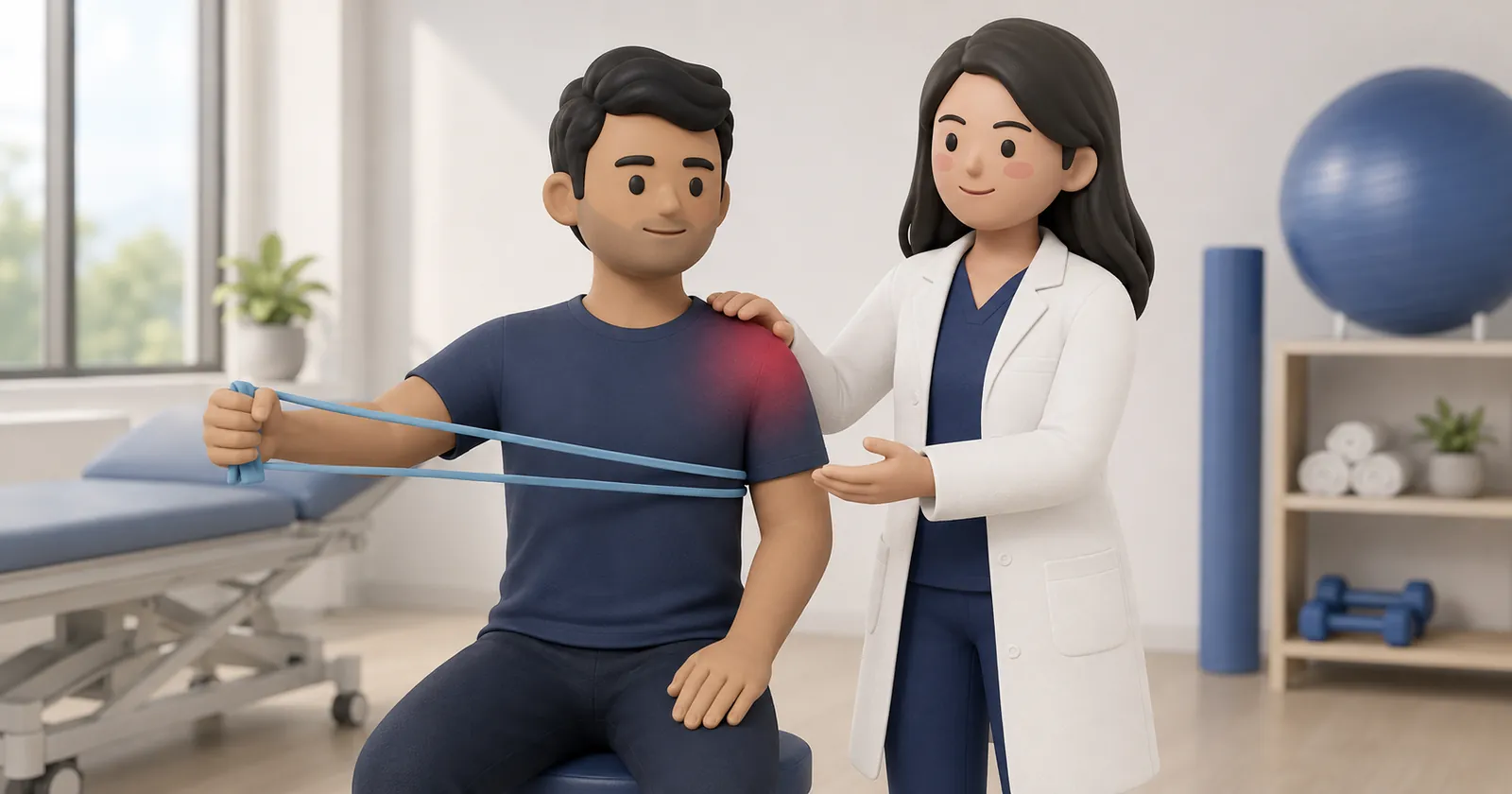
In this guide (8 sections)
Pathomechanics of Anterior Shoulder Instability
The glenohumeral joint trades structural stability for extreme mobility, relying on the labrum and inferior glenohumeral ligament (IGHLC) complex. Following a traumatic anterior dislocation, detachment of the anteroinferior labrum (Bankart lesion) leaves the shoulder susceptible to repeated subluxations.
Clinical testing differentiates mechanical apprehension (fear of dislocation) from simple rotator cuff impingement pain.
The Crank / Apprehension Test Protocol
The Apprehension test is performed with the patient lying supine on an examination table with the shoulder positioned at the edge:
- Positioning: The clinician abducts the shoulder to 90 degrees and flexes the elbow to 90 degrees.
- External Rotation Maneuver: The clinician slowly and gently rotates the arm into external rotation while supporting the elbow.
- True Positive Finding: The patient exhibits genuine apprehension, facial distress, or actively contracts their muscles to resist further movement, expressing fear that the shoulder will pop out. Pain alone without apprehension is NOT a positive test.
The Jobe Relocation Test and Surprise Release
If the patient displays apprehension, the clinician maintains external rotation and applies a firm posterior-directed stabilizing force on the anterior humeral head with the palm. Relief of apprehension confirms anterior instability.
Surprise (Release) Test: When the posterior stabilizing force is suddenly removed, immediate reappearance of apprehension confirms frank capsulolabral insufficiency.
Diagnostic Performance Matrix
| Test Component | Sensitivity | Specificity | Clinical Significance | |
|---|---|---|---|---|
| Apprehension Test Alone | 72 percent | 96 percent | High specificity when true fear of dislocation is elicited | |
| Jobe Relocation Test | 81 percent | 92 percent | Differentiates anterior instability from secondary impingement | |
| Apprehension + Relocation Combined | 85 percent | 98 percent | Gold-standard clinical combination for Bankart lesion confirmation |
Frequently Asked Questions
Why must the Apprehension test be performed in supine rather than standing?
Lying supine stabilizes the scapula against the plinth, prevents compensatory trunk rotation, and allows the clinician immediate physical control to prevent accidental dislocation.
Can rehabilitation stabilize recurrent anterior shoulder dislocations?
In younger collision athletes with bony Bankart or Hill-Sachs lesions greater than 20 percent, surgical stabilization is often required. In non-contact patients, intensive rotator cuff and periscapular dynamic neuromuscular training restores stability.
Bankart Lesions and Structural Capsular Insufficiency
Anterior shoulder dislocations tear the anterior-inferior glenoid labrum away from the bone (Bankart lesion), often accompanied by a compression fracture on the posterolateral humeral head (Hill-Sachs lesion). Without an intact labral bumper, the glenohumeral joint loses up to 50 percent of its passive stability in 90 degrees abduction and external rotation.
Dynamic Neuromuscular Stabilization Protocol
Rehabilitation emphasizes closed kinetic chain weight-bearing exercises to co-contract the rotator cuff and scapular musculature. Quadruped rhythmic stabilization, wall planks with perturbational taps, and prone horizontal abduction (Y-T-W drills) train dynamic muscular restraints to compensate for lax capsular ligaments.
High-Risk Posture Avoidance in Daily Life
Patients are educated to avoid the high five provocative posture during sports, gym bench presses, and sleep. Reaching behind the passenger seat of a car or throwing overhead must be restricted until dynamic cuff strength is fully re-established.
Related condition guides

Related recovery guides & articles
BookPhysio.in Editorial Team
The BookPhysio.in editorial team writes and maintains this content, checking it against reliable clinical sources. Content follows our medical review policy: general information only, and no page claims a clinical review until a named registered physiotherapist has signed it off.
Read our medical review policy