
Barefoot Walking vs Anti-Skid Rubber Grip Footwear on Smooth Floors in Indian Homes
In short
Cultural barefoot traditions collide with modern slick tile flooring in Indian apartments. Discover why purpose-designed anti-skid indoor footwear protects ageing balance.
In this guide (6 sections)
Footwear choices directly influence postural stability, gait kinematics, and slip resistance in older adults. Epidemiological data indicates that walking barefoot or in stocking feet inside the home increases the odds of experiencing an indoor fall by nearly eleven-fold compared to wearing supportive athletic shoes. While barefoot walking provides direct cutaneous sensory feedback in young individuals, the combination of age-related plantar fat pad atrophy, diabetic peripheral neuropathy, and mirror-polished domestic flooring makes barefoot ambulation a significant fall risk for seniors.
Domestic and Cultural Indian Realities
In Indian cultural practice, removing outdoor footwear before entering the home is a deeply ingrained tradition associated with spiritual purity and domestic cleanliness. Consequently, the vast majority of older Indians walk barefoot indoors or wear traditional flat rubber flip-flops (hawai chappals). While hawai chappals are accessible, their smooth sponge-rubber soles lose traction rapidly on wet surfaces. Furthermore, open-backed flip-flops lack heel containment, forcing older adults to claw their toes constantly to keep the footwear on. When entering prayer rooms (pooja rooms) or kitchen areas, seniors are strictly required to remain barefoot, exposing them to cold, ultra-slick polished marble and dropped liquids without traction.
Clinical Biomechanics and Postural Control Decay
The plantar surface of the human foot contains thousands of mechanoreceptors (Meissner corpuscles, Merkel discs, and Pacinian corpuscles) that detect pressure distributions, shear forces, and surface textures. In older adults, these mechanoreceptors undergo progressive denervation, blunting plantar sensation. Furthermore, age-related atrophy of the sub-calcaneal fat pad reduces shock absorption during heel strike. When an older adult walks barefoot on unyielding marble flooring, the impact transmits unbuffered shock waves through the knee and hip joints. If the floor is damp, the smooth skin of the heel hydroplanes on the water film, causing an abrupt slip fall.
Functional Assessment and Risk Stratification
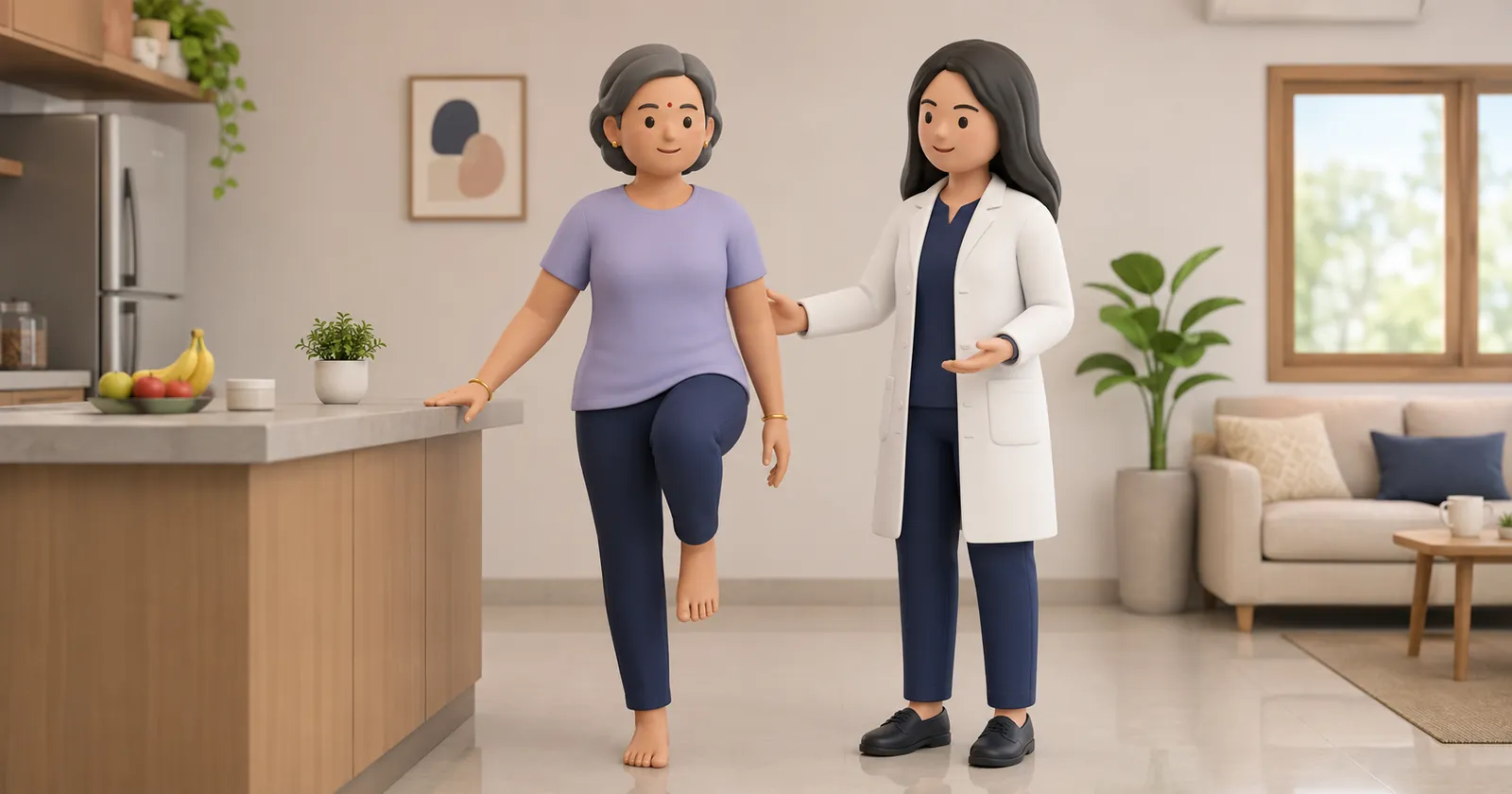
Clinical evaluation compares the patient's postural sway and gait parameters under three conditions: barefoot, wearing open-backed slippers, and wearing supportive indoor shoes with closed heels and textured rubber soles. The therapist evaluates standing balance, step length, and base of support. Seniors who display marked toe clawing, irregular step width, or excessive lateral trunk sway in slippers demonstrate impaired footwear mechanics and require immediate transition to supportive indoor shoes.
Targeted Strength and Balance Exercises
Physiotherapy rehabilitation strengthens the intrinsic foot muscles and ankle stabilizers while reconditioning sensory integration. Towel-gathering drills and marble pickups restore toe flexor strength, while ankle proprioceptive drills improve foot positioning sense during gait.
Seated Intrinsic Foot Strengthening Towel Curls
Objective: Strengthen toe flexors and arch stabilizers to improve foot grip and reduce reliance on toe clawing
- 1Sit upright in a firm chair with both feet resting flat on a smooth tile floor.
- 2Spread a small cotton hand towel flat on the floor directly in front of your bare feet.
- 3Place the toes of your right foot on the near edge of the towel, keeping your heel firmly planted.
- 4Use your toes to grip and scrunch the towel, pulling the fabric inward toward your heel.
- 5Continue curling until the entire towel is gathered under your arch, then reset and repeat with the left foot.
| Footwear Category | Biomechanical Characteristics | Fall Safety Assessment |
|---|---|---|
| Barefoot Walking | High cutaneous feedback when dry; zero traction on wet or soapy marble | High fall risk on slick stone floors; unbuffered heel strike impact |
| Smooth Hawai Chappal (Flip-Flop) | No heel strap; smooth sponge sole; causes constant toe clawing | Extreme trip and slip hazard; easily dislodged during turns |
| Smooth Cotton Socks | Near-zero coefficient of friction on polished tile and timber | Severe slip hazard; strictly contraindicated on smooth flooring |
| Supportive Indoor Shoes with Rubber Soles | Enclosed heel counter; textured rubber tread; Velcro strap closure | Optimal clinical standard; maximizes slip resistance and joint stability |
Red Flags and Emergency Post-Fall Escalation
Slips occurring while barefoot or in flat slippers often cause high-velocity backward falls. Inspect the patient for signs of a fractured coccyx, lumbar compression fracture, or femoral neck injury. Acute inability to bear weight, accompanied by groin pain on passive hip rotation, demands immediate medical immobilization. If the senior struck their head against a tiled wall, evaluate for delayed intracranial complications, particularly if they take blood-thinning medications.
Frequently Asked Questions
Can older adults wear indoor shoes inside Indian homes without violating cultural customs?
Families can maintain cultural cleanliness by dedicating a clean, new pair of supportive non-skid rubber-soled shoes exclusively for indoor use. These shoes never touch outdoor streets, preserving domestic purity while providing essential slip resistance on slick tiles.
What features should families look for when purchasing fall-prevention footwear for seniors?
Look for footwear with a firm heel counter, low wide heel (less than two centimetres), textured vulcanized rubber sole with deep treads, and adjustable Velcro closures. Geriatric physiotherapists on BookPhysio.in provide footwear assessments during home consultations with direct pay-per-session pricing under the NCAHP Act 2021.
Related recovery guides & articles
BookPhysio.in Editorial Team
The BookPhysio.in editorial team writes and maintains this content, checking it against reliable clinical sources. Content follows our medical review policy: general information only, and no page claims a clinical review until a named registered physiotherapist has signed it off.
Read our medical review policy