
Brown-Sequard Syndrome Rehabilitation: Hemisection, Proprioception, and Gait
In short
Brown-Sequard syndrome presents with dissociated sensory-motor deficits following spinal hemisection, requiring targeted gait retraining and thermal safety education.
In this guide (6 sections)
Brown-Sequard syndrome represents an incomplete spinal cord injury resulting from anatomical or functional hemisection of the spinal cord. It is classically caused by penetrating trauma (such as knife wounds), lateral spinal cord contusions from road traffic accidents, cervical disc herniation, or spinal neoplasms. The resulting clinical picture is unique and complex, characterized by crossed, dissociated sensory and motor findings: ipsilateral spastic paralysis and loss of proprioception and vibration below the lesion, paired with contralateral loss of pain and temperature sensation starting one to two segments caudal to the injury level.
Domestic and Cultural Indian Realities
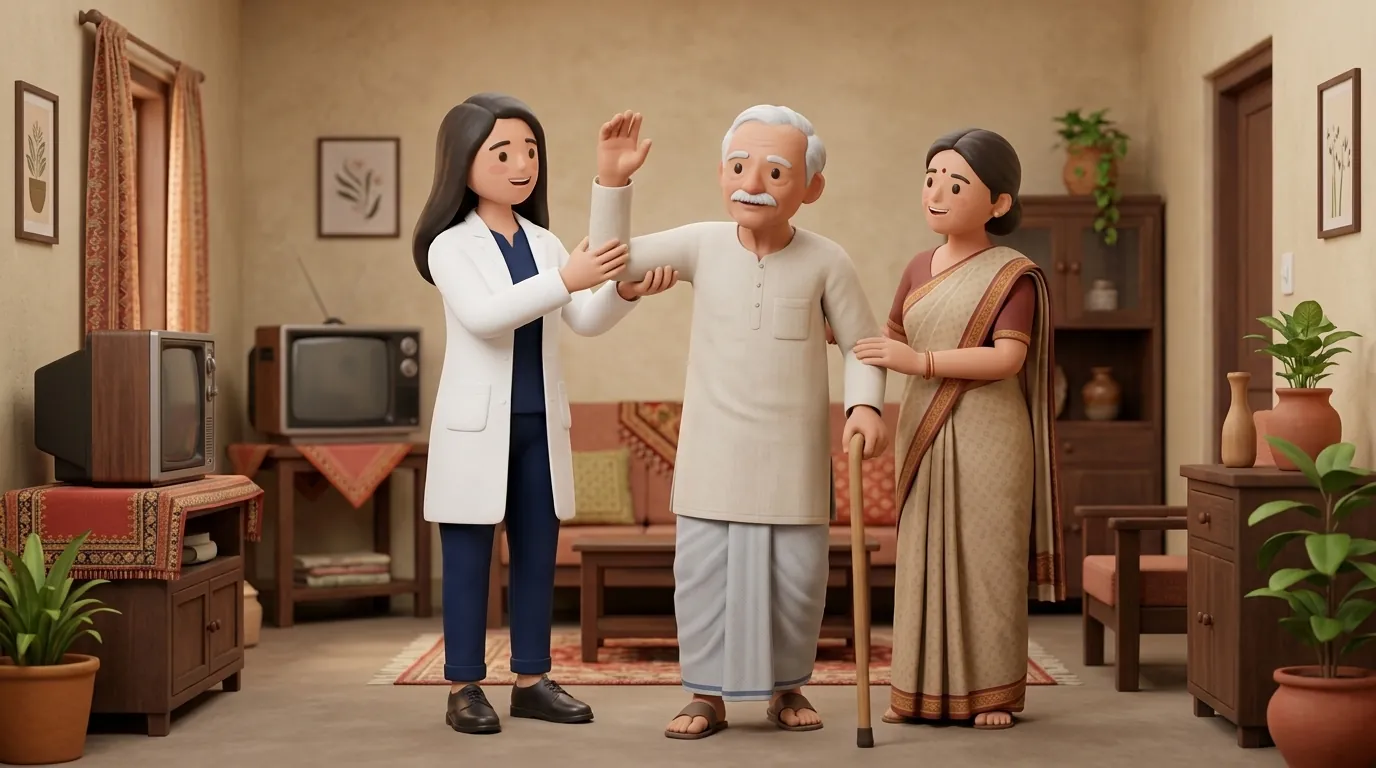
Living with Brown-Sequard syndrome in an Indian home requires strict vigilance regarding environmental safety. Because pain and temperature sensation are completely abolished on the side opposite the motor weakness, patients frequently suffer severe, painless thermal burns from everyday household activities. Dipping an insensate foot into boiling bathwater from a geyser or immersion heating rod, resting against room heaters in winter, or walking barefoot across sun-baked stone verandas can cause full-thickness burns without the patient feeling any discomfort. Family members must establish strict water thermometer testing protocols before baths and mandate protective footwear.
Clinical Biomechanics and Neurological Recovery
The dissociated neurological presentation reflects the neuroanatomy of ascending and descending spinal tracts. The lateral corticospinal tract and the posterior dorsal columns (fasciculus gracilis and cuneatus) do not decussate in the spinal cord; they cross in the medulla. Therefore, a lateral cord hemisection destroys uncrossed descending motor fibers (producing ipsilateral spastic paresis) and uncrossed ascending sensory fibers (producing ipsilateral loss of touch, vibration, and joint position sense). Conversely, the spinothalamic tract fibers conveying pain and temperature decussate within the anterior white commissure one to two spinal levels above their entry, meaning a hemisection severs fibers originating from the contralateral side of the body.
Functional Movement Analysis and Clinical Assessment
Sensory testing must meticulously evaluate both spinothalamic (pinprick, hot/cold test tubes) and dorsal column (128 Hz tuning fork, joint position matching) modalities bilaterally to establish the exact neurological level. Motor examination reveals asymmetric lower limb strength: the weak leg demonstrates spasticity, hyperreflexia, and extensor plantar responses, while the contralateral leg exhibits normal voluntary motor power. Gait analysis shows significant asymmetry: the patient relies heavily on the intact motor leg while exhibiting sensory ataxia and reduced stance time on the paretic leg.
Targeted Rehabilitation and Functional Independence Protocol
Rehabilitation capitalizes on the high ambulation potential of Brown-Sequard syndrome, as more than 80 to 90 percent of patients regain independent walking. Physiotherapy focuses on weight-bearing re-education on the paretic side, utilizing visual feedback to compensate for impaired joint proprioception. Balance training progresses from parallel bars to a single point elbow crutch held on the contralateral side to normalize pelvic levelness. Thermal safety education is conducted with all family members, and dynamic ankle-foot orthoses are fitted if foot drop impairs toe clearance during swing phase.
Single-Leg Proprioceptive Balance with Visual Compensation
Objective: Train conscious visual compensation for lost joint position sense during single-limb stance
- 1Stand inside parallel bars or beside a sturdy dining table with your hands hovering 1 inch above the surface.
- 2Focus your eyes directly on a stationary visual target marked on the wall at eye level.
- 3Shift your body weight smoothly onto your paretic leg, slowly lifting the non-paretic foot off the floor.
- 4Use visual cues to keep your knee stable in slight flexion, avoiding knee hyperextension.
- 5Hold this balanced single-leg stance for 10 to 15 seconds without gripping the support surface.
- 6Gently lower the contralateral foot back down and rest for 10 seconds before repeating.
| Neurological Modality | Ipsilateral Side (Same as Lesion) | Contralateral Side (Opposite Lesion) |
|---|---|---|
| Voluntary Motor Function | Spastic paralysis / paresis below lesion (Corticospinal tract) | Normal voluntary motor strength preserved |
| Vibration and Proprioception | Abolished below lesion (Dorsal columns) | Normal joint position sense and vibration intact |
| Pain and Temperature Sensation | Normal thermal and sharp sensation preserved | Abolished 1-2 segments below lesion (Spinothalamic tract) |
| Primary Rehabilitation Focus | Motor strengthening, spasticity control, gait retraining | Strict burn prevention, skin inspection, wound avoidance |
Red Flags and Emergency Escalation
The most dangerous domestic complication in Brown-Sequard syndrome is severe, painless full-thickness skin burns or lacerations on the contralateral lower extremity. Inspect the insensate leg and foot daily for blisters, redness, or puncture wounds from sharp objects. Furthermore, patients with dorsal column loss are vulnerable to severe falls in the dark when visual compensation is removed: nightlights must be installed along domestic hallways. Any progressive worsening of motor weakness on the unaffected side signals possible hematoma expansion or tumor growth requiring urgent neurosurgical imaging.
Frequently Asked Questions
Why do I feel pain on the weak leg but cannot feel hot or cold on the strong leg?
This happens because of how nerve tracts travel through the spinal cord. The nerve fibers carrying pain and temperature crossover to the opposite side of the spinal cord shortly after entering. Therefore, an injury to one side of the cord blocks pain signals coming from the opposite, strong side of your body.
How do I arrange in-home gait and balance retraining with a neuro-physiotherapist?
Under the NCAHP Act 2021, registered physiotherapists in India can be engaged directly without a doctor prescription. On BookPhysio.in, you can book a qualified physiotherapist who will provide customized gait training, balance re-education, and domestic safety audits in your home. Fees are paid directly to the clinician at your appointment.
Related recovery guides & articles
BookPhysio.in Editorial Team
The BookPhysio.in editorial team writes and maintains this content, checking it against reliable clinical sources. Content follows our medical review policy: general information only, and no page claims a clinical review until a named registered physiotherapist has signed it off.
Read our medical review policy