
C6 Tetraplegia Tenodesis Grip Preservation: Wrist Extension and Functional Grasp
In short
Preserving natural tenodesis grasp in C6 tetraplegia enables functional hand grasp through active wrist extension, demanding strict avoidance of flat-hand transfers.
In this guide (6 sections)
In complete cervical spinal cord injury at the C6 neurological level, voluntary innervation of the long finger flexors (flexor digitorum profundus and superficialis) is absent due to damage spanning the C8 and T1 segments. However, the extensor carpi radialis longus and brevis muscles remain actively innervated by the intact C6 root. This clinical presentation allows individuals to establish a functional grasp via passive tenodesis. When the wrist actively extends, the physiologically shortened finger flexor tendons are mechanically pulled taut across the metacarpophalangeal and interphalangeal joints, curling the fingers into the palm. Preserving this mechanical tension is the single most significant factor dictating whether a person with C6 tetraplegia can feed, write, groom, and transfer independently.
Domestic and Cultural Indian Realities
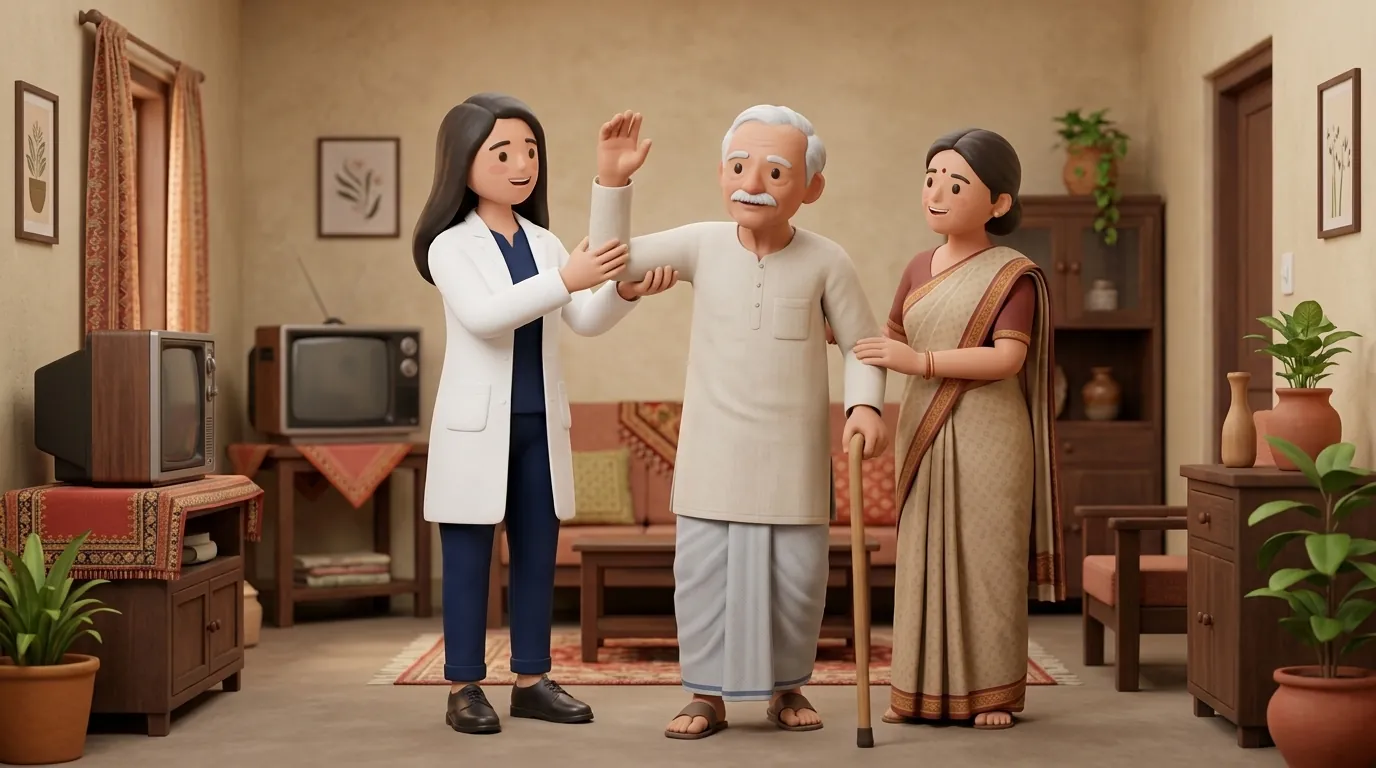
Within Indian domestic routines, an effective tenodesis grip allows individuals to grasp stainless steel glasses, manipulate traditional brass door latches (kundi), tear chapati, and operate mobile phones independently. However, a major domestic risk arises from well-meaning family caregivers who inadvertently stretch the patient fingers flat during daily oil massages (maalish) or bath routines. Flattening the fingers with the wrist extended completely abolishes the natural tendon tightness required for tenodesis grasp. Education must strictly instruct families to maintain flexed fingers whenever the wrist is extended. Furthermore, domestic transfers on firm wooden surfaces or charpoys must be performed on closed fists or knuckles with wrists stabilized in extension, never with flat open hands bearing body weight.
Clinical Biomechanics and Neurological Recovery
The biomechanics of tenodesis rely on passive tension within the multi-joint flexor digitorum tendons. When the wrist dorsiflexes to 35-45 degrees, the distance between the tendon origin on the medial epicondyle and the phalangeal insertions lengthens. If the tendons possess healthy adaptive shortening, this mechanical stretch draws the distal finger pads firmly against the thumb pad or palm, generating lateral pinch or cylindrical grasp. If triceps function (C7) is lacking, the patient locks the elbow in full extension by externally rotating the glenohumeral joint and using the anterior deltoid and biceps (C5-C6) to stabilize the upper extremity during transfers.
Functional Movement Analysis and Clinical Assessment
Assessment begins by grading active wrist extension against gravity and resistance. A minimum grade 3+/5 in the extensor carpi radialis is mandatory to generate meaningful tenodesis pinch force. The physiotherapist assesses passive tendon tightness: when the wrist is passively dropped into full flexion, the fingers must fully extend naturally; when the wrist is extended to 45 degrees, the fingers should automatically curl into a firm fist without external pressure. Pinch strength between the index finger and thumb is quantified using a pinch gauge, and functional capacity is evaluated across feeding and writing tasks with and without tenodesis orthoses.
Targeted Rehabilitation and Functional Independence Protocol
The rehabilitation protocol focuses on selective contracture management. During the initial 12 weeks post-injury, therapists position the hands in resting splints that maintain wrist extension and finger flexion. Night resting splints preserve finger flexor tightness while preventing distal oedema. When practicing bed mobility and sliding board transfers, the patient is trained to bear weight on knuckles with interphalangeal joints flexed, or on the lateral border of the closed fist. Active resistive wrist extension drills are paired with functional object manipulation, teaching the patient to position objects against a stable counter before dropping the wrist to release or pulling back to clamp.
Active-Assisted Wrist Extension Tenodesis Drill
Objective: Strengthen radial wrist extensors while training automatic passive finger grasp
- 1Sit comfortably in a supportive wheelchair with the forearm resting on a firm table.
- 2Allow the wrist to rest in slight flexion over the edge of a small rolled towel so the fingers naturally relax and extend.
- 3Place a light wooden peg or pen between the thumb and the lateral border of the index finger.
- 4Actively extend your wrist upward toward the ceiling, watching the fingers naturally curl and clamp firmly around the object.
- 5Hold the active contraction for 5 seconds without letting the object slip from your grasp.
- 6Slowly lower the wrist back into flexion, allowing the fingers to passively reopen and release the object.
| Clinical Routine | Correct Tenodesis Protocol | Harmful Action (Abolishes Grip) |
|---|---|---|
| Weight Bearing During Transfers | Weight borne on closed fists or flexed knuckles | Weight borne on flat palms with extended fingers |
| Passive Range of Motion | Fingers extended only when wrist is fully flexed | Fingers pulled straight while wrist is held in extension |
| Resting Splint Positioning | Wrist extended 30 degrees, fingers gently flexed | Flat volar resting splint keeping entire hand flat |
| Caregiver Daily Massage | Gentle palm support with curled fingers | Forceful backward stretching of fingers |
Red Flags and Emergency Escalation
C6 tetraplegia carries high risk of autonomic dysreflexia during arm training if tight splint strapping, skin pinch, or acute wrist synovitis occurs. Any sudden throbbing headache, blurred vision, or sweating above the neck requires immediate release of all arm splints and rapid assessment of bladder drainage. In addition, inspect the palmar skin and dorsal knuckles daily for signs of pressure injury or blister formation caused by transfer shear. Swelling, redness, or heat over the wrist joint indicates potential extensor tendinopathy or early heterotopic ossification, requiring immediate medical imaging and modification of loading parameters.
Frequently Asked Questions
Why should caregivers never flatten or stretch the fingers straight during hand massages?
Stretching the fingers flat while the wrist is extended permanently stretches out the long finger flexor tendons. Once these tendons become loose, the natural tenodesis clamping effect is lost forever, making it virtually impossible for an individual with C6 tetraplegia to grasp glasses, spoons, or pens without motorized orthoses or surgical tendon transfers.
How do I schedule a certified neuro-physiotherapist for tenodesis training at home?
Under the National Commission for Allied and Healthcare Professions (NCAHP) Act 2021, you can access licensed physiotherapists directly for home rehabilitation. BookPhysio.in connects you with specialised neuro-physiotherapists who can evaluate your hand function and train your family caregivers at home. Fees are paid directly to the attending clinician at each appointment via UPI or cash.
Related recovery guides & articles
BookPhysio.in Editorial Team
The BookPhysio.in editorial team writes and maintains this content, checking it against reliable clinical sources. Content follows our medical review policy: general information only, and no page claims a clinical review until a named registered physiotherapist has signed it off.
Read our medical review policy