
Cervicogenic Headache: The Trigeminocervical Complex, C1-C2 Dysfunction, and SNAG Mobilization
In short
Cervicogenic headaches originate from upper cervical spine dysfunction projecting pain to the forehead via trigeminocervical convergence; C1-C2 SNAGs restore painless neck mobility.
In this guide (4 sections)
The Anatomy of Trigeminocervical Convergence and Referred Frontal Pain
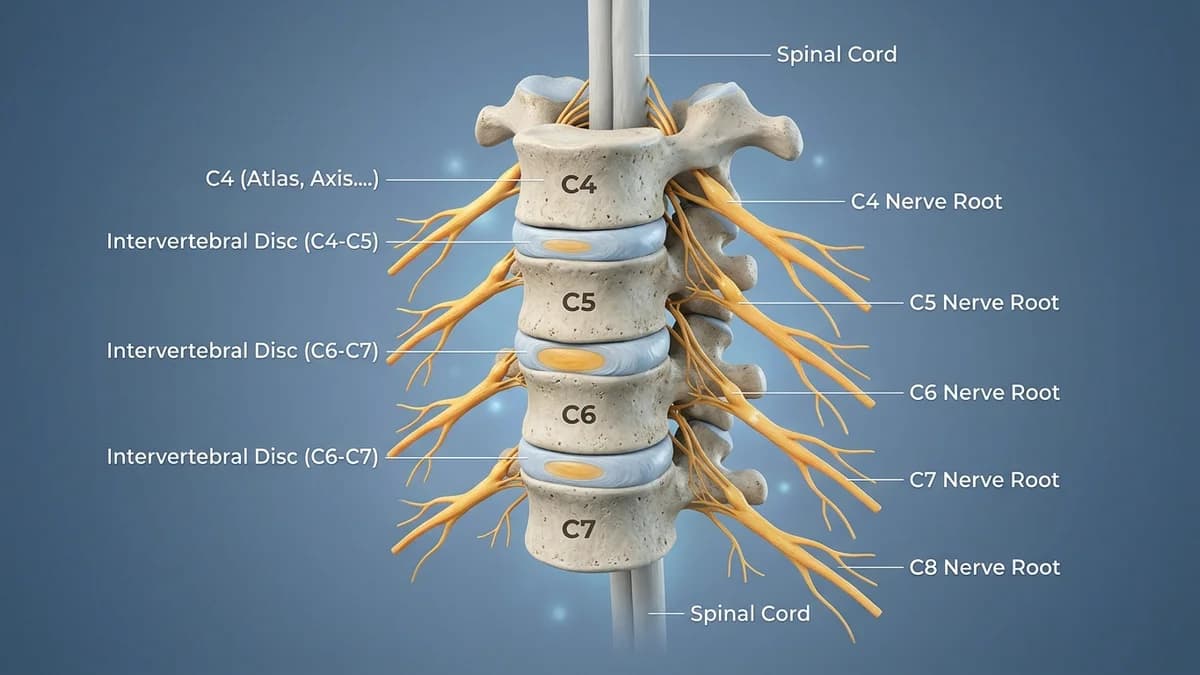
Cervicogenic Headache (CGH) is a secondary headache disorder arising from musculoskeletal dysfunction within the upper three cervical motion segments (C1-C2, C2-C3, and the atlanto-occipital joint), accounting for 15% to 20% of all chronic, recurrent headaches. Pathophysiologically, the mechanism of pain referral from the neck to the fronto-orbital region is explained by the Trigeminocervical Complex (TCC).
Nociceptive sensory afferents from the upper three cervical spinal nerves (C1, C2, C3 - innervating the suboccipital muscles, facet joints, alar ligaments, and upper cervical dura) enter the dorsal horn and descend into the pars caudalis of the spinal trigeminal nucleus. Here, cervical afferents converge directly onto the exact same second-order neurons that receive sensory inputs from the ophthalmic division of the trigeminal nerve (CN V1). The cerebral sensory cortex cannot distinguish whether the incoming noxious signals originated in the upper neck joints or the forehead, creating classic 'ram's horn' referred pain curving from the suboccipital neck over the ear to the temple and eye.
The ICHD-3 Diagnostic Criteria and Cervical Testing Matrix
| Diagnostic Test / Parameter | Testing Methodology | Pathognomonic Finding in CGH | Clinical Physiotherapy Mandate | |
|---|---|---|---|---|
| Flexion-Rotation Test (FRT) | Passive cervical flexion to end-range followed by full bilateral rotation | Rotation restricted < 32 degrees on painful side (or > 10 deg asymmetry) | GOLD STANDARD TEST: Identifies C1-C2 atlantoaxial rotational hypomobility | |
| Pain Referral Reproduction | Sustained digital pressure applied over ipsilateral C2-C3 facet / suboccipitals | Direct reproduction or worsening of the patient's familiar frontal headache | Confirms cervical spine as the primary anatomical nociceptive source | |
| Unilateral 'Ram's Horn' Distribution | Pain starts in occiput, radiating forward over ear to temple and frontal eye | Strictly unilateral headache that does not switch sides | Differentiates CGH from symmetric bilateral tension headaches | |
| Deep Neck Flexor Endurance (CCFT) | Cranio-Cervical Flexion Test using biofeedback pressure cuff (20 to 30 mmHg) | Inability to hold 26-28 mmHg for 10 s; overactivation of superficial SCM | Deep neck flexor (longus capitis/colli) endurance retraining | |
| Diagnostic Anesthetic Block Test | Fluoroscopic anesthetic injection of C2-C3 facet joint or greater occipital nerve | Temporary complete abolishment of headache confirms diagnosis | ICHD-3 diagnostic requirement in refractory surgical cases |
Standardized Clinical Rehabilitation Protocols: Mulligan C1-C2 SNAGs
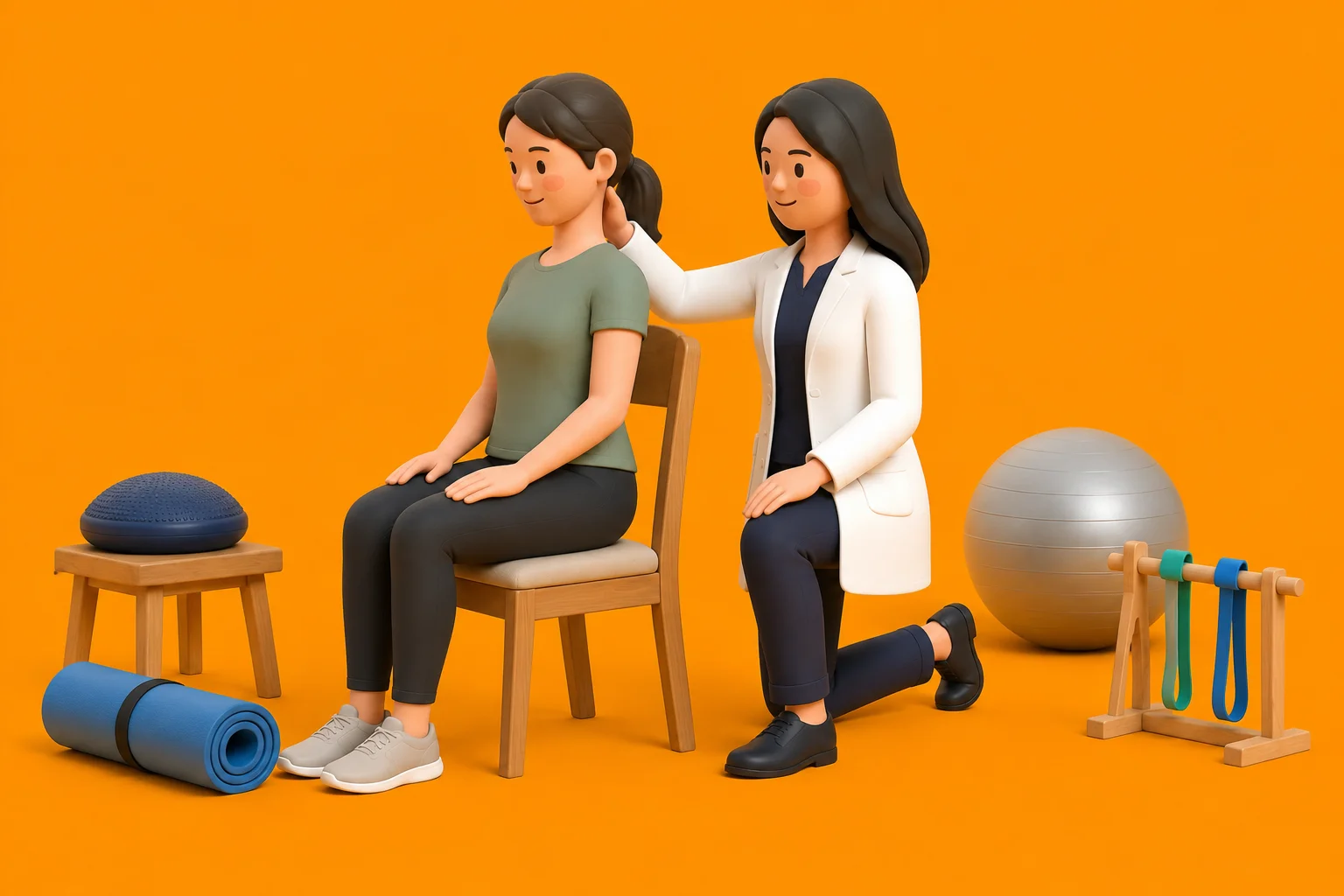
- Mulligan C1-C2 Sustained Natural Apophyseal Glide (SNAG): Apply a gentle, painless anterior-superior glide to the lateral arch of C1 (atlas) using the thumb or a mobilization strap while the patient actively rotates their head toward the restricted side; sustaining this glide while rotating restores joint kinematics, instantly increasing rotation range by 15 to 25 degrees and extinguishing frontal headache pain.
- Targeted Deep Neck Flexor Cranio-Cervical Training: Place an air-pressure biofeedback cuff behind the suboccipital lordosis; train gentle nodding chin-tucks, holding pressures of 22, 24, 26, 28, and 30 mmHg for 10 seconds without firing the superficial sternocleidomastoid (SCM); strong deep stabilizers hold the upper cervical joints in alignment.
- Suboccipital Myofascial Release and Postural Ergonomics: Perform gentle manual traction and suboccipital release to the rectus capitis posterior and obliquus capitis muscles; chronic forward-head computer posturing jams the suboccipital joints into hyperextension, compressing the greater occipital nerve.
Frequently Asked Questions
How can a problem in the top of my neck cause a headache behind my eye?
The nerves from the top three bones of your neck connect to the exact same relay station in your brainstem that receives sensory signals from your eye and forehead. When your top neck joints get stiff and irritated, the nerve signals get mixed up, and your brain misinterprets the neck pain as a headache behind your eye (a cervicogenic headache).
What is the Flexion-Rotation Test my physiotherapist performs?
Your therapist bends your neck fully forward (which locks the lower neck bones still) and then gently turns your head to the left and right. In a healthy neck, your head turns 44 degrees easily. If the top joint (C1-C2) is jammed, your head will stop turning before 30 degrees and reproduce your familiar headache.
How do Mulligan SNAG exercises relieve a neck headache so quickly?
A SNAG is a gentle hands-on technique where your therapist gently glides the stiff neck bone forward while you turn your head. This painlessly guides the joint back into its natural sliding track, instantly freeing up your neck movement and turning off the headache alarm.

Related recovery guides & articles
BookPhysio.in Editorial Team
The BookPhysio.in editorial team writes and maintains this content, checking it against reliable clinical sources. Content follows our medical review policy: general information only, and no page claims a clinical review until a named registered physiotherapist has signed it off.
Read our medical review policy