
Comprehensive Geriatric Assessment: Multidisciplinary Physiotherapy Care for Seniors
In short
Treating isolated symptoms fails frail seniors; Comprehensive Geriatric Assessment coordinates medical, functional, and social health to reduce falls by thirty percent.
In this guide (6 sections)
The Comprehensive Geriatric Assessment (CGA) is an evidence-based, multidimensional, interdisciplinary diagnostic process that determines an older adult's medical, psychological, and functional capabilities. Cochrane systematic reviews demonstrate that older patients who undergo CGA are twelve times more likely to be alive and living independently in their own homes at one year compared to those receiving routine fragmented medical care. Physiotherapy coordination forms the functional core of the CGA, translating clinical findings into targeted mobility, strength, and fall prevention programmes.
Domestic and Cultural Indian Realities
In Indian healthcare, older adults frequently navigate a highly fragmented private medical system. An elder may visit a cardiologist for hypertension, a diabetologist for insulin management, an orthopaedician for knee pain, and an ophthalmologist for cataracts, with no single clinician evaluating how these combined conditions impact daily functional balance. Polypharmacy, conflicting medical advice, and unaddressed home environmental hazards are common outcomes. In joint family structures, coordinating a formal CGA brings together medical records, family caregivers, and verified physiotherapists to establish unified care goals.
Clinical Biomechanics and Postural Control Decay
Functional frailty results from the accumulation of micro-deficits across multiple physiological systems. Sarcopenia weakens muscular torque, sensory neuropathy blunts plantar feedback, visual cataracts reduce contrast perception, and orthostatic hypotension starves the brain of oxygen. When evaluated in isolation, each deficit may appear minor; however, their combined interaction degrades the body's postural control reserve. When a minor trip occurs, the compounded system failures prevent compensation, leading to catastrophic falls. The CGA identifies and addresses this systemic vulnerability.
Functional Assessment and Risk Stratification
The CGA evaluates five core domains: medical health (co-morbidities and medications), functional capacity (Activities of Daily Living and Instrumental ADLs), cognitive and psychological wellbeing (MoCA and Geriatric Depression Scale), environmental safety (home hazard audit), and social support networks. Physiotherapists lead the functional domain, utilizing objective batteries such as the Short Physical Performance Battery (SPPB) and Berg Balance Scale.
Targeted Strength and Balance Exercises
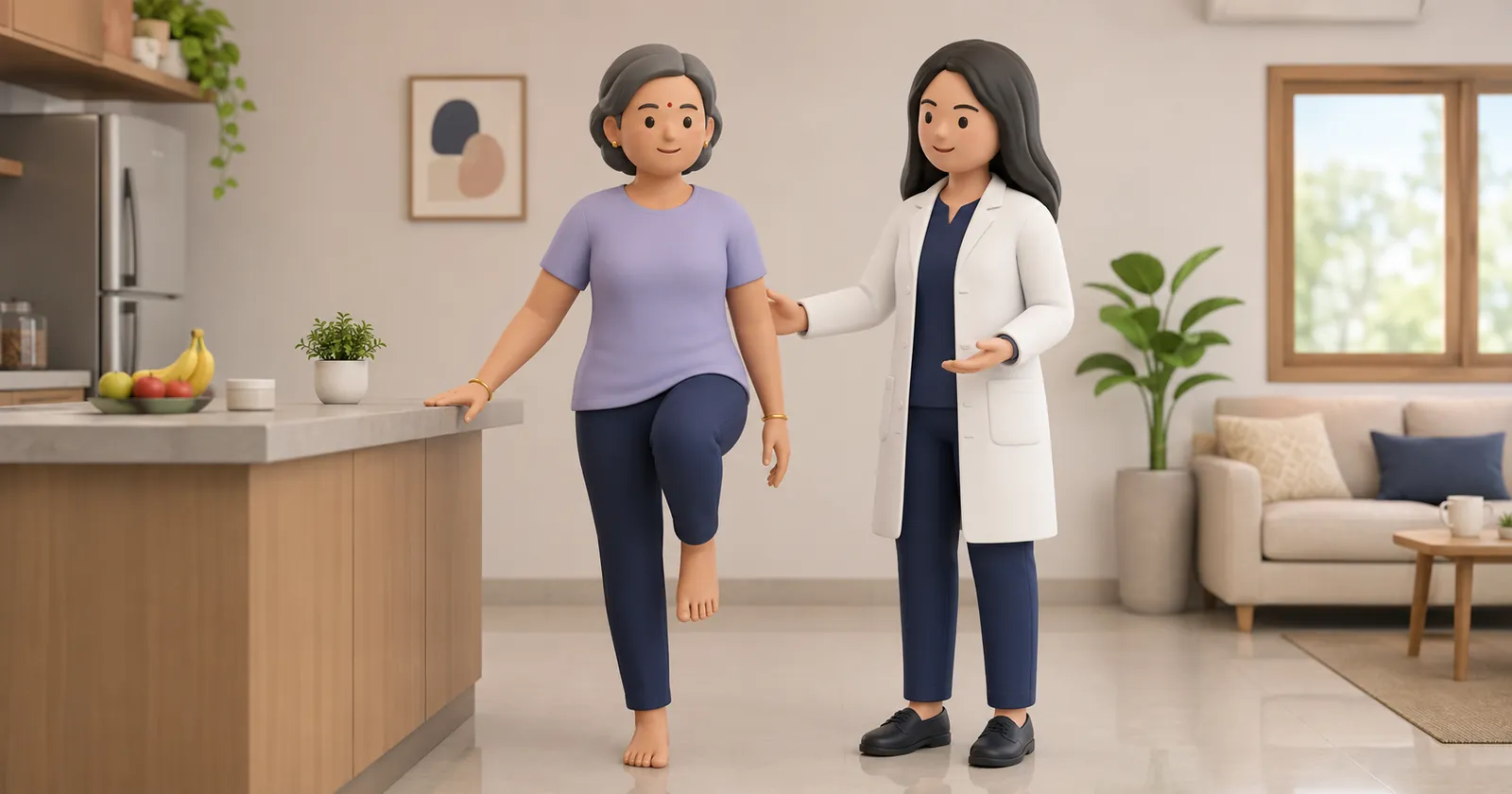
Physiotherapy plans derived from CGA findings are tailored to the patient's specific multi-domain profile. Rather than generic exercises, the programme addresses identified deficits: progressive resistance training for sarcopenia, sensory re-weighting for neuropathy, and environmental adaptations for visual loss.
Multi-Component Functional Circuit for Frailty Reversal
Objective: Integrate lower-body strength, static balance, and functional transitions in a structured daily circuit
- 1Perform five controlled chair stands from a firm dining chair with arms crossed over your chest.
- 2Stand in a room corner and hold a semi-tandem stance for twenty seconds per foot position.
- 3Hold the chair backrest lightly and perform ten controlled calf raises, holding each for two seconds.
- 4Walk ten metres down a clear hallway, practicing high-knee stepping over imaginary floor lines.
- 5Rest comfortably in the chair for two minutes, hydrate with water, and repeat the circuit once.
| CGA Assessment Domain | Primary Clinical Diagnostic Tool | Physiotherapy Interventional Role |
|---|---|---|
| Functional Mobility | Short Physical Performance Battery (SPPB), TUG, 6-Minute Walk | Prescribe progressive resistance, balance retraining, and gait aids |
| Medical & Pharmacotherapy | Beers Criteria, STOPP/START, Charlson Comorbidity Index | Identify Fall-Risk Increasing Drugs (FRIDs); monitor orthostatic vitals |
| Cognitive & Psychological | Montreal Cognitive Assessment (MoCA), Geriatric Depression Scale | Implement dual-task pacing and graded balance exposure therapy |
| Environmental & Social | Home Safety Self-Assessment Tool (HSSAT), Caregiver Strain Index | Conduct in-home hazard audits, grab bar fitting, and caregiver training |
Red Flags and Emergency Post-Fall Escalation
During a CGA, clinicians frequently identify previously undetected acute conditions, such as severe aortic stenosis, carotid bruits, severe uncorrected anemia, or silent myocardial ischemia. Any patient displaying exertional syncope, resting angina, or new focal neurological deficits must be referred immediately for emergency hospital medical evaluation before initiating exercise testing.
Frequently Asked Questions
How does a Comprehensive Geriatric Assessment reduce falls in older adults?
By systematically identifying and treating multiple contributing factors (such as medication side effects, muscle weakness, vision loss, and home hazards), the CGA provides a coordinated plan that reduces fall rates by thirty percent.
Can families arrange a home-based geriatric assessment with a physiotherapist in India?
Geriatric physiotherapists conduct thorough home-based functional assessments and coordinate care with family physicians. Under the NCAHP Act 2021, Indian patients enjoy direct access to registered physiotherapists via BookPhysio.in with direct pay-per-session pricing.
Related recovery guides & articles
BookPhysio.in Editorial Team
The BookPhysio.in editorial team writes and maintains this content, checking it against reliable clinical sources. Content follows our medical review policy: general information only, and no page claims a clinical review until a named registered physiotherapist has signed it off.
Read our medical review policy