
Cubital Tunnel Anterior Transposition: Post-Op Elbow Rehab
In short
Anterior transposition relocates the ulnar nerve to relieve compression. Controlled progressive elbow extension and scar mobilization prevent stiffness.
In this guide (5 sections)
Cubital tunnel syndrome represents compression or traction neuropathy of the ulnar nerve as it traverses the retroepicondylar groove and the aponeurotic band of Osborne at the medial elbow. In cases of chronic subluxation, severe intrinsic clawing, or failed in situ decompression, anterior transposition (subcutaneous, intramuscular, or submuscular) shifts the nerve volar to the medial epicondyle axis of rotation, converting elbow flexion from a traction force into a relaxing mechanism.
Domestic and Cultural Indian Realities
Indian patients commonly subject the cubital tunnel to sustained compression during cultural and domestic routines. Resting the elbows on hard stone or tiled floors while reading or praying, leaning on window ledges during long bus journeys, and holding heavy metal telephone handsets for extended conversations exacerbate ulnar neuropathy. Postoperatively, therapists educate patients on avoiding sustained elbow flexion beyond 90 degrees while sleeping or seated.
Surgical Pathoanatomy and Biomechanical Principles
During normal elbow flexion, the distance between the medial epicondyle and olecranon expands by 5 millimetres, and cubital tunnel pressure rises more than twentyfold. Transposing the ulnar nerve anterior to the flexion axis eliminates this traction and compression. However, surgical dissection requires extensive mobilization of the nerve, dividing medial intermuscular septa and releasing flexor carpi ulnaris (FCU) fascial arches. Postoperative therapy must safeguard the newly constructed fascial or muscular sling while preventing elbow flexion contractures.
Postoperative Rehabilitation Phases and Splinting Protocols
Following surgery, the elbow is protected in a posterior thermoplastic splint at 70 to 90 degrees of flexion with the forearm in neutral to slight pronation for 10 to 14 days. From week 2, active-assisted elbow extension commences within comfortable limits, aiming for full extension by week 4 to 6. Gentle ulnar nerve flossing (shoulder abduction, wrist extension, and progressive elbow flexion) is initiated at week 3. Resisted loading and heavy sports are deferred until week 8 to 12.
Active-Assisted Elbow Extension with Pronation Bias
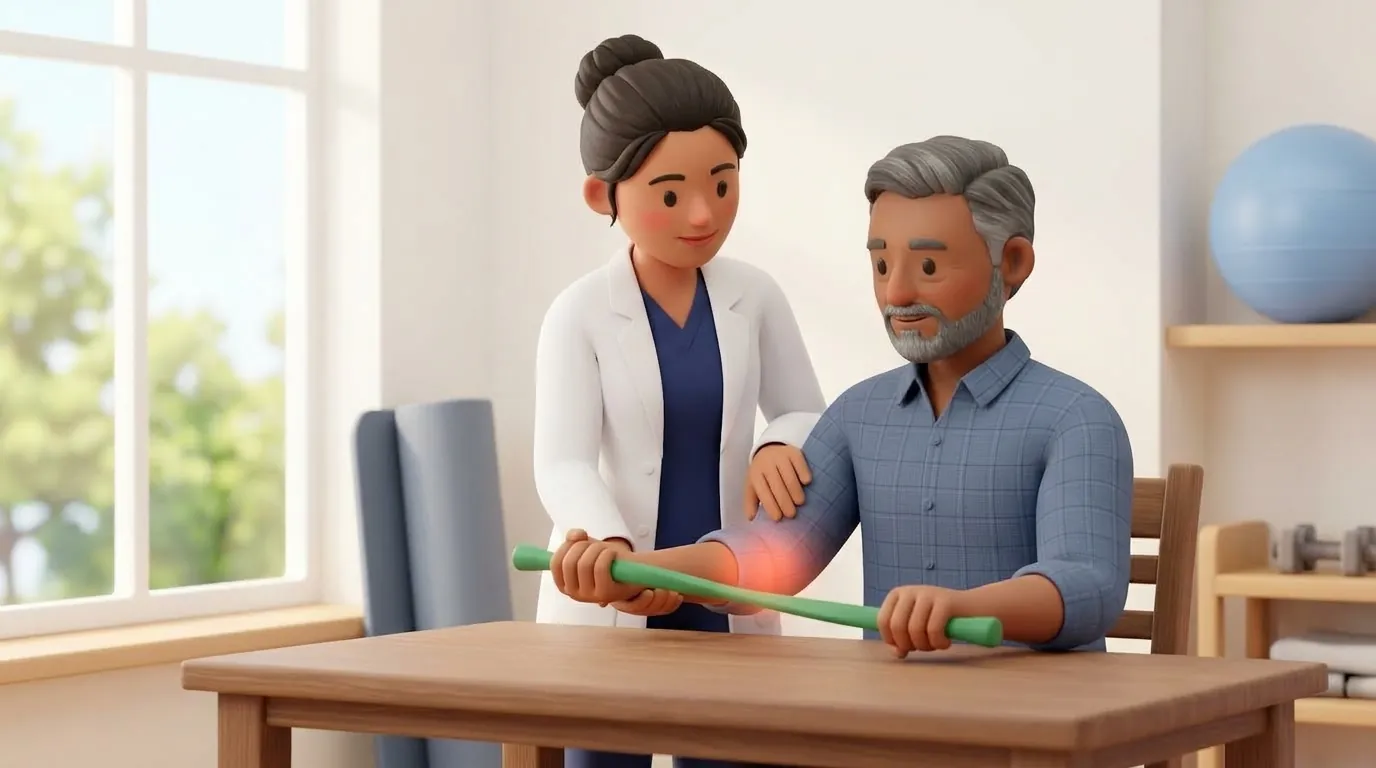
Objective: Gradually restore terminal elbow extension while protecting the transposed ulnar nerve sling
- 1Sit comfortably with your operated upper arm supported on a soft table cushion.
- 2Position your forearm so your palm faces inward toward your body (neutral rotation).
- 3Use your unaffected hand to support your operated wrist and gently guide the elbow toward extension.
- 4Stop when you feel a mild, comfortable stretch across the anterior elbow, holding for 5 seconds.
- 5Gently bend the elbow back to 90 degrees, avoiding sudden or jerky movements.
| Recovery Stage | Orthotic Protection | Clinical Milestones |
|---|---|---|
| Weeks 1 to 2 (Protection) | Posterior splint at 70 to 90 degrees elbow flexion | Edema control, active finger and thumb fist closure drills |
| Weeks 3 to 4 (Mobilization) | Removable splint for rest; extension limited to minus 30 degrees | Active-assisted elbow flexion and extension, scar desensitization |
| Weeks 5 to 6 (Full Arc) | Wean daytime orthosis; maintain night extension sleeve | Restore full elbow extension; gentle ulnar neurodynamic glides |
| Weeks 7 to 12 (Strengthening) | Discharge all orthoses during normal daily activities | Progressive forearm strengthening, intrinsic hand re-education |
Red Flags and Specialist Escalation
Immediate medical escalation is necessary if the patient experiences new or worsening intrinsic hand muscle weakness (Froment sign, Wartenberg sign), acute hematoma formation over the medial epicondyle, or persistent numbness in the little and ring fingers indicating nerve compression within an overly tight fascial sling.
Frequently Asked Questions
When can I straighten my arm completely after ulnar nerve transposition?
Gentle assisted straightening starts around two weeks post-surgery. Most patients regain comfortable full elbow extension between four and six weeks as the new tissue channel around the relocated nerve heals.
Do I need a doctor referral for post-operative elbow rehab on BookPhysio.in?
BookPhysio.in does not ask for a doctor referral. Direct access is supported by the NCAHP Act 2021. You book appointments directly with licensed physiotherapists and pay per session without commission fees.
Related recovery guides & articles
BookPhysio.in Editorial Team
The BookPhysio.in editorial team writes and maintains this content, checking it against reliable clinical sources. Content follows our medical review policy: general information only, and no page claims a clinical review until a named registered physiotherapist has signed it off.
Read our medical review policy