
Summer Dehydration in Elders: Orthostatic Drop and Gait Unsteadiness in India
In short
Intense tropical summers accelerate silent dehydration in seniors, triggering acute confusion and orthostatic falls. Discover clinical hydration protocols.
In this guide (6 sections)
Dehydration represents a frequent and preventable precipitant of acute functional deterioration, confusion, and falls in older adults. Age-related physiological alterations, including diminished hypothalamic thirst perception, reduced renal concentrating capacity, and lower total body water percentage, leave seniors highly vulnerable to fluid deficits. In tropical Indian climates where ambient summer temperatures routinely surpass forty degrees Celsius, subclinical dehydration develops rapidly, depleting intravascular volume and inducing orthostatic hypotension, cognitive blunting, and severe gait ataxia.
Domestic and Cultural Indian Realities
During peak Indian summer months (loo season), older adults face compounding cultural and physical risks. Many seniors deliberately restrict their fluid intake because they fear urinary incontinence or wish to avoid frequent trips to squat toilets. Traditional housing often relies on evaporative desert coolers or ceiling fans that circulate dry, hot air, accelerating insensible cutaneous water loss. Furthermore, older Indians taking prescribed diuretic medications for hypertension or heart failure often continue identical dosages without adjusting for heavy summer perspiration. When an elder rises from a low bed in a warm room, severe intravascular hypovolemia causes sudden cerebral hypoperfusion and fainting.
Clinical Biomechanics and Postural Control Decay
Intravascular volume depletion blunts cardiac preload and stroke volume. When a dehydrated senior stands upright, gravitational venous pooling reduces mean arterial pressure significantly. Because carotid baroreceptor sensitivity is degraded by age, the sympathetic nervous system fails to generate adequate peripheral vasoconstriction. Cerebral perfusion pressure falls below autoregulatory thresholds, resulting in transient cerebral hypoxia, lightheadedness, and impaired motor coordination. Gait analysis reveals increased step-time variability, shortened stride length, and delayed protective stepping reflexes, making recovery from minor trips impossible.
Functional Assessment and Risk Stratification
Clinical assessment evaluates objective hydration markers: mucous membrane moisture, skin turgor over the sternum, urine colour charts, and orthostatic vital signs. A postural drop of twenty mmHg systolic or ten mmHg diastolic within three minutes of standing, accompanied by a heart rate increase exceeding twenty beats per minute, indicates hypovolemic orthostasis. Functional balance testing evaluates sway velocity and sit-to-stand stability before and after fluid repletion.
Targeted Strength and Balance Exercises
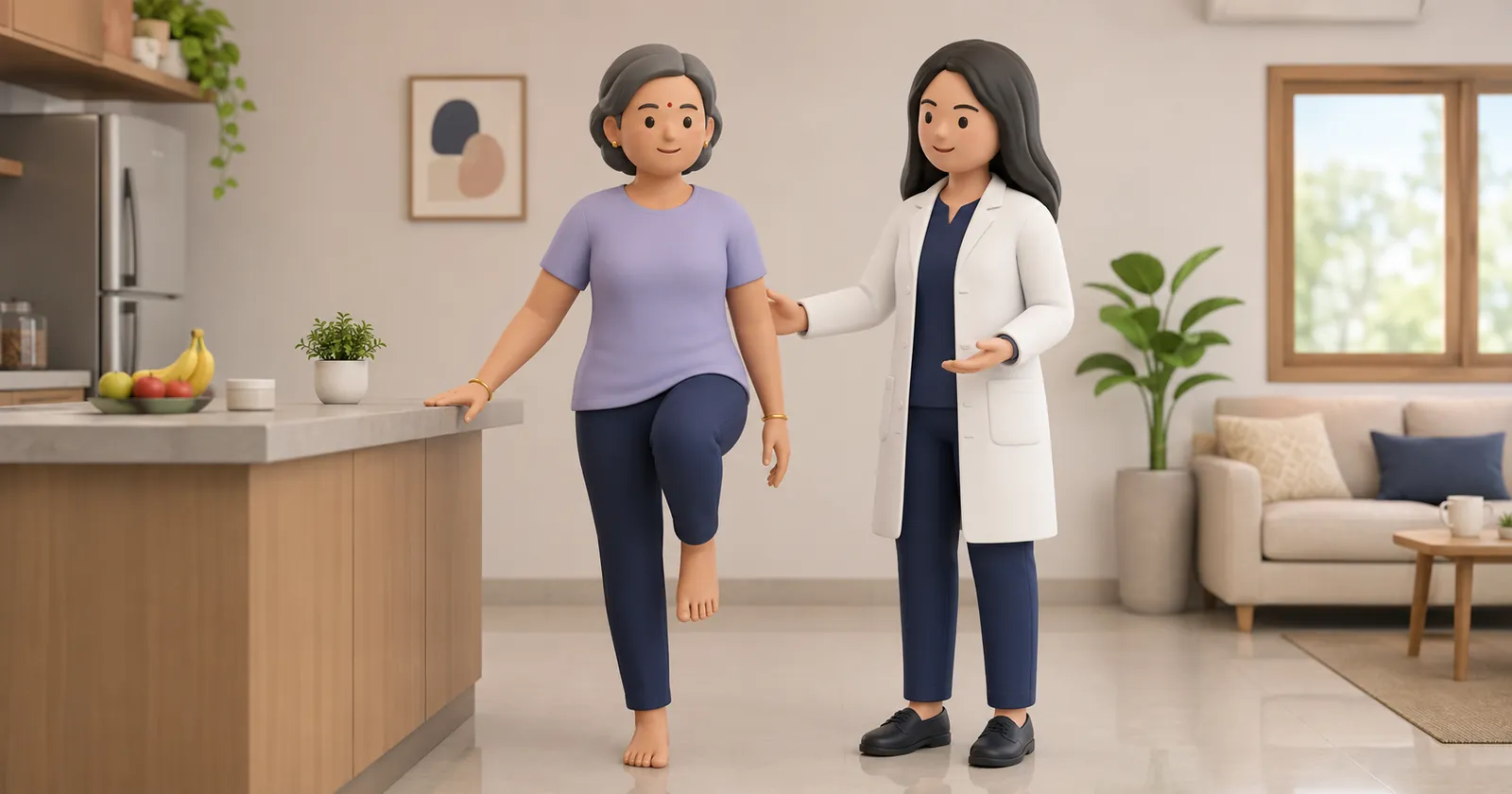
Physiotherapy intervention pairs systematic hydration pacing with physical counter-pressure maneuvers. Seniors practice seated calf pumping, leg crossing, and abdominal bracing before standing, supporting blood circulation back to the heart during hot summer days.
Seated Lower-Limb Venous Pump Counter-Maneuver
Objective: Support central venous return and cerebral blood flow before standing in warm environments
- 1Sit upright in a firm chair and drink two hundred millilitres of cool water or electrolyte solution.
- 2Cross your right leg over your left leg at the ankles, pressing your feet together firmly.
- 3Squeeze your thigh and gluteal muscles isometrically for five seconds while breathing steadily.
- 4Release the squeeze, uncross your legs, and perform twenty vigorous ankle pumps on both feet.
- 5Pause for thirty seconds to confirm clear vision before rising slowly with hand support.
| Hydration Strategy | Practical Clinical Protocol | Physiological Balance Rationale |
|---|---|---|
| Scheduled Fluid Intake | Consume 150 ml of water every 90 minutes; do not wait for thirst sensation | Maintains stable intravascular volume and prevents sudden hypovolemic drops |
| Traditional Electrolyte Drinks | Consume coconut water (nariyal pani), diluted chaas (buttermilk), or nimbu pani | Replenishes sodium and potassium lost through perspiration to support nerve conduction |
| Outdoor Exposure Timing | Restrict outdoor pedestrian errands to early morning before 8:30 AM | Avoids extreme heat stress and vasodilatory peripheral pooling |
| Medication Monitoring | Review diuretic and antihypertensive dosages with physician in May and June | Prevents compounding natural summer vasodilation with drug-induced hypotension |
Red Flags and Emergency Post-Fall Escalation
Heat exhaustion progressing to heat stroke is a life-threatening medical emergency. If an older adult collapses in a hot environment and presents with hot, dry skin, severe confusion, delirium, or core body temperature exceeding forty degrees Celsius, initiate emergency cooling immediately. Move the patient to a shaded room, apply cold damp cloths to the neck and groin, and contact emergency medical services. Evaluate for head trauma and hip fractures sustained during the collapse.
Frequently Asked Questions
Why do elderly individuals stop feeling thirsty during hot Indian summers?
Ageing blunts osmoreceptor sensitivity in the brain's hypothalamus, meaning older adults do not feel thirsty even when their bodies are significantly dehydrated. Scheduled, proactive water consumption is essential regardless of thirst.
Can physiotherapists evaluate fall risks caused by heat and dehydration in India?
Geriatric physiotherapists assess orthostatic vitals, fluid pacing, and transfer stability during home visits. Under the NCAHP Act 2021, Indian patients enjoy direct access to registered physiotherapists. BookPhysio.in connects you with verified physiotherapists for home consultations with direct session pricing.
Related recovery guides & articles
BookPhysio.in Editorial Team
The BookPhysio.in editorial team writes and maintains this content, checking it against reliable clinical sources. Content follows our medical review policy: general information only, and no page claims a clinical review until a named registered physiotherapist has signed it off.
Read our medical review policy