
Diamond Polishing and Gemstone Cutting: Cervical Disc Compression
In short
Diamond polishers in Surat and gemstone cutters in Jaipur maintain intense cervical flexion over polishing wheels. Learn clinical solutions for disc compression.
In this guide (6 sections)
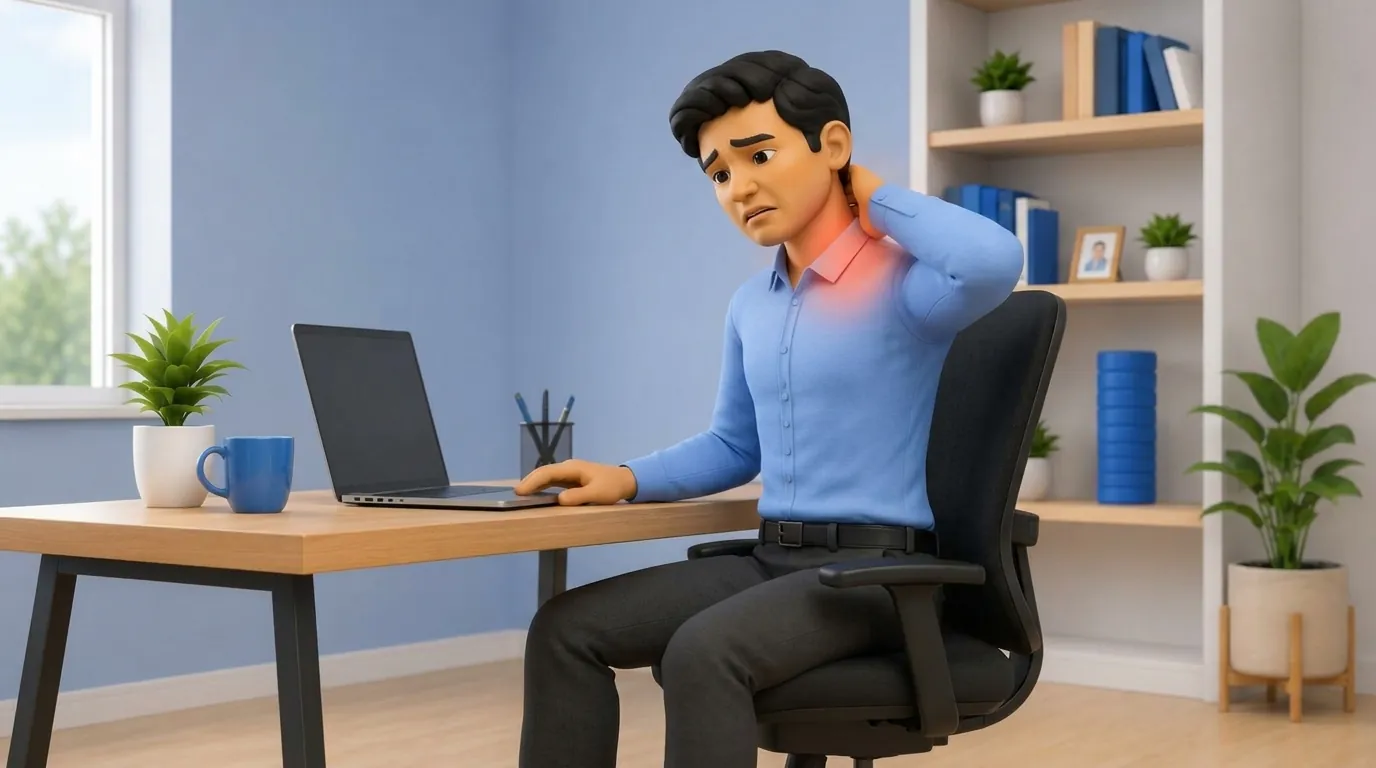
Diamond polishing in Surat and gemstone faceting in Jaipur demand millimeter-precision visual inspection under high magnification. Artisans lean forward over cast-iron scaife polishing wheels spinning at 3,000 revolutions per minute, holding a handheld gemstone tang. This posture forces the cervical spine into 40 to 60 degrees of persistent forward flexion. The resulting mechanical load multiplies the effective weight of the head on lower cervical motion segments to over 22 kilograms, accelerating degenerative disc disease and cervical radiculopathy.
Domestic and Cultural Indian Realities
In industrial clusters like Varachha and Katargam in Surat, diamond cutting units operate with rows of tightly spaced benches under intense halogen illumination. Workers spend up to 10 hours peered through a 10x eye loupe held against one eye, inducing severe asymmetrical head rotation and lateral neck tilting. Payment by piece-rate discourages voluntary postural breaks. Workers frequently develop chronic neck stiffness, radiating arm tingling, and occipital headaches, yet continue working to fulfill export deadlines.
Clinical Biomechanics and Occupational Overuse
Sustained forward head posture displaces the centre of mass anteriorly. This mechanical disadvantage forces the levator scapulae, upper trapezius, and splenius capitis into continuous isometric contraction to counteract gravitational torque. Inside the spine, anterior disc compression extrudes the nucleus pulposus posteriorly against the posterior longitudinal ligament and exiting C5, C6, or C7 nerve roots. Chronic ischemia in cervical myofascial tissues triggers localized trigger points and cervicogenic cephalea.
Workplace Ergonomic Assessment and Postural Metrics
Physiotherapists assess the craniovertebral angle using profile photographic analysis, where an angle below 50 degrees indicates marked forward head posture. Clinical testing incorporates Spurling test, the upper limb tension test of Elvey, and cervical distraction testing to evaluate radicular nerve irritation. Palpation identifies myofascial taut bands across the suboccipital triangle and upper trapezius.
Targeted Workplace Conditioning and Stretching Protocols
Ergonomic remediation involves raising the scaife table height or using inclined optical prism loupes, reducing the required neck flexion angle. Therapeutic exercises focus on deep cervical flexor retraining (longus colli and longus capitis) and thoracic extension mobilization to restore spinal alignment.
Craniocervical Flexion Retraining (Chin Tucks)
Objective: Activate the deep cervical flexors and open the posterior intervertebral foramina
- 1Sit upright on your stool with your back tall and shoulders gently relaxed downward.
- 2Look straight ahead at eye level without tilting your chin up or down.
- 3Gently glide your head straight backward as if making a subtle double chin.
- 4Maintain the retracted position for 5 seconds while feeling a gentle stretch at the skull base.
- 5Release smoothly back to neutral alignment without thrusting your chin forward.
| Cervical Angle | Effective Load on Spine | Clinical Pathological Consequence |
|---|---|---|
| 0 Degrees (Neutral) | 4.5 to 5.5 kg | Physiological baseline with balanced muscular load |
| 15 Degrees Flexion | 12.0 kg | Early upper trapezius tension and suboccipital tightness |
| 30 Degrees Flexion | 18.0 kg | Moderate anterior disc shear and foraminal narrowing |
| 45 to 60 Degrees Flexion | 22.0 to 27.0 kg | Severe disc protrusion, radiculopathy, and chronic spasms |
Red Flags and Specialist Escalation
Patients exhibiting progressive hand clumsiness, difficulty fastening buttons, unsteady gait, or hyperreflexia require immediate neurosurgical evaluation for cervical spondylotic myelopathy. Intractable brachial radicular pain with motor deficit in the deltoid or wrist extensors warrants urgent magnetic resonance imaging.
Frequently Asked Questions
Can physiotherapy help reverse neck pain from diamond polishing?
Physiotherapy aims to relieve repetitive strain and restore functional capacity through deep neck flexor strengthening, postural re-education, and optical height adjustments. While existing anatomical disc changes remain, targeted exercise relieves nerve compression and prevents symptom recurrence.
Do I need a doctor referral to see a physiotherapist for neck pain in India?
Under the National Commission for Allied and Healthcare Professions (NCAHP) Act 2021, patients in India enjoy direct access to registered physiotherapists without requiring a mandatory prior medical referral. At BookPhysio.in, you consult verified physiotherapists and pay directly per session without hidden fees or platform commissions.
Related recovery guides & articles
BookPhysio.in Editorial Team
The BookPhysio.in editorial team writes and maintains this content, checking it against reliable clinical sources. Content follows our medical review policy: general information only, and no page claims a clinical review until a named registered physiotherapist has signed it off.
Read our medical review policy