
Diastasis Recti Post-Caesarean Rehabilitation: Inter-Recti Distance, Scar Mechanics, and Core Recovery in India
In short
Recovering from diastasis recti after a caesarean birth requires coordinating linea alba healing with surgical scar mobility. Learn evidence-based assessment of inter-recti distance, transversus abdominis retraining, and safe postpartum progression.
In this guide (6 sections)
Diastasis recti abdominis (DRA) following caesarean delivery presents a distinct clinical challenge because surgical disruption of the abdominal wall intersects with systemic hormonal tissue laxity. In India, where caesarean section rates in urban private hospitals frequently exceed 40 percent, new mothers often experience persistent mid-abdominal bulging, lower back aching, and pelvic instability months after delivery. Traditional beliefs frequently counsel complete bed rest or encourage binding the abdomen with tight sarees, yet passive immobilisation does not restore fascial tension. Clinical rehabilitation aims to re-establish dynamic tension transfer across the linea alba while respecting healing surgical incisions.
1. Functional Biomechanics: Linea Alba Tension and Surgical Scar Mechanics
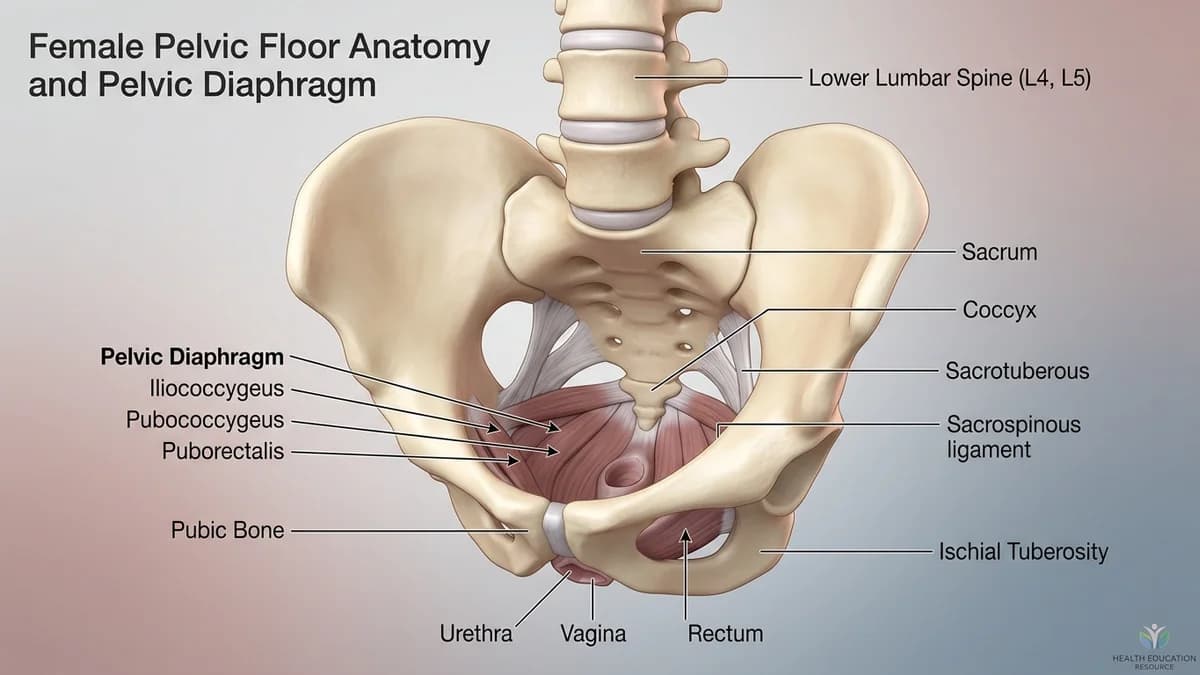
The abdominal wall functions as a continuous biomechanical canister bounded superiorly by the respiratory diaphragm, inferiorly by the levator ani pelvic floor complex, and circumferentially by the transversus abdominis and internal oblique muscles. In a standard Pfannenstiel incision, superficial tissues and the anterior rectus sheath are transected horizontally, separating the fascial anchorage of the lower abdominal wall. When inter-recti distance (IRD) widens beyond 2 centimetres, the capacity of the rectus abdominis to generate anterior intra-abdominal pressure without dome-shaped protrusion is impaired. Rehabilitation focuses on generating fascial tension across the linea alba rather than merely closing the structural gap.
2. Domestic Indian Context: Daily Chores, Ergonomics, and Privacy
In Indian joint family households, new mothers face early pressure to resume domestic tasks like lifting 15-litre stainless steel water buckets (balti), squatting to wash baby clothes, and sitting on the floor for pooja rituals. Rising from low seating or lifting heavy brass kitchen cookware directly spikes intra-abdominal pressure, producing visible tenting along the linea alba. Furthermore, multi-generational living can limit personal space and privacy for floor exercises. Physiotherapists modify daily routines by teaching mothers to roll onto their sides before sitting up from bed, using low stools instead of deep floor squats, and timing gentle rehabilitation sets during infant nap periods.
3. Clinical Special Tests and Physical Examination
Objective assessment involves palpating the anterior abdominal wall in crook lying with the knees flexed at 90 degrees. The physiotherapist measures inter-recti distance using finger breadths or dial calipers at three landmarks: 4.5 centimetres above the umbilicus, at the umbilical ring, and 4.5 centimetres below the umbilicus. Fascial integrity is tested by assessing the depth of depression and tissue resistance during a gentle curl-up compared to an active transversus abdominis draw-in.
| Clinical Parameter | Mild Separation (Grade 1) | Moderate Separation (Grade 2) | Severe Separation (Grade 3) |
|---|---|---|---|
| Inter-Recti Distance (IRD) | 2.0 to 3.0 cm at umbilicus | 3.0 to 5.0 cm with moderate sag | Greater than 5.0 cm with fascial deficit |
| Linea Alba Tension | Firm resistance on gentle palpation | Soft with delayed tension generation | Lax with zero resistance on active curl |
| Functional Deficit | Mild fatigue with prolonged standing | Noticeable doming during sit-to-stand | Pelvic girdle instability and lumbar ache |
| Primary Management | Transversus abdominis re-education | Progressive kinetic chain loading | Specialist pelvic physio and surgical review |
4. Stage-by-Stage Functional Physiotherapy Protocol
Rehabilitation follows a progressive timeline from early tissue protection to functional multi-planar loading, synchronising the breath with deep core activation.
Phase 1: Diaphragmatic Breath with Gentle Transversus Abdominis Drawing-In
Objective: Activate deep transversus abdominis fibres to generate lateral tension on the linea alba without stressing the caesarean scar.
- 1Lie on your back on a firm bed or floor mat with knees bent and feet flat on the ground.
- 2Place one hand over your lower abdomen above the surgical scar and the other hand on your lower ribcage.
- 3Inhale softly through your nose, allowing your ribs to expand outward sideways without forcing your belly to puff up.
- 4As you exhale slowly through pursed lips, gently draw your lower belly inward toward your spine, feeling a soft tightening under your fingertips.
- 5Ensure your pelvis remains stationary and your lower back does not flatten hard into the floor.
Phase 2: Supported Heel Slides with Pelvic Floor Pre-Contraction
Objective: Train deep core stability under dynamic lower limb movement while maintaining fascial tension.
- 1Maintain the crook lying position with your spine in comfortable neutral.
- 2Inhale gently to prepare. As you begin exhaling, engage your pelvic floor and lower abdominal muscles.
- 3Slowly slide one heel forward along the floor until your knee is almost straight, keeping your core stable.
- 4Slide the heel back to the starting position while completing your exhalation without allowing any doming along your midline.
- 5Alternate legs smoothly, keeping your hips level without tilting.
Phase 3: Quadruped Bird-Dog with Linea Alba Tension Monitoring
Objective: Advance anti-extension endurance and rotational control to prepare for domestic lifting tasks.
- 1Position yourself on all fours with your wrists beneath your shoulders and knees under your hips.
- 2Engage your deep core gently to maintain a flat, neutral spine resembling a tabletop.
- 3Reach one arm straight forward while extending the opposite leg straight back until parallel to the floor.
- 4Hold the reach for 3 seconds while breathing normally, verifying that your lower back does not arch.
- 5Lower both limbs smoothly under control and switch to the opposite side.
Contact your obstetrician or visit an emergency department immediately if you notice: redness, warmth, foul-smelling discharge, or separation along your caesarean incision; sudden sharp abdominal pain accompanied by dizziness or fever; or progressive bulging along the midline that becomes firm, painful, or cannot be reduced when lying flat, which may indicate an incisional hernia.
5. Clinic Consultation, Home Visits, and Transparent Fee Benchmarks
In India, under the National Commission for Allied and Healthcare Professions (NCAHP) Act 2021, patients can consult a registered physiotherapist directly without an upfront referral, though BookPhysio.in does not ask for one. For early postpartum mothers, domiciliary care (home visits) provides clinical guidance within your home environment, avoiding stressful commutes with a newborn. Clinic sessions in Indian urban centres typically range from ₹500 to ₹1,500 per visit, whereas home visits range from ₹700 to ₹2,000 depending on city tier and practitioner postgraduate qualifications. Patients pay the physiotherapist directly at each appointment, with no platform commission.
6. Frequently Asked Questions
Can I use a traditional cotton saree binder (chundadi) to fix my diastasis recti?
Traditional tight cotton binders provide psychological support and posture feedback during the first 2 to 4 weeks post-delivery. However, wrapping the abdomen too tightly forces intra-abdominal pressure downward onto the pelvic floor and upward toward the diaphragm, potentially worsening pelvic organ prolapse or urinary leaks. External wraps cannot rebuild muscle motor control. Structured exercise therapy is required to restore active fascial tension.
When can I safely start physiotherapy after a caesarean delivery in India?
Gentle diaphragmatic breathing, pelvic floor contractions, and basic circulatory ankle pumps can begin within 48 to 72 hours post-delivery once approved by your obstetrician. Formal core rehabilitation targeting the linea alba and scar tissue mobilisation usually commences after the routine 6-week obstetric check-up once the surgical incision has fully re-epithelialised.
Related recovery guides & articles
BookPhysio.in Editorial Team
The BookPhysio.in editorial team writes and maintains this content, checking it against reliable clinical sources. Content follows our medical review policy: general information only, and no page claims a clinical review until a named registered physiotherapist has signed it off.
Read our medical review policy