
Diastasis Recti Post-Vaginal Delivery: Safe Core Loading, Avoiding Crunches, and Functional Recovery in India
In short
Recovering from diastasis recti after a vaginal delivery requires progressive core loading rather than aggressive crunches. Discover how to protect your linea alba, coordinate pelvic floor activation, and restore functional strength.
In this guide (6 sections)
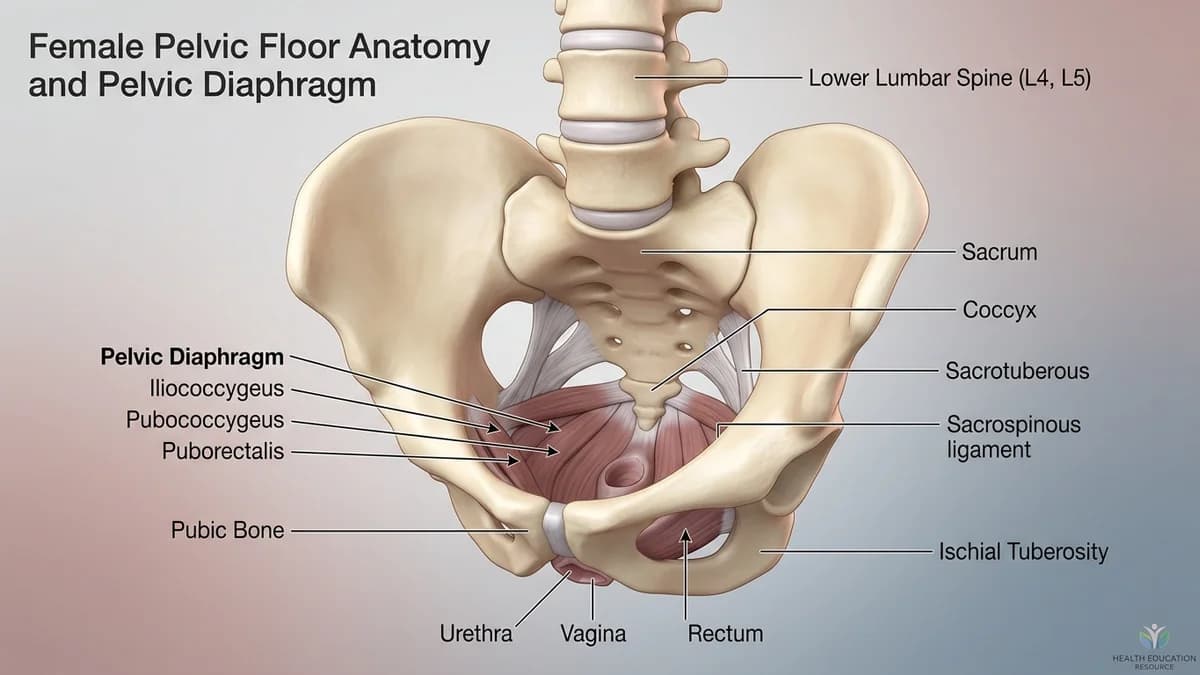
Following vaginal delivery, the abdominal wall and pelvic floor undergo profound stretching and hormonal adaptation. Many mothers in India notice a persistent soft bulge or trench along the midline when sitting up, commonly termed diastasis recti abdominis. Eager to regain their pre-pregnancy waistline, many women turn to online workout videos and begin aggressive sit-ups or crunches within weeks of childbirth. Unfortunately, traditional crunches generate sharp spikes in intra-abdominal pressure that push the rectus abdominis bellies outward, stretching the vulnerable linea alba and compromising the pelvic floor.
1. Functional Biomechanics: Why Traditional Crunches Strain the Linea Alba
The linea alba is a dense tendinous raphe formed by the interlacing aponeuroses of the external oblique, internal oblique, and transversus abdominis muscles. During a standard crunch or sit-up, the superficial rectus abdominis shortens forcefully, compressing the abdominal cavity. If the deeper transversus abdominis is weak or delayed in firing, intra-abdominal pressure forces the visceral organs forward against the unresisted midline fascial band, causing visible coning or doming. Physiotherapy focuses on deep cylindrical co-activation, teaching the transversus abdominis to pull laterally and tense the linea alba prior to any trunk flexion.
2. Domestic Indian Context: Daily Chores, Ergonomics, and Privacy
Daily life in an Indian household involves repetitive bending, floor sweeping (jharoo-pocha), and carrying young children on the hip while balancing domestic responsibilities. Mothers often lift heavy brass cooking handis or laundry tubs from floor level with a rounded spine and breath holding, a classic Valsalva manoeuvre. In addition, privacy for personal exercise can be challenging in crowded family homes. Physiotherapists teach practical modifications, such as exhaling during exertion (the 'blow as you go' principle), bending at the hips and knees instead of the waist, and performing brief 5-minute exercise blocks in the bedroom.
3. Clinical Special Tests and Physical Examination
A clinical examination evaluates both inter-recti distance (IRD) and fascial tension generation. The patient lies supine with knees bent and raises their head and neck slightly off the plinth until the spine of the scapulae just leaves the bed. The clinician palpates along the midline to evaluate gap width in centimetres and grades the tension of the linea alba as soft, moderately taut, or firm.
| Biomechanical Factor | Traditional Abdominal Crunches | Progressive Isometric Core Loading | Functional Daily Movement Training |
|---|---|---|---|
| Intra-Abdominal Pressure | High spikes pushing outward | Controlled and distributed evenly | Adapted dynamically to external load |
| Linea Alba Response | Stretches and domes outward | Generates firm lateral tension | Transfers load safely across pelvis |
| Pelvic Floor Impact | Downward displacement and leak risk | Co-contracts upward to support viscera | Maintains continence during lifting |
| Clinical Suitability | Contraindicated in early recovery | Ideal foundation from 4 to 8 weeks | Recommended for long-term strength |
4. Stage-by-Stage Functional Physiotherapy Protocol
A progressive protocol restores abdominal wall stiffness and coordinates the pelvic floor with the diaphragm, transitioning from floor-based drills to upright functional tasks.
Phase 1: Supine Transversus Abdominis Activation with Pelvic Tilting
Objective: Re-educate deep core muscles to generate linea alba tension without activating superficial rectus dominance.
- 1Lie on your back on a firm mat with knees bent at 90 degrees and feet resting flat on the floor.
- 2Place your fingers just inside your pelvic hip bones to monitor deep muscle contraction.
- 3Take a relaxed breath in. As you exhale through your mouth, gently draw your navel inward toward your spine without squeezing your gluteal muscles.
- 4Tilt your pelvis slightly to bring your lower back into soft contact with the mat, sustaining the contraction for 5 seconds.
- 5Inhale smoothly to release the tension and repeat without holding your breath.
Phase 2: Bent-Knee Fall-Outs for Rotational Core Stability
Objective: Build anti-rotational stability in the obliques and transversus abdominis to protect the linea alba during movement.
- 1Remain on your back with knees bent and feet flat on the floor.
- 2Engage your deep lower abdominal muscles on a gentle exhalation.
- 3Slowly let your right knee drift out to the side toward the floor by about 45 degrees, keeping your left hip completely still.
- 4Use your lower abdominal control to pull the right knee back to the centre.
- 5Switch to the left knee so your pelvis remains steady.
Phase 3: Standing Wall Press with Breath Synchronisation
Objective: Transfer core tension into upright postures to prepare for domestic lifting and carrying.
- 1Stand facing a wall at arm length with your feet hip-width apart.
- 2Place your palms flat on the wall at shoulder height.
- 3Inhale softly. As you exhale, gently press your hands into the wall while drawing your lower belly inward.
- 4Maintain the firm pressing action for 5 seconds while continuing to breathe steadily.
- 5Release the press on an inhale and reset before the next repetition.
Consult a medical specialist immediately if you experience: a hard, tender bulge near the navel that cannot be pushed back in, severe persistent abdominal pain, vomiting, or signs of urinary incontinence accompanied by loss of bowel sensation, which requires an immediate pelvic floor assessment.
5. Clinic Consultation, Home Visits, and Transparent Fee Benchmarks
Under the National Commission for Allied and Healthcare Professions (NCAHP) Act 2021, patients in India can consult a registered physiotherapist directly without an upfront referral, though BookPhysio.in does not ask for one. New mothers juggling childcare can choose between clinic consultations and home visits. In urban centres like Mumbai, Bengaluru, Delhi NCR, and Chennai, clinic sessions generally cost between ₹500 and ₹1,500, while personalised home visits range from ₹700 to ₹2,000 per session. Patients pay their practitioner directly at each appointment, with no platform commission.
6. Frequently Asked Questions
Can diastasis recti resolve completely without surgery in Indian women?
In most mild to moderate cases, structured physiotherapy aims to restore functional linea alba tension and core stability without surgery. Even if an anatomical gap of 1.5 to 2 centimetres persists, achieving a taut, responsive fascial band enables normal heavy lifting, prevents lower back pain, and eliminates abdominal doming.
Are planks and push-ups safe for postpartum diastasis recti?
Standard full planks and floor push-ups generate high intra-abdominal pressure that can cause the midline to sag or dome if the deep core is not yet conditioned. It is safer to begin with inclined wall planks or quadruped holds, progressing to full horizontal positions only when you can maintain a flat abdominal wall without doming.
Related recovery guides & articles
BookPhysio.in Editorial Team
The BookPhysio.in editorial team writes and maintains this content, checking it against reliable clinical sources. Content follows our medical review policy: general information only, and no page claims a clinical review until a named registered physiotherapist has signed it off.
Read our medical review policy