
Dyssynergic Defecation and Chronic Constipation: Puborectalis Mechanics and Toilet Positioning in India
In short
Straining for hours without passing stool often stems from pelvic muscle discoordination rather than poor digestion. Discover how pelvic physiotherapy and toilet posture resolve dyssynergic defecation.
In this guide (6 sections)
Dyssynergic defecation, also recognized clinically as anismus, pelvic floor dyssynergia, or paradoxical puborectalis contraction, is a major contributor to intractable chronic constipation, affecting up to 40 percent of patients with chronic constipation in India. Individuals spend 30 to 45 minutes on the toilet, straining forcefully, yet feel that their rectum never empties completely. Many patients rely chronically on harsh Ayurvedic churna laxatives, senna tablets, or repeated enemas, which fail to address the root problem. Dyssynergic defecation is not an issue of slow colonic transit, but a functional coordination failure where the pelvic floor muscles paradoxically tighten rather than relax during bowel evacuation.
1. Functional Biomechanics: The Anorectal Angle and Paradoxical Puborectalis Contraction
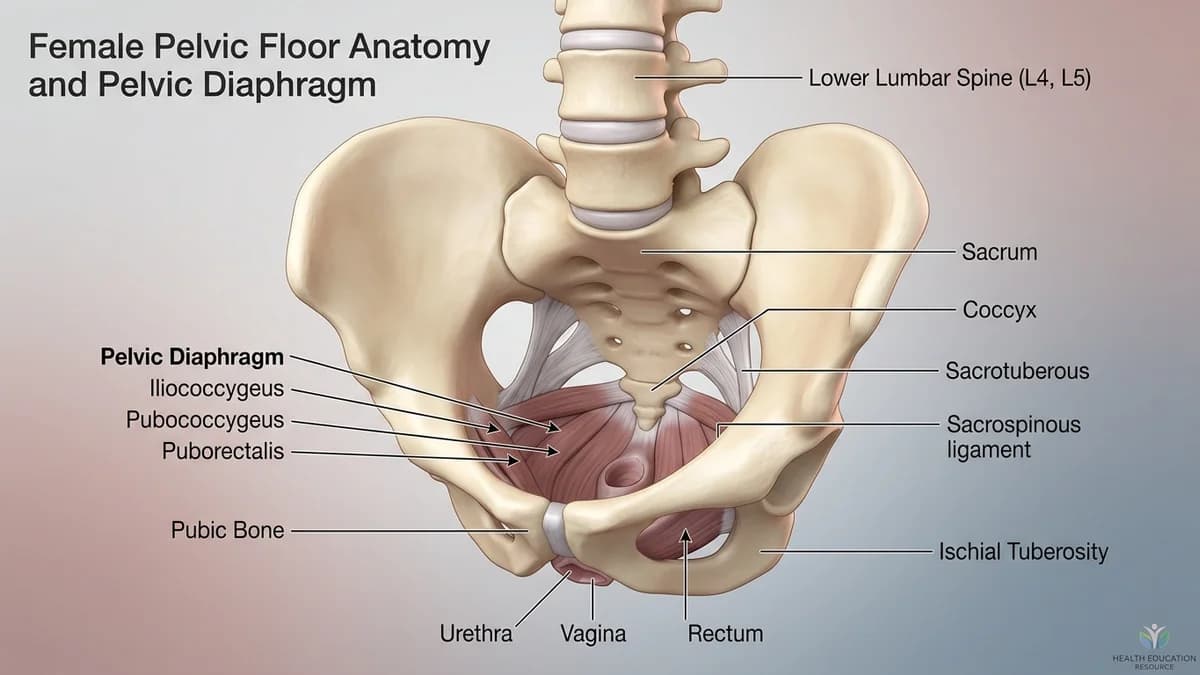
Fecal continence is maintained primarily by the puborectalis muscle, a U-shaped muscular sling originating from the pubic bones that loops around the posterior junction of the rectum and anal canal. At rest and during sitting, the puborectalis maintains a sharp 90-degree anorectal angle, acting like a kink in a garden hose to prevent involuntary stool passage. During normal defecation, intra-abdominal pressure rises gently while the puborectalis and external anal sphincter relax completely, straightening the anorectal angle to 130 to 140 degrees for effortless evacuation. In dyssynergic defecation, the puborectalis contracts paradoxically when bearing down, closing the anorectal outlet and blocking stool passage.
2. Domestic Indian Context: Daily Chores, Ergonomics, and Privacy
The widespread transition in urban Indian homes from traditional squat toilets to modern western commodes has exacerbated dyssynergic defecation. Standard western toilets seat the user at a 90-degree hip angle, keeping the puborectalis locked in contraction. Furthermore, dietary habits involving refined wheat flour (maida), low water consumption during busy workdays, and high psychological stress promote hard stool consistency. In multi-generational joint households, bathroom time pressure often triggers hurried, aggressive straining. Physiotherapists teach the 'brace and bulge' breathing technique, reintroduce optimal toilet footstool elevation, and guide patients away from stimulant laxatives.
3. Clinical Special Tests and Physical Examination
Diagnosis is confirmed using digital rectal examination (DRE), where the clinician palpates the puborectalis sling while asking the patient to bear down as if evacuating. An absence of perineal descent, or palpable tightening of the muscle against the finger, indicates dyssynergia. High-resolution anorectal manometry (HR-ARM) and balloon expulsion testing provide objective physiological confirmation.
| Physiological Parameter | Normal Evacuation Dynamics | Type 1 Dyssynergia (Classic) | Type 2 Dyssynergia (Akinetic) |
|---|---|---|---|
| Intra-Rectal Pressure | Adequate rise (exceeds 40 mmHg) | Adequate rise (exceeds 40 mmHg) | Inadequate propulsive rise (<40 mmHg) |
| Anal Sphincter Pressure | Relaxes by >20% from baseline | Paradoxical increase in anal pressure | Paradoxical increase in anal pressure |
| Anorectal Angle | Straightens to 130-140 degrees | Remains kinked at 90 degrees | Remains acutely kinked |
| Physiotherapy Solution | Maintenance of dietary fibre & fluids | sEMG biofeedback & balloon retraining | Propulsive diaphragmatic coordination |
4. Stage-by-Stage Functional Physiotherapy Protocol
Rehabilitation centres on biofeedback sensory re-education, eliminating straining, and optimizing posture using the 35-degree knee elevation principle.
Phase 1: Toilet Footstool Ergonomic Positioning and Knee Elevation
Objective: Straighten the anorectal angle toward 130 degrees on a western commode without forced squatting.
- 1Sit on the western toilet seat and place a 7 to 9-inch footstool (such as a Squatty Potty or sturdy bathroom stool) beneath your feet.
- 2Rest your feet flat on the stool so your knees are elevated above your hips at approximately a 35-degree angle.
- 3Lean forward from your hips with your spine straight, resting your forearms on your knees.
- 4Allow your lower abdominal wall to soften forward and keep your mouth slightly open to relax your jaw.
- 5Notice how the rectal outlet opens naturally without pushing.
Phase 2: The 'Brace and Bulge' Coordinated Evacuation Breath
Objective: Generate gentle propulsive intra-abdominal pressure while simultaneously relaxing the puborectalis muscle.
- 1In the elevated footstool position, take a slow, deep breath in through your nose to fill your lower belly.
- 2Do not hold your breath. Exhale gently through pursed lips making a soft 'moo' or 'ssss' sound.
- 3As you make the sound, widen your waistline outward like expanding a belt (the 'bulge').
- 4Simultaneously relax your anus completely, feeling the pelvic floor drop downward like opening a trapdoor.
- 5Allow the stool to glide out naturally; if nothing happens within 5 minutes, stand up and walk around.
Phase 3: Deep Squat Anorectal Lengthening (Malasana Breath)
Objective: Build proprioceptive awareness of full puborectalis relaxation away from the toilet.
- 1Stand with feet shoulder-width apart, holding onto a sturdy kitchen counter or door frame.
- 2Lower your hips into a deep, comfortable squat, keeping your heels supported on a rolled towel if needed.
- 3Take 5 slow diaphragmatic breaths into your lower pelvis.
- 4With each inhalation, consciously visualize your rectal sphincter softening, opening, and widening.
- 5Stand back up smoothly, training your nervous system that opening the pelvic floor is safe.
Seek immediate gastroenterological evaluation if you experience: rectal bleeding with dark or maroon stools, sudden unexplained change in bowel habits lasting over 3 weeks in adults over 45, unintentional weight loss, severe pencil-thin stools, or excruciating anal pain accompanied by a palpable lump (indicating a thrombosed hemorrhoid or abscess).
5. Clinic Consultation, Home Visits, and Transparent Fee Benchmarks
In India, under the National Commission for Allied and Healthcare Professions (NCAHP) Act 2021, patients can consult a registered pelvic health physiotherapist directly without an upfront referral, though BookPhysio.in does not ask for one. Pelvic physiotherapists use surface electromyography (sEMG) biofeedback and balloon expulsion retraining to teach patients how to relax the puborectalis. Outpatient clinic appointments in Indian metropolitan cities range between ₹500 and ₹1,500, with home visits ranging from ₹700 to ₹2,000 where available. Patients pay their physiotherapist directly at each consultation, with zero platform commission.
6. Frequently Asked Questions
Can taking Ayurvedic churna laxatives cure dyssynergic defecation?
No. Stimulant laxatives (like senna, triphala, or castor oil) irritate the colon to produce chemical peristalsis, but they do not teach the spastic puborectalis muscle how to relax. Over time, chronic laxative use causes colonic inertia and dependence. Pelvic floor biofeedback and physiotherapy retrain the underlying motor coordination, restoring natural bowel function without pills.
How does using a footstool on a western toilet help with constipation in India?
Sitting on a conventional western toilet leaves your hips at a 90-degree angle, which keeps the puborectalis muscle partially hooked around your rectum. Raising your feet onto a 7 to 9-inch stool elevates your knees to a 35-degree angle, mimicking natural squatting. This straightens the anorectal canal, allowing stool to pass with minimal effort.
Related recovery guides & articles
BookPhysio.in Editorial Team
The BookPhysio.in editorial team writes and maintains this content, checking it against reliable clinical sources. Content follows our medical review policy: general information only, and no page claims a clinical review until a named registered physiotherapist has signed it off.
Read our medical review policy