
Emergency Fall Alert Systems: Medical Pendants and Smartwatch Detection for Elders
In short
Over eighty percent of older adults who fall cannot press an emergency button due to shock or injury. Learn how automatic fall detection wearables protect living alone.
In this guide (6 sections)
Rapid medical response following a domestic fall is critical to minimizing long lie complications, permanent functional disability, and mortality. While traditional personal emergency response systems (PERS) relied on manual panic buttons, clinical studies reveal that up to eighty percent of older adults who sustain a fall cannot press a manual trigger due to head impact, acute shock, severe fracture pain, or physical separation from the device. Modern emergency alert systems incorporating tri-axial accelerometers and automatic fall detection algorithms bridge this life-saving gap.
Domestic and Cultural Indian Realities
In Indian urban centres, demographic shifts have led to an unprecedented increase in elderly couples or widowed seniors living alone while children reside in other cities or abroad. Cultural pride often leads older Indians to downplay their vulnerability, rejecting medical alert pendants because they look institutional or stigmatizing. Furthermore, many seniors remove neck pendants before bathing or sleeping, which are the two highest-risk periods for domestic falls. In contrast, modern consumer smartwatches with discreet automatic fall detection are culturally well-received, functioning as both communication tools and emergency fall monitors.
Clinical Biomechanics and Postural Control Decay
Automatic fall detection relies on sensor fusion combining tri-axial accelerometers and gyroscopes. The detection algorithm monitors for three sequential biomechanical phases: free-fall acceleration (a sudden drop in vertical G-force below 0.5G), impact shock (a rapid deceleration spike exceeding 2.5G to 3.0G upon ground contact), and post-fall immobility (the complete absence of angular limb movement for ten to thirty seconds). When this specific kinetic signature is detected, the device initiates an acoustic countdown and dispatches emergency SOS alerts with GPS coordinates to family members and emergency response networks.
Functional Assessment and Risk Stratification
Evaluating an older adult for an emergency fall alert system involves assessing cognitive reliability, fine motor dexterity, and digital literacy. Clinicians evaluate whether the senior can reliably charge the device daily, distinguish false alarms from real alerts, and press cancellation buttons within thirty seconds to prevent unnecessary emergency service dispatch.
Targeted Strength and Balance Exercises
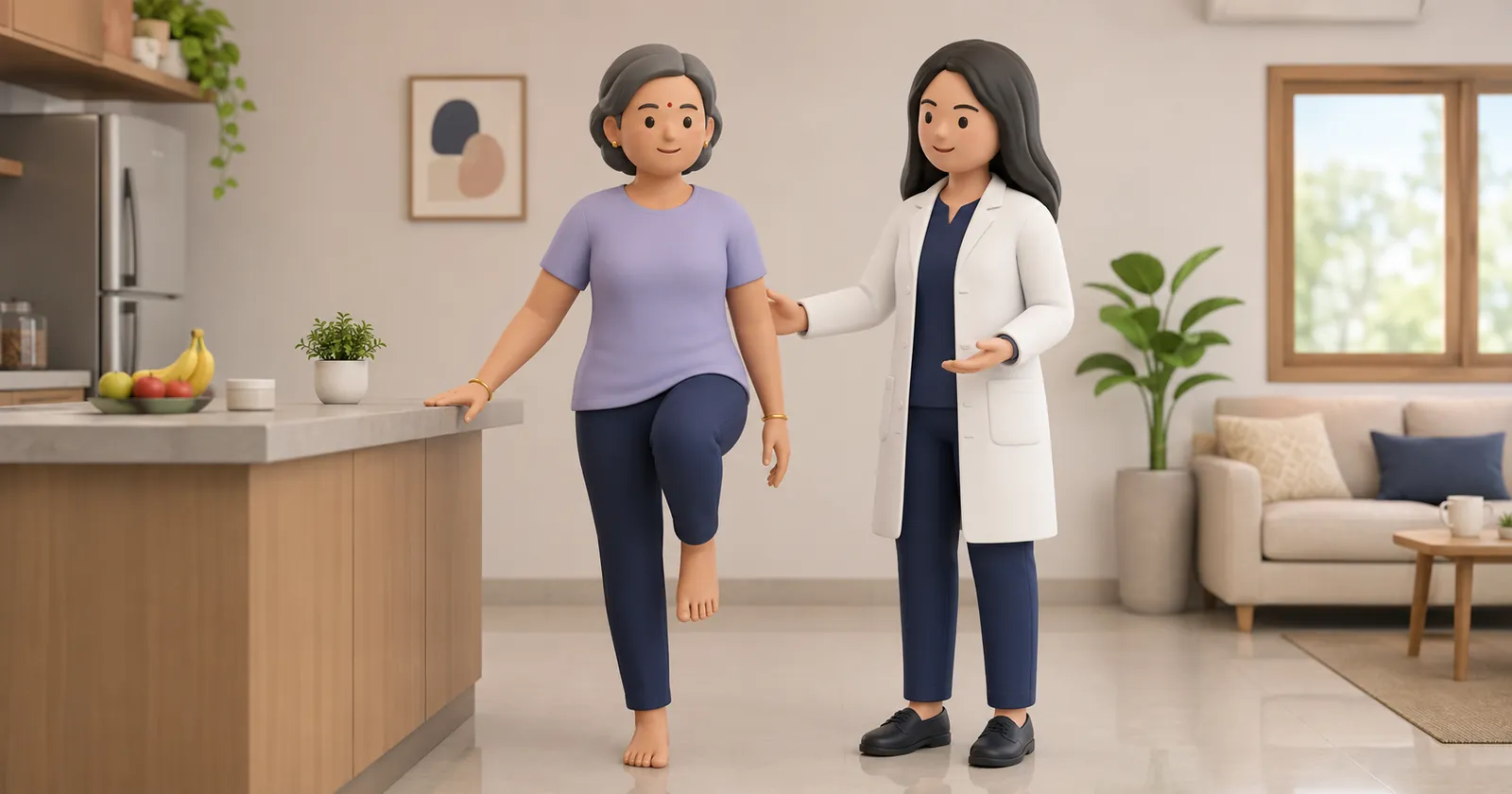
Wearable technology acts as a useful safety net, but cannot replace physical balance retraining. Physiotherapy rehabilitation focuses on improving core stability, reactive stepping, and practicing safe emergency response procedures so that seniors remain physically capable of self-protection.
Emergency Response Posture and Alert Activation Practice
Objective: Practice calm, deliberate emergency alert activation while maintaining a stable seated or supported posture
- 1Sit comfortably in your primary living room chair wearing your alert device or smartwatch.
- 2Practice pressing the emergency SOS button or side crown with firm, deliberate finger pressure.
- 3Observe the countdown screen and practice tapping the cancellation button within fifteen seconds to understand the reset mechanism.
- 4Practice speaking clearly into the device microphone: "I am safe, practicing my alert system."
- 5Confirm that your designated emergency contact family members receive test notifications successfully.
| Alert Technology | Key Functional Features | Clinical Practical Considerations |
|---|---|---|
| Waterproof Neck Pendant | Dedicated SOS button; worn in shower; multi-year battery life | High false alarm rate if dropped; must have breakaway safety cord to prevent choking |
| Smartwatch with Auto-Fall Detection | Discreet appearance; cellular calling; GPS tracking; automatic impact trigger | Requires daily charging; fine motor dexterity needed to cancel false alarms |
| Ambient Wall/Radar Sensors | No wearables required; radio-frequency radar maps room movement | Operates in bathrooms; zero compliance burden; higher initial installation cost |
| Smart Home Speaker Voice Alert | Voice-activated calling ("Alexa/Google, call my son") | Fails if senior is unconscious, dysarthric, or out of acoustic microphone range |
Red Flags and Emergency Post-Fall Escalation
When an emergency fall alert triggers, treating clinicians and family members must treat the event as an acute medical crisis. If the fallen senior is unresponsive over the two-way speaker, dispatch emergency ambulance services immediately. Assess for acute intracranial bleeding, cervical spine trauma, or femoral neck fractures. Seniors with cardiac pacemakers should have their alerts coordinated with cardiology to ensure devices do not cause electromagnetic interference.
Frequently Asked Questions
Do fall detection smartwatches work inside Indian bathrooms where many falls happen?
Modern smartwatches and dedicated medical alert pendants feature IPX7 or IPX8 water resistance ratings, meaning they can be worn safely during bucket baths and showers where wet tile slip risks are highest.
Can physiotherapists help choose and integrate fall alert systems for elderly parents in India?
Geriatric physiotherapists assess patient cognitive-motor profiles and recommend appropriate alert technologies alongside balance rehabilitation. Under the NCAHP Act 2021, Indian patients enjoy direct access to registered physiotherapists. BookPhysio.in connects you with verified physiotherapists for home care with direct per-session payments.
Related recovery guides & articles
BookPhysio.in Editorial Team
The BookPhysio.in editorial team writes and maintains this content, checking it against reliable clinical sources. Content follows our medical review policy: general information only, and no page claims a clinical review until a named registered physiotherapist has signed it off.
Read our medical review policy