
Endometriosis and Pelvic Floor Hypertonicity: Myofascial Trigger Point Therapy and Rehabilitation in India
In short
Endometriosis pain often persists even after surgical laparoscopy due to secondary pelvic floor muscle spasm. Learn how myofascial trigger point release provides lasting relief.
In this guide (6 sections)
Endometriosis, the presence of endometrial-like stroma and glands outside the uterine cavity, affects an estimated 25 million women across India. While the primary pathology is gynaecological, up to 80 percent of women with endometriosis develop secondary chronic pelvic floor hypertonicity and myofascial pain syndrome. Even after successful laparoscopic excision of endometriotic lesions, many women continue to suffer from agonizing menstrual cramps, deep dyspareunia, burning pain with bowel movements, and chronic hip or lower back aching. This persistent pain is frequently driven by pelvic floor muscles that contracted into chronic protective guarding over years of inflammatory pain. Specialized pelvic physiotherapy targeting internal myofascial trigger points breaks this pain cycle.
1. Functional Biomechanics: Viscero-Somatic Cross-Sensitisation and Protective Guarding
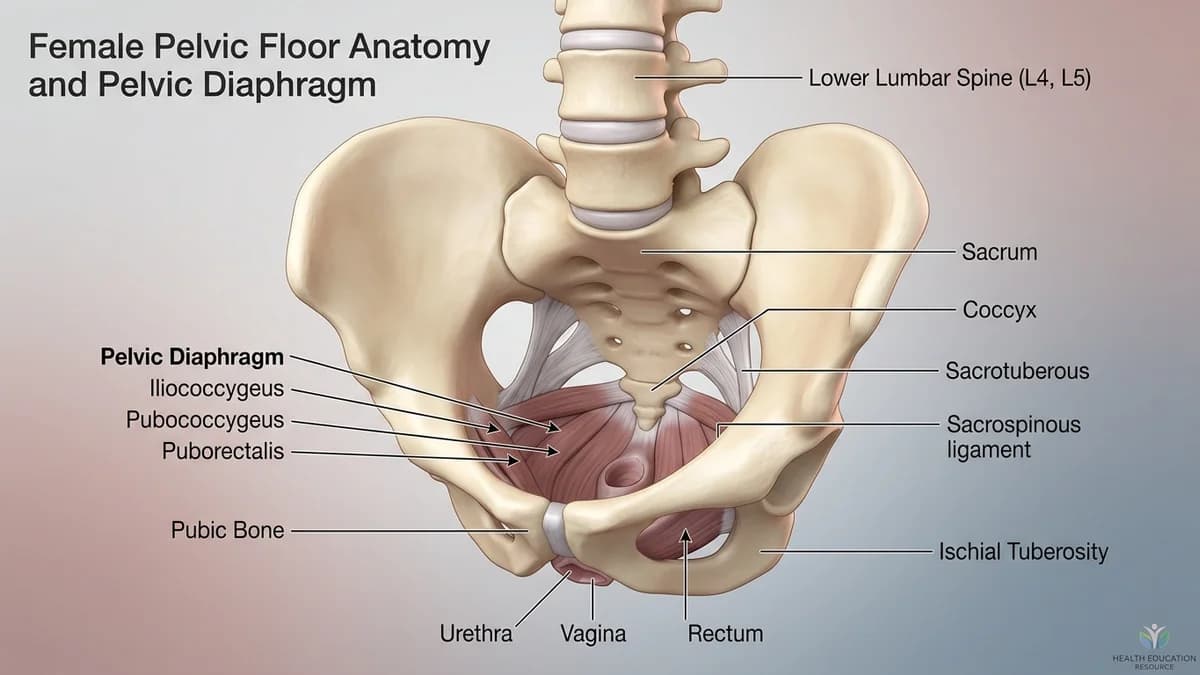
Endometriotic implants in the pouch of Douglas, uterosacral ligaments, and pelvic peritoneum trigger cyclical bleeding, local prostaglandin release, and chronic inflammation. This constant nociceptive barrage enters the spinal cord through dorsal horn neurons. Through viscero-somatic convergence, the central nervous system reflexively commands adjacent somatic muscles, the puborectalis, iliococcygeus, obturator internus, and piriformis, to contract in a protective guarding reflex. Over time, these muscles remain locked in continuous hypertonicity, developing taut bands and tender trigger points that produce their own independent myofascial pain, long after surgical excision of the original lesions.
2. Domestic Indian Context: Daily Chores, Ergonomics, and Privacy
In Indian society, severe menstrual pain (dysmenorrhea) is frequently dismissed as a normal part of womanhood, with young women told to endure it or take hot water bags and pain pills. Women often struggle through domestic chores like sweeping, washing, and cooking while doubled over in pain, unconsciously bracing their abdominal and pelvic muscles. The cultural pressure to conceive quickly after marriage adds severe psychological distress when dyspareunia makes intimacy agonizing. Physiotherapists provide compassionate, trauma-informed care, educating patients that pelvic muscle spasm is a physical, treatable condition rather than a personal failure.
3. Clinical Special Tests and Physical Examination
Clinical evaluation includes comprehensive pelvic girdle screening: assessing sacroiliac joint mobility, evaluating abdominal wall trigger points (Carnett test), and performing gentle single-digit digital vaginal palpation to map myofascial trigger points in the levator ani, obturator internus, and coccygeus muscles.
| Clinical Characteristic | Visceral Endometriosis Pain | Secondary Myofascial Spasm | Integrated Physiotherapy Strategy |
|---|---|---|---|
| Timing of Pain | Cyclical; peaks during menstruation & ovulation | Non-cyclical; daily pain, worse with sitting | Treat muscle spasm across the entire cycle |
| Pain Sensation | Deep throbbing, sharp inflammatory cramps | Aching, tight, heavy, burning muscle knots | Myofascial release deactivates muscle knots |
| Response to Surgery | Improves with complete surgical excision | Persists post-laparoscopy if untreated | Post-surgical pelvic floor rehabilitation |
| Primary Intervention | Hormonal suppression, surgical excision | Pelvic physiotherapy, down-training, heat | Collaborative gynaecological and physio care |
4. Stage-by-Stage Functional Physiotherapy Protocol
Rehabilitation centres on active pelvic floor down-training, external and internal myofascial trigger point deactivation, and nervous system desensitisation.
Phase 1: Supported Pelvic Diaphragm Calming with Bolster Elevation
Objective: Unload visceral pelvic pressure and restore resting length to the hypertonic levator ani.
- 1Lie on your back with your pelvis elevated on a soft bolster or folded cotton blanket.
- 2Rest your lower legs on a chair or sofa so your hips and knees are at 90 degrees.
- 3Place one hand on your lower belly and the other hand on your chest.
- 4Inhale deeply into your lower pelvis for 4 seconds, feeling your sit bones gently separate.
- 5Exhale slowly through your mouth for 6 seconds without any muscular contraction.
- 6Focus on the feeling of warmth and dropping in your pelvic bowl.
Phase 2: External Obturator Internus and Piriformis Foam Rolling
Objective: Deactivate external hip rotators that share fascial attachments with the pelvic floor.
- 1Sit on a comfortable mat and place a tennis ball or soft massage ball beneath your outer right buttock.
- 2Cross your right ankle over your left knee in a figure-4 position.
- 3Gently roll over the deep gluteal region until you locate a tender muscular knot.
- 4Hold static pressure on the knot for 30 seconds while taking slow, deep diaphragmatic breaths.
- 5Allow the muscle to soften under the ball before switching to the left side.
Phase 3: Cat-Cow with Pelvic Floor Eccentric Expansion
Objective: Coordinate spinal articulation with active lengthening of the pelvic floor and abdominal wall.
- 1Position yourself on all fours with wrists under shoulders and knees under hips.
- 2As you inhale, gently drop your belly toward the mat, lift your chest, and tilt your tailbone toward the ceiling (Cow pose).
- 3Consciously feel your pelvic floor widen and relax downward toward the floor.
- 4As you exhale, softly round your spine toward the ceiling (Cat pose), keeping your pelvic floor completely neutral without clenching.
- 5Flow smoothly between postures to restore dynamic spinal-pelvic mobility.
Seek emergency medical care immediately if you experience: sudden excruciating unilateral pelvic pain accompanied by nausea and vomiting (suggesting an ovarian torsion or ruptured endometrioma cyst), heavy vaginal bleeding soaking more than two pads per hour, high fever with pelvic rigidity, or passing fresh blood from the rectum during bowel movements.
5. Clinic Consultation, Home Visits, and Transparent Fee Benchmarks
Under the National Commission for Allied and Healthcare Professions (NCAHP) Act 2021, patients in India can consult a registered pelvic health physiotherapist directly without an upfront referral, though BookPhysio.in does not ask for one. Pelvic health physiotherapists provide specialized internal myofascial release, neural mobilisations, and heat therapies in private treatment suites. Clinic sessions in Indian cities range between ₹500 and ₹1,500, with home visits ranging from ₹700 to ₹2,000 where available. Patients pay their physiotherapist directly at each consultation, with zero platform commission.
6. Frequently Asked Questions
Can pelvic floor physiotherapy relieve endometriosis pain and tension in India?
Physiotherapy cannot surgically remove endometriotic lesions, but it plays a vital clinical role in treating the secondary pelvic floor muscle spasm, myofascial trigger points, and nerve hypersensitivity that cause up to 70 percent of daily chronic pain. Combining gynaecological medical management with pelvic physiotherapy provides comprehensive symptom relief.
Why does my pelvic pain continue even after my endometriosis surgery was successful?
Laparoscopic surgery removes the active endometriotic implants, but it does not automatically reset muscles that have been clenched in protective spasm for years. These hypertonic muscles maintain their own memory of pain and trigger points. Pelvic floor physiotherapy is essential to release these chronically contracted muscles and restore normal resting tone.
Related recovery guides & articles
BookPhysio.in Editorial Team
The BookPhysio.in editorial team writes and maintains this content, checking it against reliable clinical sources. Content follows our medical review policy: general information only, and no page claims a clinical review until a named registered physiotherapist has signed it off.
Read our medical review policy